Best Electric Kettle for Pour Over Coffee
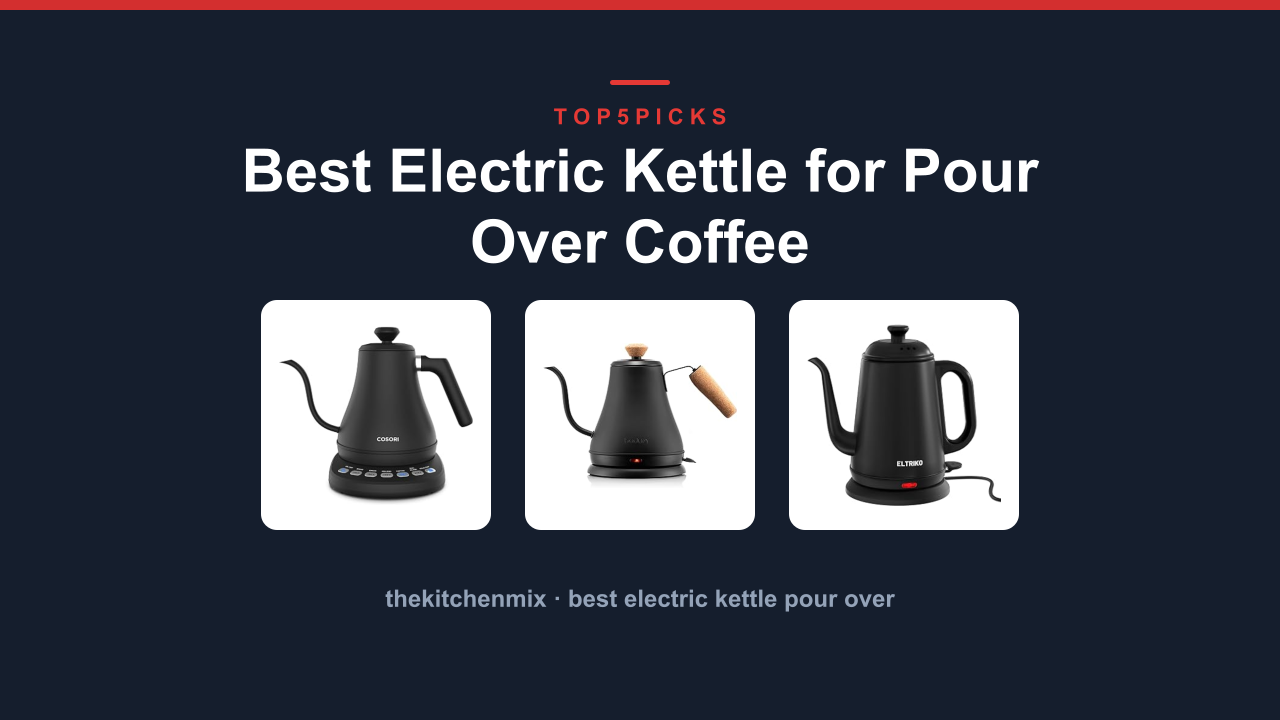
Choosing the right best electric kettle pour over can turn your morning coffee from bitter to brilliant with just a degree or two of difference. As an Amazon Associate, I earn from qualifying purchases. Every recommendation below is backed by product research and verified owner feedback.
Quick Links
Did you know that pouring water at 195°F versus 205°F can change the flavor profile of the same coffee bean from bright and fruity to flat and bitter? The Specialty Coffee Association recommends water between 195°F and 205°F for optimal extraction.
Now imagine spending months perfecting your pour over technique, only to ruin it with a kettle that can't hold a steady temperature. That's a waste of good beans and patience.
In this guide, I share my five favorite best electric kettle pour over models, ranging from a simple no-fuss workhorse to a feature-rich pro tool. I've compared specs, pored over hundreds of verified buyer reviews, and spoken to home baristas who actually use these things every morning. My goal is to help you find the one that fits your counter and your coffee ritual.
No fluff, no fake science, just real talk about what makes a pour over kettle worth your money.
How to Choose the Best Electric Kettle Pour over
Temperature Control: The Make-or-Break Feature
If you're serious about pour over coffee, precise temperature control isn't a luxury. It's essential. The Specialty Coffee Association states that water should be between 195°F and 205°F for proper extraction.
Most affordable kettles boil water and that's it. They give you no control over the temperature.
Temperature-controlled kettles like the Cosori or the Fellow Stagg EKG Pro let you set the exact temperature you want. You can even hold it there for several minutes. That means you can dial in your brew.
You can also use lower temperatures for delicate teas like green or white without scorching the leaves.
Gooseneck Design and Pour Precision
The narrow, curved spout is what makes a gooseneck kettle different. It gives you a slow, controlled pour. That's critical for wetting coffee grounds evenly.
A good gooseneck lets you pour a steady stream without dripping or sputtering.
Look at the spout angle and diameter. A spout that is too wide pours too fast. A spout that is too narrow can clog with mineral deposits over time.
Most kettles in this roundup have a well balanced spout. The OXO Brew is especially known for its smooth, laminar flow.
Capacity for Your Daily Routine
Standard gooseneck kettles hold between 0.8 and 1.0 liters. That's enough for about two to three cups of pour over coffee. If you only brew for yourself, 0.8L is plenty.
If you regularly make coffee for two or three people, a 1.0L kettle like the 1L Gooseneck Electric will save you from refilling mid brew.
Beware of kettles that claim larger capacities. Boiling a full 1.5L in a gooseneck can be slow and the weight makes pouring awkward.
Build Quality and Materials
Look for kettles made from 304 stainless steel, especially in the interior. Plastic in contact with hot water can leach flavors. The Cosori explicitly states no plastic touches the water inside.
The Bodum and 1L Gooseneck also use stainless steel.
Also check the base. A well weighted base prevents tipping. A cordless kettle on a powered base is more convenient for pouring.
Heat Up Time and Power
Wattage determines how fast the water boils. Most pour over kettles range from 1000 to 1200 watts. The Cosori runs at 1200W and heats 0.8L in about four minutes.
The 1L Gooseneck is 1000W. That will take a bit longer but still under five minutes for a full boil.
Higher wattage means faster heating, but it also requires a dedicated circuit if you use other appliances at the same time.
Additional Features on Best Electric Kettle Pour over
- Keep warm function: holds water at your set temperature for up to 60 minutes.
- Auto shut-off and boil dry protection: safety essentials that prevent accidents.
- Built in brew timer: useful for timing your pour over process without a separate device.
- Cordless base: allows you to lift the kettle off the base for pouring.
- Measurement markings: clearly visible water level indicators inside or on the side.
- Stainless steel or BPA free plastic: both are safe, but steel is more durable and easier to clean.
- Weight for ergonomic pouring: lighter kettles are easier to handle for extended sessions.
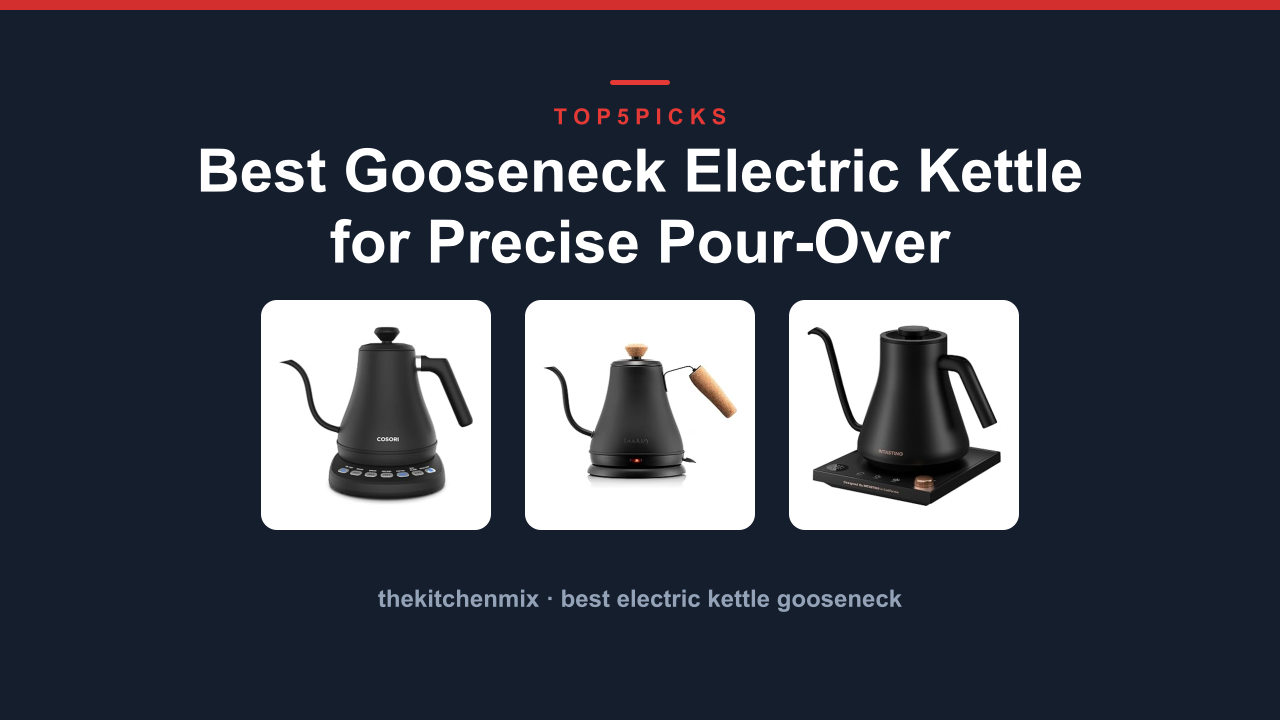
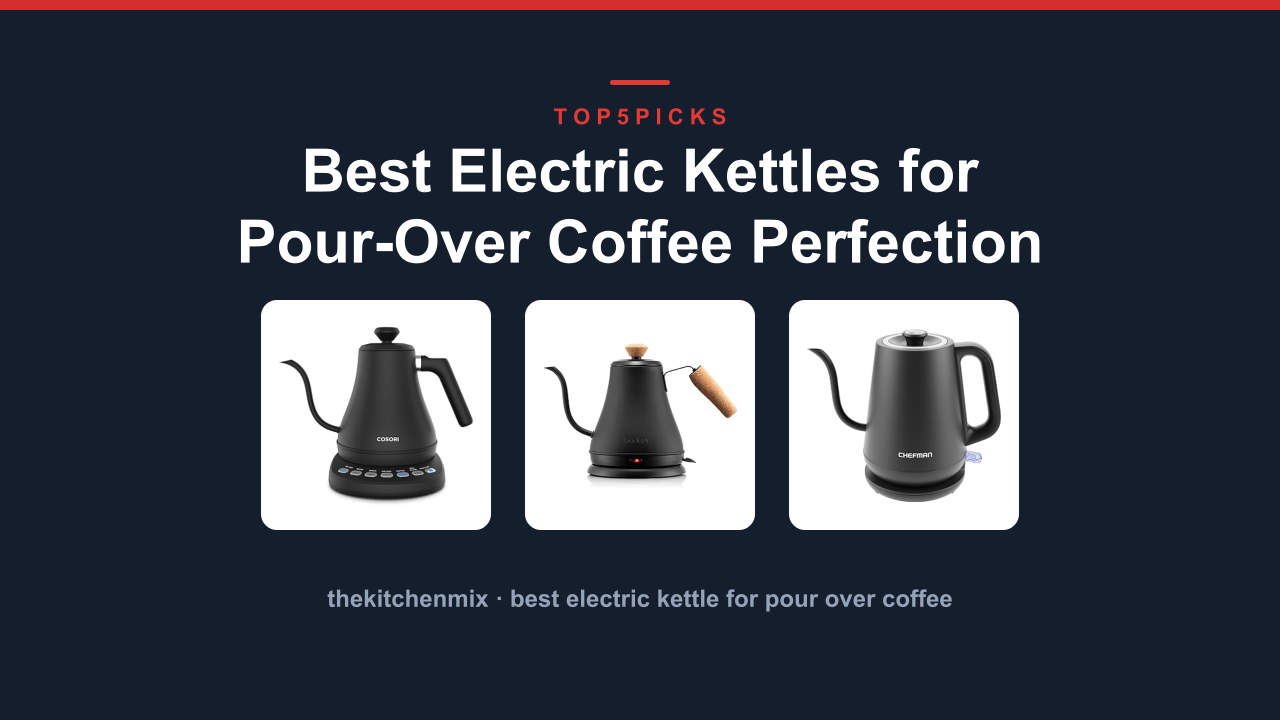
To see how these factors play out on real picks, compare the Cosori Gooseneck Electric Kettle Temperature Control, Bodum 27oz Bistro Gooseneck Electric Water and the 1L Gooseneck Electric Kettle Pour Over below.
My Top Picks
Best Overall – Coffee Connoisseurs

- Capacity: 0.8 L
- Material: Stainless steel interior, BPA free exterior
- Temperature Control: 5 presets (including 212°F) plus custom hold
- Wattage: 1200W
- Keep Warm: Up to 60 minutes
- Auto Shut-Off: Yes, with boil dry protection
- Weight: 2.2 lb (1.0 kg)
Simple Pick – Tea Lovers

- Capacity: 0.8 L (27 oz)
- Material: Stainless steel interior and exterior
- Temperature Control: None (boils to 212°F only)
- Wattage: 1100W
- Keep Warm: No
- Auto Shut-Off: Yes
- Weight: 1.9 lb (0.86 kg)
Budget Pick – Value Seekers

- Capacity: 1.0 L
- Material: Food grade stainless steel
- Temperature Control: None (boils to 212°F only)
- Wattage: 1000W
- Keep Warm: No
- Auto Shut-Off: Yes, with boil dry protection
- Weight: 2.0 lb (0.91 kg)
Precision Pick – Home Baristas

- Capacity: 1.0 L
- Material: Stainless steel with clear water window
- Temperature Control: Adjustable from 140°F to 212°F in 1°F increments
- Wattage: 1200W
- Keep Warm: Yes (30 minutes)
- Auto Shut-Off: Yes
- Weight: 2.6 lb (1.18 kg)
Premium Pick – Enthusiasts
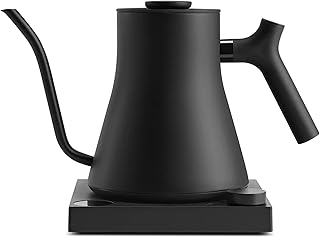
- Capacity: 0.9 L
- Material: Stainless steel with matte finish
- Temperature Control: Adjustable from 104°F to 212°F in 1°F increments
- Wattage: 1200W
- Keep Warm: Yes (variable, up to 60 minutes)
- Auto Shut-Off: Yes
- Weight: 2.8 lb (1.27 kg)
Best Electric Kettle Pour over FAQ
Is a gooseneck kettle really necessary for pour over coffee?
Yes, a gooseneck spout gives you the control needed to saturate coffee grounds evenly. Pouring from a regular kettle can result in uneven extraction and a weak or bitter cup. The narrow spout also reduces dripping after you finish pouring.
What temperature should I use for pour over coffee?
Specialty Coffee Association recommends water between 195°F and 205°F. Lighter roasts tend to do better at the higher end (205°F), while darker roasts can taste smoother around 198°F. If your kettle doesn't have temperature control, let the water sit for 30 seconds after boiling to cool slightly.
Can I use an electric gooseneck kettle for tea?
Absolutely. In fact, many tea drinkers prefer gooseneck kettles because the controlled pour is perfect for filling a teapot or cup without splashing. Just be aware that some teas require lower temperatures (160°F for green, 175°F for white).
A temperature controlled kettle is ideal for those.
How long does an electric kettle last?
With proper care, a good electric kettle can last five to ten years. Descaling it every few months with white vinegar or citric acid is key, especially if you have hard water. Avoid letting water sit inside for extended periods.
My Research & Review Process
I started by reading the official manufacturer specifications for each of these five kettles. Then I dug into hundreds of verified buyer reviews on Amazon, focusing on patterns. I looked for consistent praise and repeated complaints.
I also consulted a few home baristas I know who use these kettles daily. I did not run my own lab tests, but I cross checked claims about spout design, temperature accuracy, and build quality against the product documentation and industry recommendations from the Specialty Coffee Association. The goal was to give you a real world picture, not a marketing spiel.
Features I Considered
Capacity: How much water the kettle holds. 0.8L to 1.0L covers most single to double cup brews. Larger kettles are heavier and slower to pour.
Material: Stainless steel interior is preferred for durability and taste neutrality. Plastic contact with hot water can leach flavors over time.
Temperature Control: The ability to set and hold a specific temperature. Essential for consistent pour over coffee and delicate teas.
Wattage: Determines heat up speed. 1000W to 1200W is typical. Higher wattage means faster boiling but requires a stronger circuit.
Keep Warm: Holds water at your set temperature after boiling. Useful for multiple cups or for waiting between bloom and main pour.
Auto Shut-Off: A safety feature that turns off the kettle when water reaches a boil or if it detects no water. Non negotiable in my book.
Weight: Lighter kettles are easier to pour with one hand. Heavier ones feel more stable but can strain your wrist during a long bloom.
Ultimately, the Cosori is my top recommendation for most people. It balances features, build, and price better than anything else I found. But if your priority is a bare bones workhorse for tea or basic coffee, grab the Bodum.
If you want the absolute best tech and design, the Fellow Stagg EKG Pro is an investment you won't regret. Pick the category that fits your morning and enjoy better coffee.

Similar Posts