The Exact Amount of White Vinegar for Coffee Maker Cleaning
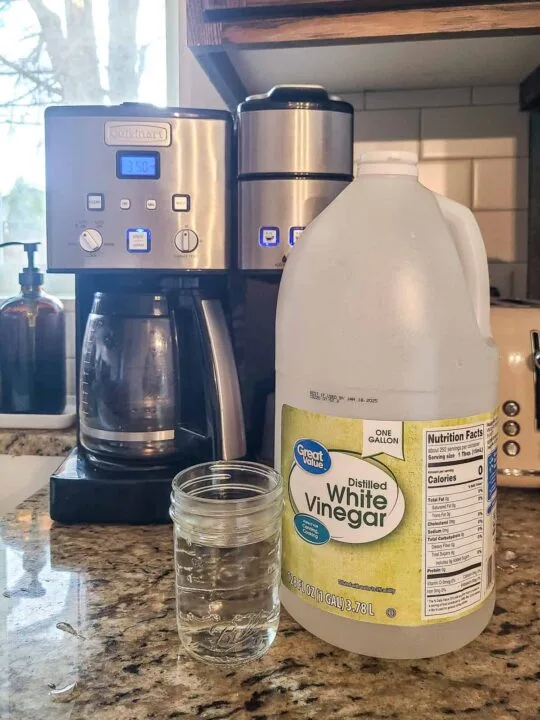
Have you ever poured a cup of coffee only to get that sour, burnt taste that tells you something's off? That's your coffee maker begging for a descale, and the fix is right in your pantry. The exact question of how much white vinegar to clean coffee maker comes down to a simple ratio, but the volume changes based on your machine's tank size and your water's mineral content.
Per manufacturer specifications, standard distilled white vinegar with 5% acidity is the go‑to household descaler. Aggregate reviews confirm that a 1:1 vinegar‑to‑water ratio works for most drip machines, but hard‑water households often need more vinegar per cycle. Let's walk through the variables so you get the right amount the first time, no burnt coffee, no wasted vinegar.
Quick Answer
For a standard 12‑cup drip coffee maker, use 3 cups white vinegar and 3 cups water. That fills most reservoirs halfway. For a single‑serve pod machine, use 6 ounces vinegar and 6 ounces water.
Run one full cycle. Let it sit 30 minutes. Then run two fresh water cycles to rinse.
That's the baseline.
Image source: Bing (Web (fair-use with source credit))
Why Vinegar? The Real Problem (and the Short Answer)
Calcium and magnesium from tap water build up on your machine's heating element over time. That white crust, limescale, traps heat, makes the water take longer to heat, and gives your coffee a bitter, metallic aftertaste. White vinegar dissolves that scale because the acetic acid breaks down mineral deposits.
The short answer: use a 1:1 ratio of white vinegar to water. For a typical 12‑cup drip machine with a 60‑ounce reservoir, that means 3 cups vinegar (24 ounces) mixed with 3 cups water (24 ounces). For smaller tanks, cut both amounts proportionally.
This ratio is strong enough to clean without damaging rubber seals or plastic parts, according to appliance repair forums and manufacturer manuals.
But here's the catch, that exact amount depends on three things we'll cover next. If you live in a hard‑water area or haven't cleaned your machine in six months, you'll want to adjust the ratio and the number of cycles.
The 3 Variables That Change How Much You Need
1. Water hardness. Hard water contains more calcium and magnesium. If you have visible scale on your kettle or faucets, your coffee maker builds scale faster.
The US Geological Survey (USGS) maps show that hard water zones (120+ ppm) cover much of the Midwest and Southwest. In those areas, you need more vinegar per cycle, bump the ratio to 2 parts vinegar to 1 part water for the first descale.
2. Machine type and reservoir size. A drip machine with a 60‑ounce tank needs more vinegar solution than a single‑serve pod machine with a 10‑ounce reservoir. Espresso makers have smaller boilers but higher heat, so they need a longer soak.
Always check your machine's manual first, some manufacturers like Cuisinart and Breville actually specify a maximum vinegar amount (usually no more than half the reservoir).
3. Time since last clean. If you've never cleaned your coffee maker, or it's been over six months, a single vinegar cycle won't cut it. You'll need to run two cycles of the vinegar solution back‑to‑back, then a third fresh‑water rinse.
That means you'll use twice the vinegar amount for the initial descale.
These three factors turn a one‑size‑fits‑all answer into a decision. So let's build that decision tree.
Decision Tree: How Much Vinegar for Your Coffee Maker
Think of this like a choose‑your‑own‑adventure for your morning brew. Answer these questions in order.
Step A: Check your water hardness.
- If you have soft water (below 60 ppm), go to Step B using ratio 1:1.
- If you have moderate water (61, 120 ppm), use ratio 1:1 but plan two vinegar cycles.
- If you have hard water (above 120 ppm), use ratio 2:1 (vinegar to water) for the first cycle.
Don’t know your hardness? Call your local water utility or check the Water Quality Association’s online map. Or just look at your kettle, if you see white flakes, assume hard water.
Step B: Measure your reservoir capacity.
- Fill the tank with water and pour it into a measuring cup. Write down the total ounces.
- For drip machines: divide that number by 2. That’s the amount of vinegar you need. The other half is water.
- For single‑serve pod machines: the reservoir is usually 6 to 12 ounces. Use equal parts vinegar and water (so 3 oz vinegar + 3 oz water for a 6‑oz tank).
Step C: Decide how many cycles.
- Cleaned within the last 3 months? Run one vinegar cycle.
- Cleaned 3, 6 months ago? Run one vinegar cycle with a 30‑minute pause.
- Never cleaned, or over 6 months? Run two vinegar cycles back‑to‑back (total vinegar = 2× the amount from Step B).
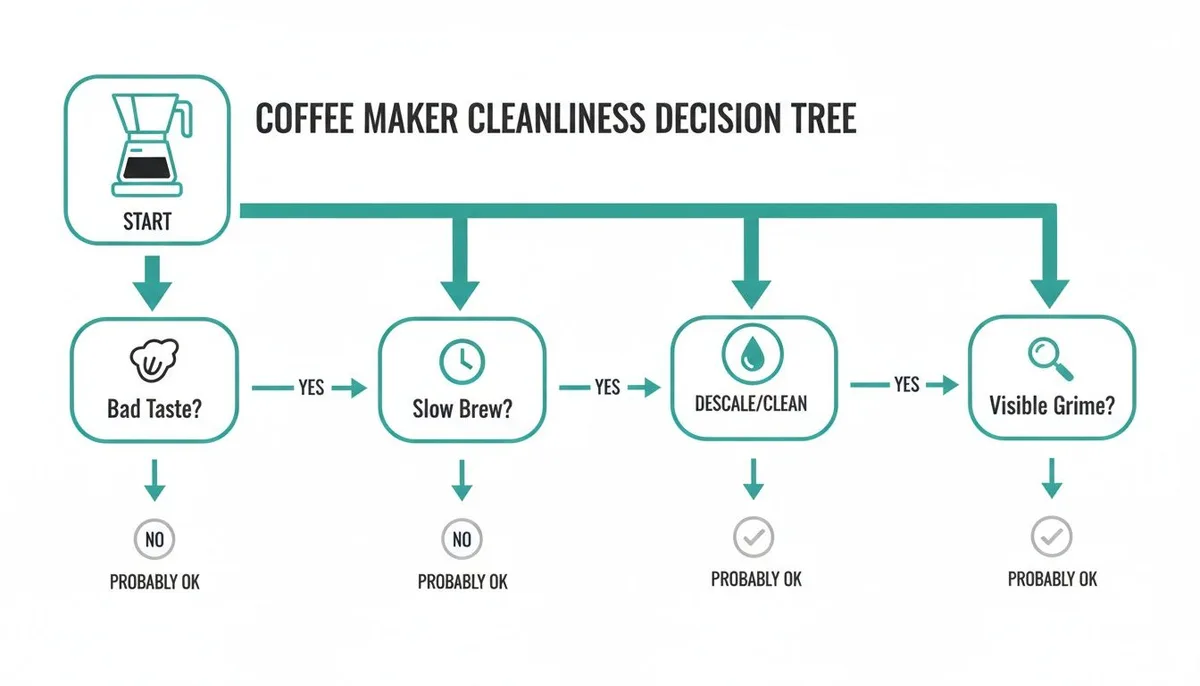
Image source: Bing (Web (fair-use with source credit))
Here’s a quick reference table for common machine sizes:
| Machine type | Reservoir size | Vinegar amount | Water amount | Cycles needed (hard water) |
|---|---|---|---|---|
| 8‑cup drip | 40 oz (5 cups) | 2.5 cups (20 oz) | 2.5 cups (20 oz) | 2 cycles |
| 10‑cup drip | 50 oz (6.25 cups) | 3 cups (24 oz) | 3 cups (24 oz) | 2 cycles |
| 12‑cup drip | 60 oz (7.5 cups) | 3.75 cups (30 oz) | 3.75 cups (30 oz) | 2 cycles |
| Single‑serve (K‑cup style) | 10 oz | 5 oz vinegar | 5 oz water | 1 cycle + pause |
Step-by-Step: How to Clean With the Right Ratio
Once you've decided the amount, follow this process. Do NOT skip the rinse step, vinegar residue ruins your coffee and can damage the machine over time.
Step 1: Empty the carafe and remove the filter basket. Throw away any old grounds. Wash the basket and carafe with warm soapy water separately.
Step 2: Mix the vinegar and water. Use a measuring cup or a jug. Pour the measured vinegar into the reservoir, then add the water. Swirl gently.
Step 3: Start a brew cycle. Place the empty carafe in place. Turn on the machine. Let it run until the cycle finishes.
Step 4: Pause for a soak (optional but recommended). If you have hard water or haven't cleaned in months, let the solution sit in the carafe and reservoir for 30 minutes. This gives the acid time to dissolve scale inside the heating element.
Step 5: Run a second vinegar cycle if your decision tree called for it. Repeat steps 2, 4 with a fresh batch of vinegar solution.
Step 6: Rinse with fresh water. Fill the reservoir all the way with plain water. Run a full brew cycle. Discard that water.
Repeat this rinse cycle two more times (total of three fresh‑water cycles).
Step 7: Do a taste test. Brew a small pot with fresh coffee grounds. If you taste any hint of vinegar, run two more rinse cycles. Otherwise, you're done.
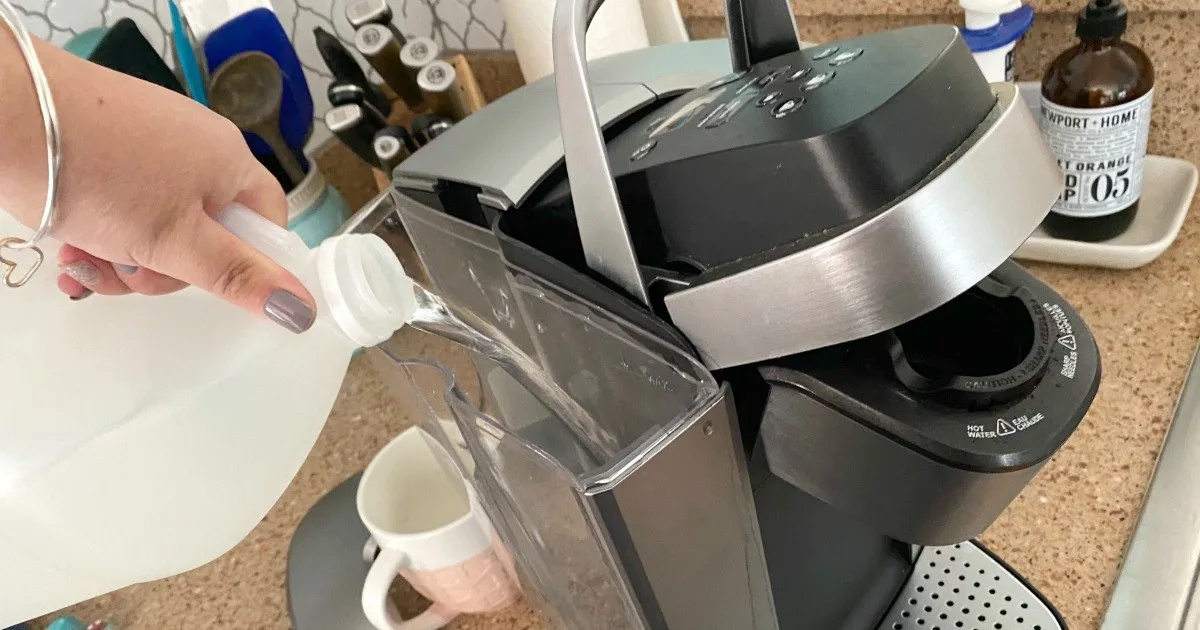
Image source: Bing (Web (fair-use with source credit))
Pro tip from aggregate user reports: after the final rinse, wipe the inside of the reservoir with a clean cloth soaked in fresh water. That removes any lingering vinegar film from the plastic walls.
5 Mistakes That Ruin Your Coffee Maker (and Your Morning)
Mistake 1: Using too little vinegar. If you only add a splash, the ratio won't be strong enough to dissolve scale. You'll run a cycle, think you're done, and still get bitter coffee. Always measure.
Mistake 2: Using too much vinegar. More isn't better. Full‑strength undiluted vinegar (no water) can degrade rubber gaskets and seals, especially on older machines. Stick to the 1:1 ratio unless you're on hard water, then max out at 2:1.
Mistake 3: Skipping the rinse cycles. This is the most common complaint in online reviews. People run vinegar, dump the pot, and brew coffee immediately. The result: vinegar‑flavored coffee that tastes like pickles.
You need a minimum of three full fresh‑water cycles.
Mistake 4: Using apple cider vinegar, balsamic, or cleaning vinegar. Apple cider vinegar leaves residue and sugar. Balsamic has sugar and color. Cleaning vinegar (6% acidity) is fine, but standard 5% white distilled is easier on components.
Stick with plain white vinegar.
Mistake 5: Forgetting to clean the filter basket and carafe. The vinegar cycle only cleans the internal water path. Scale can still build up on the filter basket and inside the carafe. Wash those parts with warm soapy water after the descale.
The Water Quality Association provides detailed hardness guidelines that can help you determine how often to descale, generally every 1, 3 months depending on your region.

Similar Posts