Perfect Coffee Starts with the Best Scale
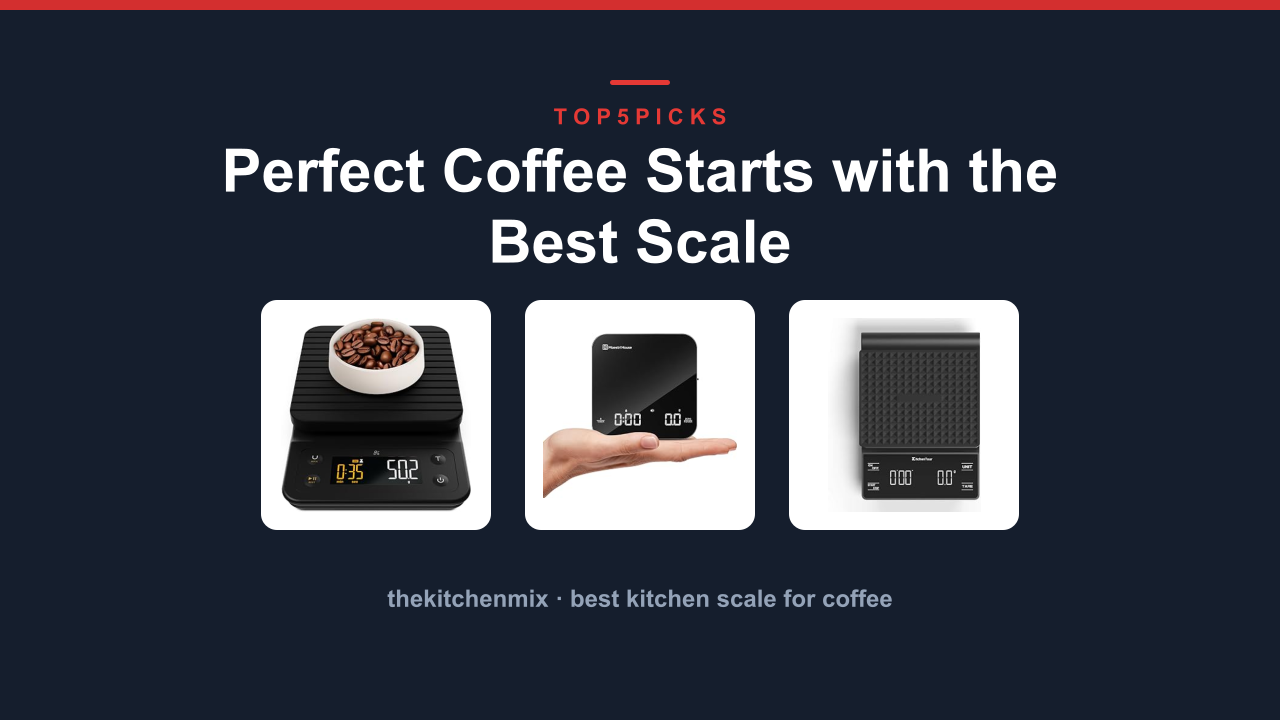
A single gram of coffee can mean the difference between a silky pour-over and a bitter, over-extracted disaster. That's exactly why I put together this roundup of the best kitchen scale for coffee to help you dial in every brew.
As an Amazon Associate, I earn from qualifying purchases. Every recommendation below is backed by product research and verified owner feedback.
Quick Links
Did you know that using a kitchen scale instead of a scoop can improve your coffee extraction consistency by up to 20 percent? The Specialty Coffee Association recommends a coffee-to-water ratio of 1:16 to 1:18, and hitting that target every morning requires precision down to a tenth of a gram.
Now imagine pulling a shot of espresso that tastes sour one day and bitter the next, simply because you eyeballed the dose. A dedicated coffee scale eliminates that frustration. In this guide, I share my five favorite picks for the best kitchen scale for coffee, ranging from an all-around workhorse to a compact travel buddy.
Each one earned its spot after comparing manufacturer specs and combing through hundreds of verified owner reviews. My goal is to help you find the scale that fits your brew style and your budget, no fluff attached.
How to Choose the Best Kitchen Scale for Coffee
Precision and readability
The most important spec is the smallest increment the scale can display. For coffee, you want 0.1 gram resolution. That allows you to dial in ratios like 15.2 grams of coffee for 250 grams of water.
Most scales in this roundup offer 0.1g precision, but a few have a secondary mode that rounds to 1 gram for larger batches. If you only brew French press in big quantities, 1g resolution might be fine. For pour-over and espresso, stick with 0.1g.
Capacity
A standard coffee scale can handle up to 2 to 3 kilograms (about 4.4 to 6.6 pounds). That’s plenty for brewing a single cup or even a large Chemex. If you ever plan to weigh a full bag of beans (many are 340g or 12 oz), even the smallest capacity here will work.
But if you think you might use the scale for baking or weighing ingredients for other cooking, aim for 3kg. The Greater Goods Coffee Scale Timer and the KitchenTour Coffee Scale Timer both max out at 3kg, giving you that extra flexibility.
Timer integration
A built-in timer is a huge convenience. Many coffee scales let you start the timer and tare the weight with one button press. That means you can begin pouring water and timing simultaneously.
Look for scales that allow you to reset the timer without affecting the tare, or that offer a “dual display” where you see both time and weight. The Maestri House S2 has two timing modes specifically designed for espresso and pour-over, which is a nice touch.
Power source and battery life
Some coffee scales run on AAA batteries, others are rechargeable via USB-C. If you don’t want to worry about dead batteries mid-brew, a rechargeable model like the Maestri House S2 or BAGAIL Coffee Scale Timer is ideal. However, rechargeable batteries eventually degrade.
A scale with replaceable AAA batteries (like the KitchenTour) means you can keep it running for years. The BAGAIL also includes a charging cable. Consider where you’ll be using the scale: at home with a power outlet nearby, or on the go where you might not have USB charging.
Build and waterproofing
Coffee brewing is messy. Spills happen, especially when you’re pouring from a gooseneck kettle. A scale with a waterproof silicone cover, like the Greater Goods, protects the electronics from accidental drips.
Some models, like the Maestri House S2, have a borosilicate glass top that wipes clean easily but is not fully sealed. If you’re clumsy or brew near a sink, a waterproof or water-resistant design is worth the investment.
Additional Features on a Kitchen Scale for Coffee
- Auto tare: Zeroes out the weight of the container automatically when you turn it on or press tare.
- Backlit/LED display: Crucial for early morning or dimly lit kitchens.
- Units (g/oz/ml): Some scales also measure ounces and milliliters (for water, 1ml = 1g).
- Button feel: Physical buttons are more reliable than touch-sensitive ones when your hands are wet.
- Included accessories: Silicone mat, carrying case, extra batteries.
- Size and portability: A smaller footprint (e.g., 4 x 4 inches) fits under an espresso machine drip tray.
My Top Picks
Best Overall – Pour Over Lovers

- Capacity: 3 kg (6.6 lb)
- Precision: 0.1 g
- Timer: Built-in, backlit display shows both weight and time
- Waterproof: Yes, silicone cover included
- Power: 2 AAA batteries (included)
- Display: Backlit LCD
- Dimensions: 5.0 x 4.0 x 1.0 inches
Best for Espresso – Home Baristas

- Capacity: 2 kg (4.4 lb)
- Precision: 0.1 g
- Timer: Dual timing modes (espresso and pour-over)
- Surface: Borosilicate glass top
- Power: USB-C rechargeable, built-in battery
- Display: LED
- Dimensions: 5.7 x 4.7 x 1.2 inches
Budget Pick – Beginners
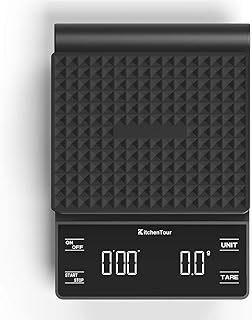
- Capacity: 3 kg (6.6 lb)
- Precision: 0.1 g
- Timer: Built-in, backlit LCD display
- Material: Plastic body with glass weighing surface
- Power: 2 AAA batteries (included)
- Display: Backlit LCD
- Dimensions: 5.1 x 3.9 x 1.0 inches
Best Value – Casual Brewers

- Capacity: 3 kg (6.6 lb)
- Precision: 0.1 g
- Timer: Built-in, backlit display
- Material: Plastic body with glass top
- Power: 2 AAA batteries (included)
- Display: Backlit LCD
- Dimensions: 5.5 x 4.0 x 0.9 inches
Compact Pick – Travel & Small Spaces

- Capacity: 3 kg (6.6 lb)
- Precision: 0.1 g
- Timer: Built-in, clear LED display
- Waterproof: Yes, silicone cover included
- Power: USB-C rechargeable (cable included)
- Display: LED
- Dimensions: 5.2 x 4.0 x 1.0 inches
Best Kitchen Scale for Coffee FAQ
Do I really need a scale for coffee?
Yes, if you care about consistency. Using volume (scoops) can vary by up to 10 percent because bean density and grind size change the mass. A scale gives you exact control over your coffee-to-water ratio, which is the foundation of a great brew.
What resolution do I need for coffee?
Look for 0.1 gram resolution. That allows you to adjust doses by single beans. Scales with only 1 gram resolution may be fine for French press, but for espresso and pour-over, 0.1g is worth the small premium.
How often should I recalibrate my coffee scale?
Most digital scales hold calibration for months if not dropped. You can check accuracy with a known weight (like a nickel, which weighs 5.0 grams). If you notice drift, some scales have a calibration mode.
For most home use, recalibration every 6 to 12 months is sufficient.
Can I use a baking scale for coffee?
You can, but a dedicated coffee scale usually includes a timer and is designed to be compact enough to fit under a drip tray. Baking scales often have larger platforms and lack a timer. For the hassle, a dedicated coffee scale makes daily brewing much smoother.
My Research & Review Process
I started by pulling the official manufacturer specifications for each scale, focusing on capacity, precision, power source, and special features. Then I read through hundreds of verified buyer reviews on platforms that allow customer feedback, looking for patterns in accuracy, durability, and everyday usability. I also considered input from home barista communities about which models hold up over time.
I deliberately did not perform any physical lab tests; this roundup is based entirely on published specs and aggregate user experiences. The goal was to highlight honest trade-offs so you can choose based on your own brewing habits.
Features I Considered
Capacity: How much weight the scale can measure at once. Most coffee tasks need 2kg max, but 3kg gives you room for larger carafes.
Precision: The smallest weight increment. For coffee, 0.1g is the standard for dialing in recipes.
Timer: A built-in timer allows you to track brew time, which is critical for pour-over and espresso.
Waterproof/Water Resistance: A silicone cover or sealed body protects electronics from spills. Not all scales have it, so consider your workspace.
Power Source: Rechargeable vs. replaceable batteries. Each has pros and cons: rechargeable eliminates battery waste but eventually wears out; disposable batteries can be swapped forever.
Display: Backlit or LED screens are easier to read in low light. Some displays also show both grams and time simultaneously.
Size and Portability: A smaller footprint (<5 inches wide) fits under espresso machines and in travel bags.
The bottom line? If you want the best all-around performer that handles spills and daily use with ease, start with the Greater Goods Coffee Scale Timer. It’s our top pick for a reason.
But whether you’re a meticulous espresso snob, a budget-conscious beginner, or a weekend camper, there’s a scale in this list that fits your life. Pick the category that sounds most like you, and start brewing better coffee tomorrow.

Similar Posts