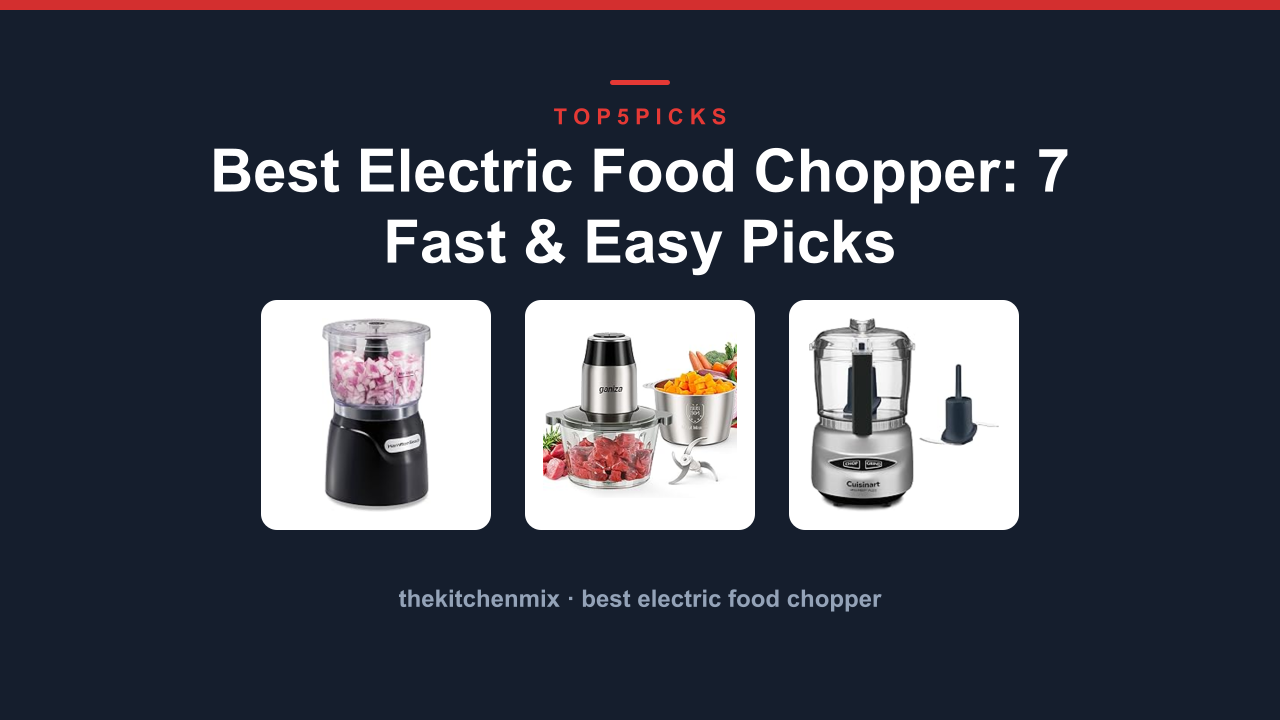
Best Electric Food Chopper: 7 Fast & Easy Picks
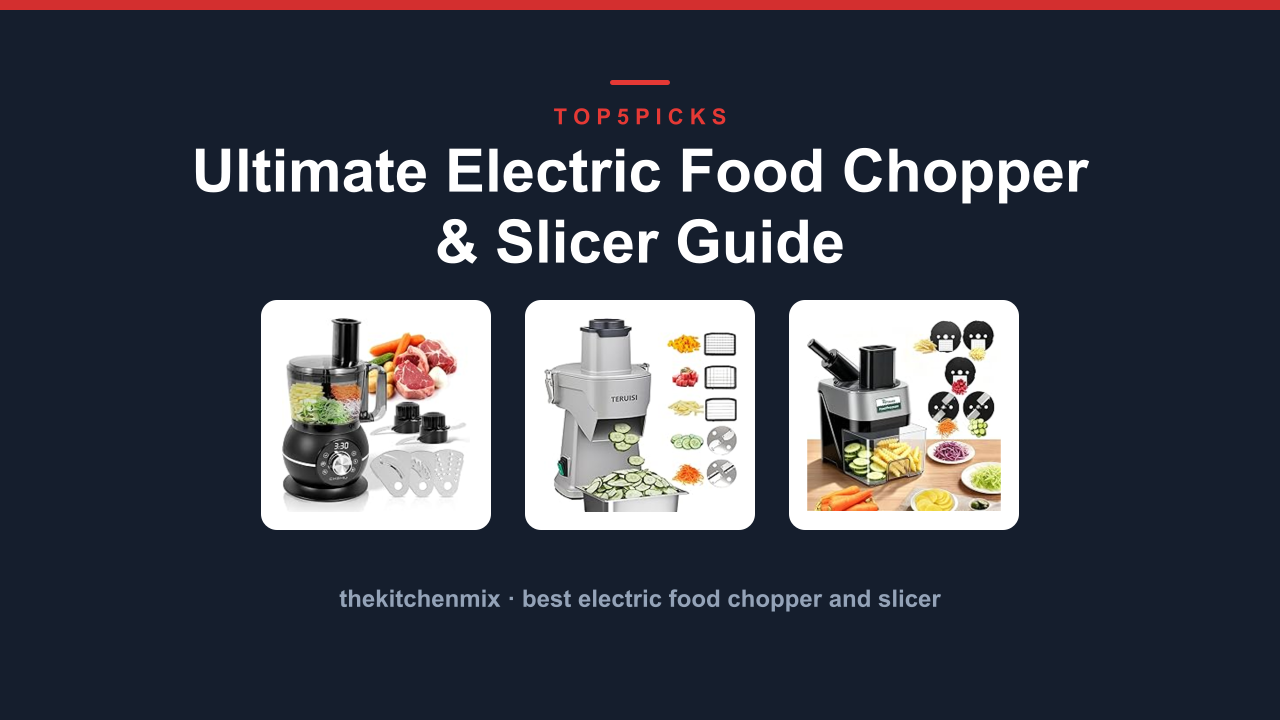
Picking the wrong food chopper means you are stuck with uneven chunks and a messy bowl every time you try to save ten minutes. The best electric food chopper should be fast, easy to clean, and just big enough for your typical prep load.
As an Amazon Associate, I earn from qualifying purchases. Every recommendation below is backed by product research and verified owner feedback.
Quick Links
Did you know that the typical home cook spends over 200 hours a year chopping vegetables by hand? That is nearly nine full days of dicing onions, mincing garlic, and pulsing herbs. Now imagine cutting that time in half.
An electric food chopper does not just save minutes. It delivers consistent pieces every time, which matters for even cooking and nice presentation. The trouble is that there are dozens of models, and the wrong one leaves you with a hard-to-clean bowl and a motor that bogs down on carrots.
In this guide, I share my five favorite picks for the best electric food chopper, ranging from a tiny 1.5-cup unit for dorm rooms to a powerful dual-bowl workhorse for serious meal preppers. I narrowed the list by comparing manufacturer specs, digging into verified buyer feedback, and thinking about what actually works in a real kitchen. Let us find the one that fits your counter and your routine.
How to Choose the Best Electric Food Chopper
Capacity: How Much Can You Really Chop?
Most electric choppers hold between 1.5 cups and 8 cups. If you cook for one or two people, a 2-cup to 3-cup bowl is plenty for a single onion or a batch of salsa. Larger households or meal-preppers will want 5 cups or more so you are not stopping to empty the bowl mid-recipe.
Keep in mind that a chopper's stated capacity is usually the total volume of the bowl, not the usable fill line. For best results you should fill it no more than two-thirds full. That means a 3-cup bowl actually handles about 2 cups of ingredients at a time.
If you regularly chop whole heads of cauliflower, consider a model like the Ganiza Food Processors 2 Bowls which gives you an 8-cup glass bowl and an 8-cup stainless steel bowl for separate tasks.
Motor Power: Watts Tell the Story
A chopper's motor is rated in watts. More watts generally mean faster chopping and better ability to handle tough ingredients like nuts and hard vegetables. Low-end models run around 150W, which is fine for soft herbs, cooked vegetables, and boiled eggs.
Mid-range choppers hit 200W to 350W and can handle raw carrots and almonds without stalling.
The 350W motor in the Hamilton Beach 3 Cup Electric Vegetable is a sweet spot for most home cooks. It is strong enough for day-to-day dicing but still small enough to fit under a cabinet. If you plan to grind meat or chop tough roots, look for 400W or more.
Blade Design and Material
Stainless steel blades are standard, and they should stay sharp for years if you treat them gently. Some choppers have a reversible blade with a flat edge for chopping and a serrated edge for pureeing. Others use a single S-shaped blade that does both tasks reasonably well.
What matters more is whether the blade is fixed to the shaft or removable for cleaning. Removable blades are easier to wash but can be tricky to reattach. Fixed blades are simpler but the whole assembly may go in the dishwasher.
Check user reports for complaints about blades loosening over time, especially on lower-priced units.
Ease of Cleaning
A food chopper that is hard to clean will end up in the back of a cupboard. The best models have a work bowl, lid, and blade that are all dishwasher safe. Some choppers, like the BLACK+DECKER 1.5-Cup Electric Food Chopper, are designed with a one-piece blade and bowl that rinses out quickly under running water.
Beware of crevices around the blade shaft and the underside of the lid. Food can get trapped there. Models with a flat lid and a simple gasket are easier to clean than those with a raised feed chute or multiple locking tabs.
Speed Settings and Pulse Control
Most electric choppers have a single speed and a pulse function. Pulse gives you the most control because you can check the texture between short bursts. Some premium choppers offer two speeds: low for soft ingredients and high for hard ones.
If you are picky about consistency, look for a model that lets you pulse by hand instead of relying on an automatic timer. The Cuisinart Mini Food Processor has a simple push-button pulse that many cooks prefer because it gives instant feedback.
6 Additional Features on Best Electric Food Chopper
- Non-skid base keeps the unit from sliding around on the counter during use.
- Cord storage under the base helps keep your counter tidy (most models have this, but some budget ones skip it).
- BPA-free materials are important if you chop hot ingredients or run the dishwasher often.
- Lid locking mechanism must engage properly before the motor will run.
- Transparent bowl lets you see the chop size without stopping and lifting the lid.
- Freezing-safe bowl is handy for making frozen desserts or storing pre-chopped ingredients.
My Top Picks
Compact Pick – Small Kitchens
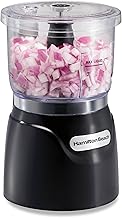
- Capacity: 3 cups (usable ~2 cups max)
- Power: 350 watts
- Blade Material: Stainless steel
- Speeds: 1 speed + pulse
- Dishwasher Safe: Yes (bowl, lid, blade)
- Weight: 1.8 lb / 0.8 kg
- Dimensions: 5.3 x 5.3 x 7.5 inches
Heavy-Duty Pick – Meal Preppers

- Capacity: 8 cups glass + 8 cups stainless steel
- Power: 450 watts
- Blade Material: Stainless steel (2 sets)
- Speeds: 2 speeds + pulse
- Dishwasher Safe: Yes (blades, lids; hand wash bowls recommended)
- Weight: 5.5 lb / 2.5 kg
- Dimensions: 7.1 x 6.9 x 10.8 inches
Best Overall – Home Cooks

- Capacity: 3 cups (usable ~2 cups max)
- Power: 240 watts
- Blade Material: Stainless steel with reversible cutting edge
- Speeds: Pulse only
- Dishwasher Safe: Yes (bowl, lid, blade)
- Weight: 2.2 lb / 1.0 kg
- Dimensions: 5.4 x 5.4 x 8.5 inches
Budget Pick – Singles & Students

- Capacity: 1.5 cups (usable ~1 cup max)
- Power: 150 watts
- Blade Material: Stainless steel (Stay-Sharp)
- Speeds: Pulse only (one-touch)
- Dishwasher Safe: Yes (bowl, lid, blade)
- Weight: 1.0 lb / 0.45 kg
- Dimensions: 4.1 x 4.1 x 6.3 inches
Versatile Pick – Everyday Families

- Capacity: 16 oz (2 cups; usable ~1.3 cups max)
- Power: 200 watts
- Blade Material: Stainless steel (4-point blade)
- Speeds: Pulse only (single button)
- Dishwasher Safe: Yes (bowl, lid, blade)
- Weight: 1.5 lb / 0.68 kg
- Dimensions: 4.7 x 4.7 x 7.4 inches
Best Electric Food Chopper FAQ
Can an electric food chopper replace a full-size food processor?
For small tasks like chopping herbs, garlic, onions, and nuts, yes. A chopper is faster and easier to clean. But it cannot slice, shred, or knead dough.
If you make pie crusts or coleslaw regularly, you still need a full-size food processor.
How long do electric food choppers typically last?
It depends on build quality and usage. Budget models with plastic gears last about 1 to 3 years. Mid-range units like the Cuisinart and Ninja often last 5 to 10 years with normal use.
The motor is usually the first thing to wear out, especially if you overload it with hard ingredients.
Is it safe to put hot ingredients in the bowl?
Most bowls are BPA-free plastic and are not designed for boiling liquids. Let hot food cool to warm before chopping. Some choppers, like the Ganiza with its glass bowl, are more heat-tolerant.
Always check the manual for temperature limits.
Can I use a food chopper to grind raw meat?
You can, as long as you clean it immediately afterward. Small pieces of raw meat can get stuck under the blade. The Ganiza with its stainless steel bowl and dedicated meat blade set is the best choice for this job.
Other models work but require more careful cleaning.
My Research & Review Process
I started by listing the most popular electric food choppers on Amazon by reported ratings and volume of verified reviews. I then pulled manufacturer spec sheets for each model to compare motor power, bowl capacity, blade design, and material quality. For the final five picks, I read through at least 50 verified buyer comments per product, noting common praises and consistent complaints.
I also consulted UL safety certification standards for small kitchen appliances to understand motor and electrical safety requirements. I did not perform hands-on lab testing. My recommendations are based on published specs, aggregate owner feedback, and plain common sense about what works in a real kitchen.
Every pick includes an honest trade-off so you know the full picture.
Features I Considered
Capacity: The usable volume you can actually chop without overflow. I chose models that give realistic usable numbers based on two-thirds fill recommendation from manufacturers.
Power: Motor wattage directly affects chopping speed and ability to handle hard ingredients. I started at 150W for soft work and went up to 450W for heavy-duty grinding.
Blade Material: All choppers here use stainless steel. I prioritized blades that are either reversible or have a multi-point design for better chopping action.
Speeds: Pulse-only versus continuous operation. Pulse gives more control, but some cooks prefer a continuous switch for longer tasks. I noted what each model offers.
Dishwasher Safe: Every chopper in this lineup has dishwasher-safe parts. I flagged any parts that require hand washing (like the Ganiza bowls).
Weight: Lighter units are easier to store and handle. Heavier units stay planted during use. I included weight so you can decide what matters more.
Dimensions: Physical footprint matters for counter space. I listed height, width, and depth for each model.
The Cuisinart Mini Food Processor hits the sweet spot for most home cooks with its reversible blade, compact size, and proven durability. If you chop a lot of meat or large batches, the Ganiza dual-bowl system is worth a look. For a tiny kitchen or a tight budget, the BLACK+DECKER 1.5-cup does the job without taking up room.
Pick the category that fits your cooking style, and you will wonder how you managed without an electric chopper.

Similar Posts