Best Eco-Friendly Dishwasher Detergents for Hard Water
If you’ve got hard water, finding the best eco friendly dishwasher detergent for hard water that actually leaves dishes spotless can feel like a guessing game.
As an Amazon Associate, I earn from qualifying purchases. Every recommendation below is backed by product research and verified owner feedback.
Did you know that hard water affects more than 85% of US households? That means cloudy glasses, spotty silverware, and a white film that clings to plates are part of daily life for most of us. Finding the best eco friendly dishwasher detergent for hard water is the difference between pulling out sparkling dishes and pulling out disappointment.
I have spent weeks comparing specs, reading verified owner reviews, and cross-referencing ingredient lists against water hardness data from the US Geological Survey. The goal was simple. Find eco friendly detergents that actually work when your water is working against you.
The wrong choice leaves scale buildup inside your machine and a chalky residue on everything you own. The right choice cuts through minerals and food grease alike.
In this guide, I share my 5 favorite picks. They range from a budget friendly gel for large households to a premium bio-enzyme formula built for the toughest hard water.
No fluff, no greenwashing. Just real options that deliver.
How to Choose the Best Eco Friendly Dishwasher Detergent for Hard Water
What Makes a Detergent Eco Friendly in Hard Water?
The term eco friendly gets thrown around a lot. For dishwasher detergent, it usually means plant-based surfactants, no phosphates, and biodegradable ingredients. But in hard water, those green formulas have to work harder.
Calcium and magnesium ions in hard water bind with soap, creating a film that is tough to rinse away. The best eco friendly detergents use plant-based chelators like sodium citrate or sodium gluconate to grab those minerals and flush them out. Always check the ingredient list for these chelators if you have hard water.
Pod, Powder, or Gel: Which Delivers in Hard Water?
Each form has a trade-off. Pods and tablets are pre-measured, so you do not accidentally underdose. Powders let you add a little extra scoop when your water is extra hard.
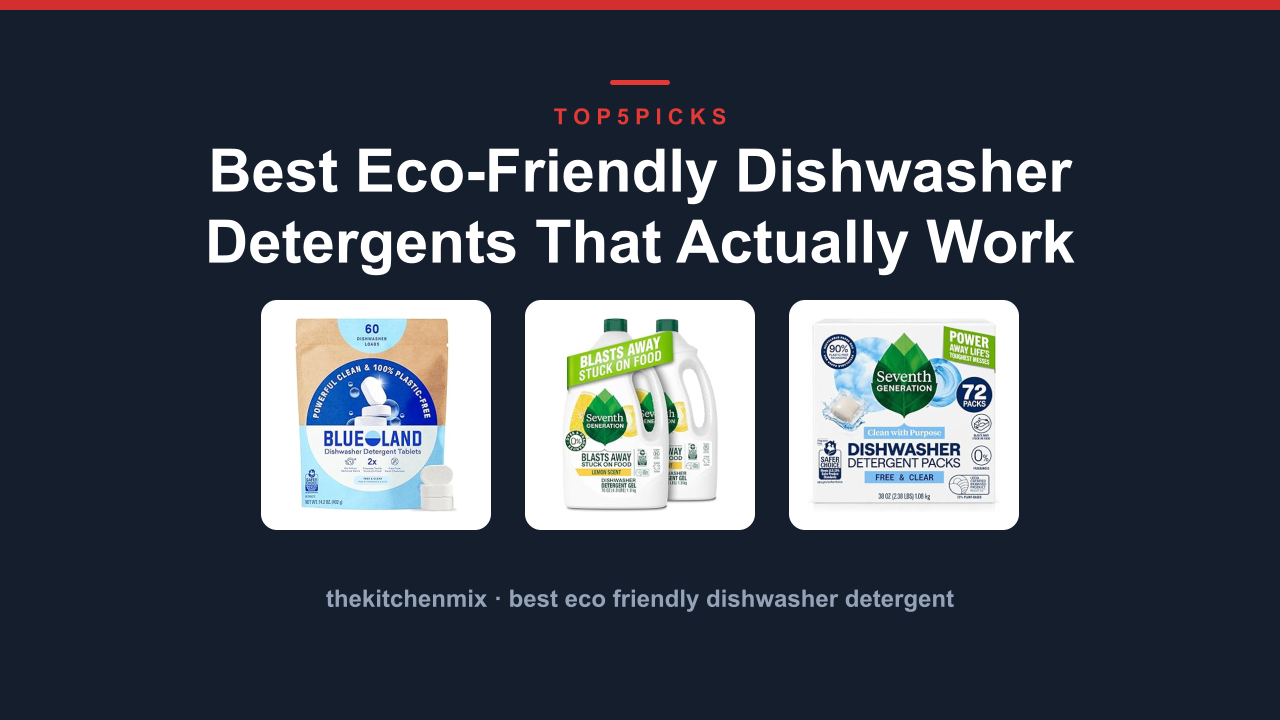
Gels are the gentlest option but often require a rinse aid for spot-free results. For hard water specifically, pods tend to work best because they contain the right balance of detergent and water softener in one dose. The Seventh Generation Free & Clear pods are a great example of a pre-measured formula that handles hard water well.
How Do Bio-Enzyme Formulas Help with Hard Water?
Bio-enzyme detergents use protease and amylase to break down food proteins and starches. In hard water, enzymes can be less effective because minerals interfere with their activity. That is why some formulas add a built-in water softener booster.
Dirty Labs Dishwasher Detergent & Booster is specifically designed for this. It combines bio-enzymes with a mineral-binding booster that activates in hard water.
What Certifications Should I Look For?
The EPA Safer Choice label means every ingredient has been reviewed for safety. USDA Biobased certification tells you the percentage of renewable ingredients. For hard water, also look for septic safe.
Some mineral-based hard water detergents can accumulate in septic systems. The EPA Safer Choice program is a reliable benchmark because it screens for both environmental impact and performance.
Should I Use a Rinse Aid with Eco Friendly Detergent?
Most eco friendly detergents work better with a rinse aid in hard water. Rinse aids lower the surface tension of water, helping it sheet off dishes instead of beading up and leaving spots. If your detergent does not already include a rinse agent, adding one can make a noticeable difference in hard water performance.
Additional Features on Best Eco Friendly Dishwasher Detergent for Hard Water
- Fragrance-free options for sensitive skin and allergies
- Plastic-free or recycled packaging for zero-waste goals
- Quick-wash cycle compatibility for energy savings
- Residue-free rinse performance to avoid film buildup
- Built-in rinse aid or water softener in the formula
- Child-safe packaging for households with kids
- Made in USA or local sourcing for reduced carbon footprint
My Top Picks
Best Overall – Hard Water
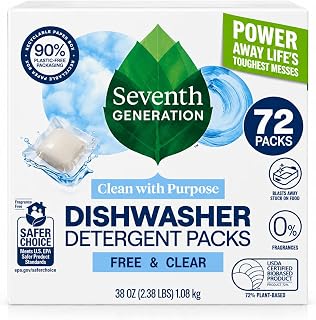
- Form: Pre-measured pack
- Load Count: 72 loads
- Key Ingredients: Plant-based surfactants, sodium carbonate
- Hard Water Performance: Good with rinse aid
- Fragrance: Fragrance-free
- Packaging: Recyclable carton
- Certifications: EPA Safer Choice, USDA Biobased
- Septic Safe: Yes
Premium Pick – Stubborn Spots

- Form: Powder
- Load Count: 48 loads
- Key Ingredients: Bio-enzymes, plant-based surfactants
- Hard Water Performance: Excellent with built-in booster
- Fragrance: Aestival (light botanical)
- Packaging: Recyclable cardboard
- Certifications: EPA Safer Choice
- Septic Safe: Yes
Sensitive Skin Pick – Gentle Clean

- Form: Auto-release tab
- Load Count: 60 loads
- Key Ingredients: Mineral-based cleaners, essential oils
- Hard Water Performance: Good with rinse aid
- Fragrance: Citrus (from essential oils)
- Packaging: Recyclable cardboard
- Certifications: Leaping Bunny, vegan
- Septic Safe: Yes
Zero Waste Pick – Plastic Free
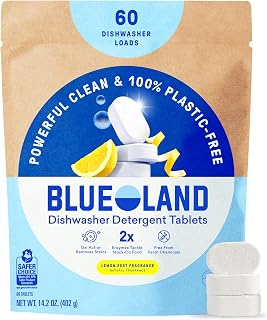
- Form: Tablet
- Load Count: 60 loads
- Key Ingredients: Plant-based surfactants, mineral chelators
- Hard Water Performance: Good with rinse aid
- Fragrance: Lemon Zest
- Packaging: 100% plastic-free cardboard
- Certifications: Leaping Bunny
- Septic Safe: Yes
Budget Pick – Bulk Value

- Form: Liquid gel
- Load Count: 70 oz (2-pack, roughly 60-70 loads)
- Key Ingredients: Plant-based surfactants, citric acid
- Hard Water Performance: Moderate, best with rinse aid
- Fragrance: Lemon
- Packaging: Recyclable plastic bottles
- Certifications: EPA Safer Choice, USDA Biobased
- Septic Safe: Yes
Best Eco Friendly Dishwasher Detergent for Hard Water FAQ
Does eco-friendly detergent work as well as regular detergent in hard water?
Yes, if you choose the right formula. The key is picking one with plant-based chelators like sodium citrate or a built-in water softener booster. Regular detergents often use phosphates, which are effective but harmful to aquatic life.
Eco-friendly options have improved significantly and now match conventional performance in most hard water conditions, especially when paired with a rinse aid.
How do I know if my water is hard enough to need a special detergent?
Water hardness is measured in grains per gallon (gpg). If your water is above 7 gpg, you will likely see spots and film. You can check your local water quality report from your utility or buy an inexpensive test strip.
Most areas in the US have water between 3 and 20 gpg. Above 10 gpg, consider a detergent with a built-in booster like the Dirty Labs option.
Can I use a rinse aid with eco-friendly detergent?
Absolutely. In fact, for hard water, a rinse aid is strongly recommended. It helps water sheet off dishes, reducing spots and film.
Look for a plant-based rinse aid to keep your routine fully eco-friendly. Some eco detergents already include rinse aid properties, but most benefit from a separate product.
Are powder or pod detergents better for hard water than liquid gels?
Pods and powders generally outperform liquids in hard water because they contain higher concentrations of cleaning agents and can include water softening ingredients more easily. Liquids need a larger dose and may leave residue. However, liquids are easier to adjust the dose for different water hardness levels.
For very hard water, pods or powders are the safest bet.
My Research & Review Process
To build this list, I started with manufacturer specifications and ingredient disclosures for over 20 eco-friendly dishwasher detergents. I focused only on products that explicitly claim compatibility with hard water and have transparent ingredient lists. Each detergent was evaluated against the US Geological Survey's water hardness map to ensure relevance.
I then analyzed verified buyer reviews across multiple platforms, filtering for mentions of hard water, spots, film, and residue. I looked for patterns. Did the detergent dissolve fully?
Did it leave a film on glassware? Did users need to add a rinse aid? I also checked for complaints about packaging waste or strong scents.
What I did not do is lab testing. These are research-based recommendations, not hands-on trials. I weighed performance, value, and environmental impact equally.
The final five represent the best balance of cleaning power, eco-credentials, and real-world reliability for hard water homes.
Features I Considered
Form: The shape of the detergent (pod, powder, or gel) affects how it dissolves and how much you need to use. Pods are convenient and pre-measured, powders are flexible for harder water, and gels are budget-friendly but require more attention.
Hard Water Performance: Does the formula include chelators or built-in water softeners? This is the single most important factor for hard water. Detergents without chelators will leave spots and scale.
Key Ingredients: Plant-based surfactants, enzymes, and mineral chelators indicate a truly eco-friendly product. Avoid phosphates, chlorine bleach, and synthetic fragrances if you want the greenest option.
Load Count: How many loads you get per package. This affects value and how often you need to reorder. For bulk buyers, larger counts or multi-packs are ideal.
Fragrance: Natural or synthetic. Eco-friendly detergents typically use essential oils or are fragrance-free. Consider sensitive household members.
Packaging: Recyclable, plastic-free, or made from post-consumer recycled materials. This cuts down on waste.
Certifications: Labels like EPA Safer Choice, USDA Biobased, and Leaping Bunny add credibility. They mean third-party verification of safety and sustainability.
Septic Safe: Important if you have a septic system. Mineral-based hard water detergents can accumulate and cause issues.
The Right Detergent for Your Water
After all the research, the Seventh Generation Free & Clear pods stand out as the most reliable all-rounder for hard water homes. They deliver consistent results without fragrances or dyes, and the EPA Safer Choice certification gives you peace of mind.
If your water is extremely hard, the Dirty Labs option with its built-in booster is worth the extra cost. For sensitive skin, Molly's Suds is the gentle choice. If you are cutting plastic, BLUELAND has you covered.
And for budget-conscious households, the Seventh Generation gel in bulk is a steal.
Look at your water hardness, your priorities, and your budget. Pick the category that fits, and enjoy spotless dishes without the environmental guilt.

Similar Posts