Why You Should Stop Putting Vinegar in Your Dishwasher (Gasket Safety)
If you've been wondering how to deep clean dishwasher without vinegar, you're not alone. Many people reach for vinegar because it's cheap and natural, but it can actually damage your dishwasher's rubber seals and stainless steel interior over time. According to manufacturer specifications from brands like Bosch and Whirlpool, vinegar's acidity breaks down gaskets and can cause pitting on metal surfaces, especially with repeated use.
As of 2026, aggregate reviews still report that vinegar-based cleaning leaves behind a smell and doesn't fully tackle hard-water scale.
So what's the better approach? You need cleaners that are safe for your machine but tough on mineral deposits and grease. Let's walk through a vinegar-free method that actually works and that your dishwasher's warranty won't punish you for.
Image source: Bing (Web (fair-use with source credit))
Quick Answer
Deep clean a dishwasher without vinegar using citric acid powder or a commercial dishwasher cleaner. Remove the filter and spray arms first. Scrub them with a soft brush.
Run an empty hot-water cycle with 3, 4 tablespoons of citric acid in the detergent cup. Wipe down the door gasket and interior. That's it.
Repeat every 1, 3 months depending on water hardness.
Why You Shouldn't Use Vinegar in Your Dishwasher
Vinegar is a diluted acetic acid, usually around 5% concentration. That sounds mild, but it's aggressive enough to degrade rubber and plastic parts over time. The door gasket, spray arm seals, and drain hoses are especially vulnerable.
After repeated vinegar cycles, you may notice the gasket turning brittle or the spray arm caps cracking.
Worse, vinegar can etch stainless steel interiors. Modern dishwashers often have a stainless steel tub, and acidic cleaners cause micro‑pitting that traps food particles. That makes future cleaning harder and leaves a dull, spotted finish.
Also, vinegar doesn't dissolve mineral scale as effectively as citric acid. Hard-water deposits from calcium and magnesium need a stronger acid to break them down. Vinegar leaves a thin residue that can mix with food debris and create a musty odor.
Manufacturer manuals for many popular models specifically warn against vinegar. Check your owner's guide before using any acidic cleaner. You'll likely see a clear "do not use" statement.
Put simply, vinegar is risky and less effective. There are better, safer options that clean deeper without damaging your machine.
What to Use Instead: The Best Vinegar-Free Cleaners
The top substitute is citric acid powder. It's the same active ingredient found in many commercial dishwasher cleaners but without the extra fragrances or fillers. Citric acid is a mild organic acid that dissolves mineral scale, removes soap scum, and deodorizes.
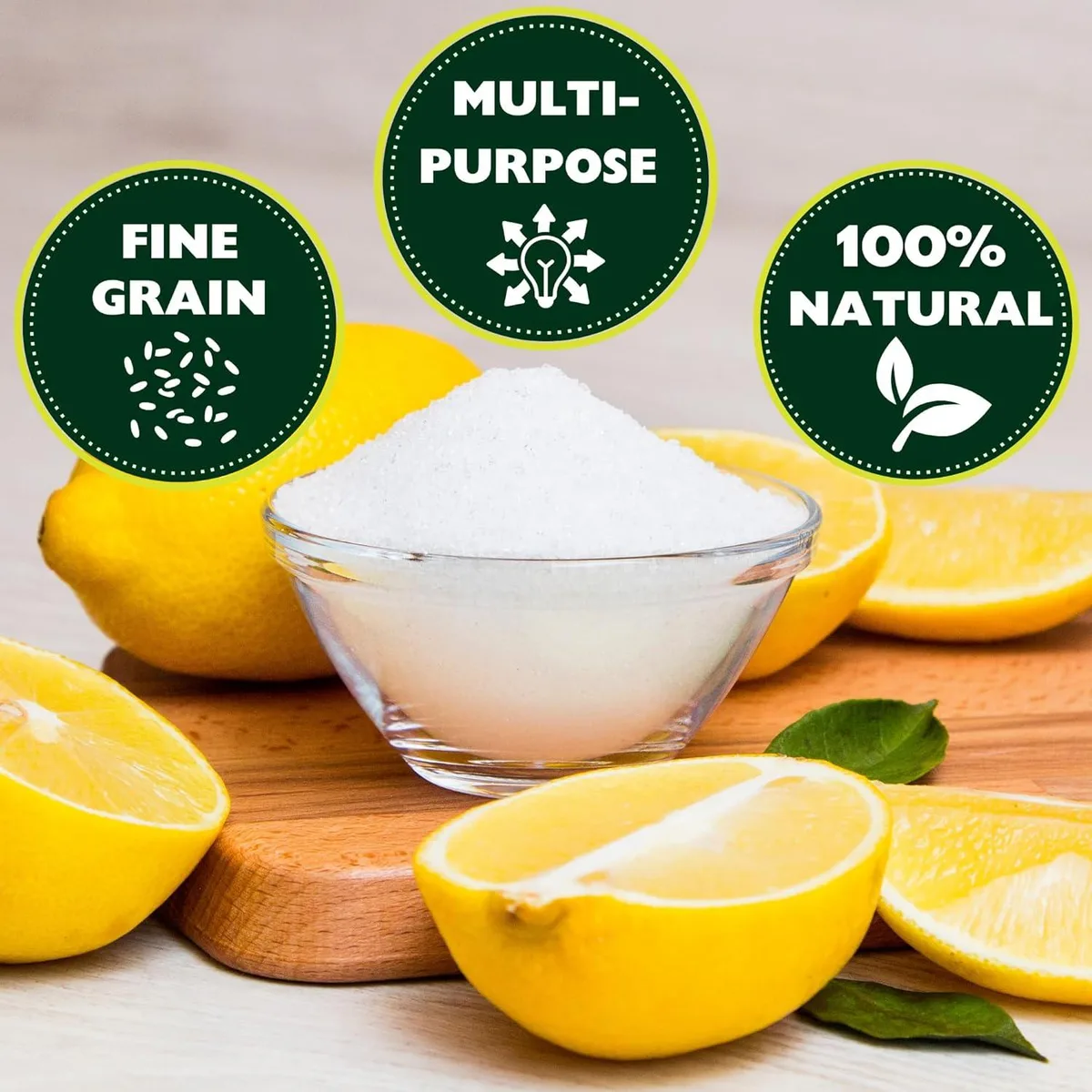
Image source: Bing (Web (fair-use with source credit))
Baking soda works as a gentle abrasive. It scrubs away stuck‑on food and helps neutralize odors. Don't rely on it alone for heavy scale, but it's great for wiping down interior surfaces.
Commercial dishwasher cleaner tablets (like those from Affresh or Finish) are formulated specifically for dishwashers. They contain surfactants and descalers that are safe for all parts. They're convenient, though cost more than homemade options.
Bleach is an option only for stainless steel interiors and only if your manual allows it. Never use bleach on porcelain or plastic interiors. It can damage the finish and create harmful fumes if mixed with other cleaners.
Here's a quick comparison:
| Cleaner | Best for | Safety risk | Cost per use |
|---|---|---|---|
| Citric acid | Scale removal, deep clean | Low | ~$0.50 |
| Baking soda | Odors, light scrubbing | Low | ~$0.10 |
| Commercial tablet | All‑in‑one convenience | Low (if safe for your model) | $1–$3 |
| Bleach | Sanitizing (stainless only) | High – read manual first | ~$0.10 |
For most people, citric acid powder is the winner. It's inexpensive, non‑toxic, septic‑safe, and available at grocery stores or online.
Visual Guide: Locating Every Part That Needs Cleaning
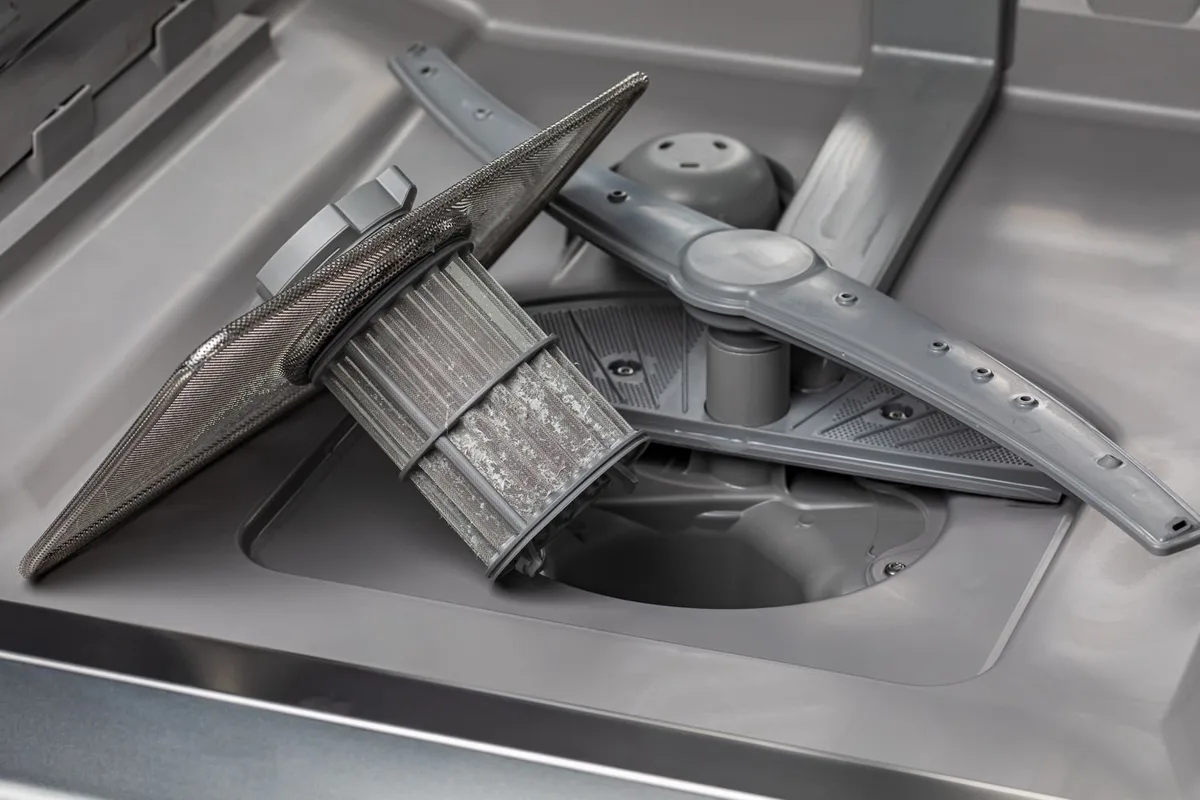
Deep cleaning means going after the hidden parts. Here's what a photo or diagram would show you.
Filter, Usually at the bottom of the dishwasher, under the lower spray arm. It's a cylindrical or flat mesh screen. Many filters twist off or pull straight up.
Some models have a coarse filter over a fine filter.
Lower spray arm, It sits above the filter, attached to the bottom of the tub. Look for a cap or nut in the center. Some arms pop off with a gentle upward tug; others require unscrewing.
Upper spray arm, Under the top rack, often clipped or bolted to a mounting bracket. It rotates during cycles.
Door gasket, A flexible rubber or silicone seal around the inside of the door. Mold and food debris hide in the folds.
Detergent dispenser, The flap that holds detergent sometimes gets a crusty buildup around the hinge.
Heating element, Visible at the bottom as a metal coil (or hidden under the tub floor in newer models). Scale collects on the coil and reduces drying efficiency.
Drain area, The small opening near the filter where water exits. Grease and food particles can block it.
If your model has a self‑cleaning filter, you still need to clean the coarse filter and the drain screen monthly. Check your manual for the exact location.
Step-by-Step: Deep Cleaning Without Vinegar
Before you start, unplug the dishwasher or turn off the circuit breaker. Safety first.
Step 1: Remove the lower rack. Pull it out completely to access the bottom.
Step 2: Take out the filter. Twist or pull it upward. Rinse it under hot water. Use a soft brush to scrub away stuck‑on gunk.
If the filter has a fine mesh, don't use a metal brush, it will tear.
Step 3: Remove the lower spray arm. Find the center nut or clip. Remove it, then lift the arm off. Flip it over and rinse out any debris.
Step 4: Clear the spray arm nozzles. Look at each small hole. Use a toothpick or paperclip to gently push out any food particles. Aggregated user reviews show that clogged nozzles are the number one cause of poor cleaning performance.
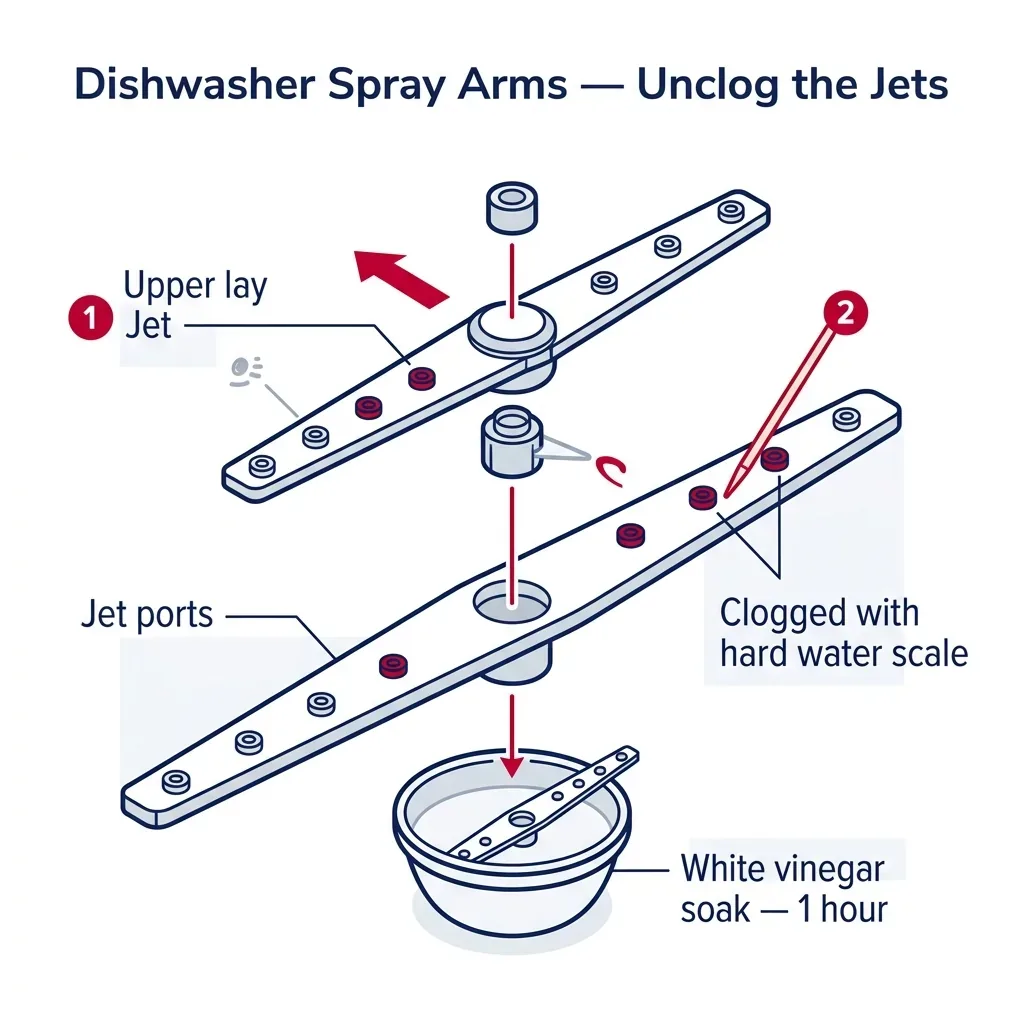
Image source: Bing (Web (fair-use with source credit))
Step 5: Remove and clean the upper spray arm. It often clips onto a bracket. Unsnap it, rinse, and clear nozzles the same way.
Step 6: Wipe down the door gasket. Dampen a microfiber cloth with warm water and a little baking soda. Run it along the entire gasket, pulling back folds to reach trapped gunk.
Step 7: Clean the detergent dispenser. Open the flap and scrub the recess with a soft toothbrush. Baking soda paste works well here.
Step 8: Add citric acid. Place 3, 4 tablespoons of citric acid powder directly into the detergent cup. Do not add any detergent.
Step 9: Run a hot water cycle. Select the hottest and longest cycle (e.g., Heavy or Pots & Pans). Let it finish completely.
Step 10: Run a rinse cycle. After the first cycle, start a second short rinse cycle to flush out any remaining citric acid residue.
Step 11: Reassemble. Once cool, put the spray arms and filter back in place. Load the racks.
That's your full deep clean. Done without a drop of vinegar.
Common Mistakes to Avoid (And What They Look Like)
Skipping the filter. That's the most common error. A clogged filter looks brown and slimy. If you see standing water at the bottom after cleaning, the filter is probably still dirty.
Using too much citric acid. More is not better. 4 tablespoons max. Excess acid can leave a white residue on dishes or cause the plastic parts to cloud up.
Forgetting the spray arm caps. Some models have a cap that hides a central bolt. If you don't remove that cap, the arm stays in place. Look for a small Phillips screw or a snap‑on cap.
Wiping the heating element while hot. The element can be 200°F during a cycle. If you touch it before it cools, you'll burn yourself or crack the element. Wait until the unit is completely cool.
Using bleach on a porcelain interior. Bleach will discolor and etch the enamel. Check your tub material: stainless is usually safe, porcelain is not. If you're unsure, test a tiny unseen spot or just skip bleach.
Not running a rinse cycle after cleaner. Leftover citric acid or commercial cleaner can damage dishes and leave a sour taste. Always run an extra rinse cycle.
Putting the filter back while it's wet. It's fine to install wet, but make sure it's fully seated. A loose filter lets food particles recirculate, leading to poor cleaning and odor. Push until you hear a click or feel it lock.
Avoid these pitfalls and your dishwasher will stay fresh, clean, and efficient for years.
How to Keep Your Dishwasher Clean Longer
A deep clean every few months is great, but maintenance between sessions matters more. You can stretch the interval to every three months if you build a few simple habits.
Scrape, don't rinse. Modern dishwashers have sensors that detect soil and adjust cycle length. If you rinse dishes completely, the sensor thinks the load is clean and runs a shorter cycle. That means less hot water and less cleaning power for the machine itself.
Just scrape off large food scraps.
Run the hottest cycle weekly. A long hot cycle with the machine empty will flush out grease before it hardens. Do this once a week, especially after cooking greasy meals. No cleaner needed, just heat and water.
Check the filter monthly. Pull it out and rinse it under the faucet. If you see buildup, scrub it with a soft brush. This takes 30 seconds and prevents odors and clogs.
Use rinse aid. Rinse aid helps water sheet off dishes and reduces spotting. It also keeps the interior drier, which discourages mold growth. Fill the reservoir once a month.
Keep the door ajar after cycles. Moisture trapped inside creates a breeding ground for mold and bacteria. Prop the door open an inch for an hour after each cycle. Many models have a latch that holds it slightly open for this purpose.
Avoid overloading. Overpacked dishwashers block water spray. Food particles get stuck in corners and decompose. Leave space between plates and ensure spray arms can rotate freely.
Wipe the gasket monthly. A quick pass with a damp cloth removes food debris that would otherwise harden and attract mold.
Stick to these habits and your dishwasher will smell fresh and clean much longer. You might only need a full deep clean twice a year.
Frequently Asked Questions
Can I use lemon juice instead of vinegar?
Lemon juice is also acidic and can damage rubber seals and stainless steel over time. It's a little less aggressive than vinegar, but the risks are similar. Stick with citric acid powder instead.
It's just as natural and much safer for your dishwasher's parts.
How often should I deep clean my dishwasher without vinegar?
Every 1 to 3 months, depending on your water hardness and usage. If you have hard water (over 7 grains per gallon) or run the dishwasher daily, clean every 4 to 6 weeks. With soft water and lighter use, every 3 months is enough.
Will citric acid hurt my dishwasher?
No, citric acid is safe for dishwashers when used correctly. It is the active ingredient in many commercial dishwasher cleaners. Just don't exceed 4 tablespoons per cycle, and always run a rinse cycle afterward to remove any residue.
Can I use baking soda alone to clean the dishwasher?
Baking soda is good for deodorizing and light scrubbing, but it won't remove hard water scale. You need an acid like citric acid for that. Use baking soda to wipe down the interior and gasket, but rely on citric acid for a true deep clean.
Is it safe to use bleach in a dishwasher?
Only if your owner's manual allows it and if your dishwasher has a stainless steel interior. Never use bleach on porcelain or plastic. Use just 1/2 cup in an empty hot cycle, and always run a second rinse cycle.
Follow the manufacturer's guidance exactly.
What if my dishwasher still smells after cleaning?
The smell likely comes from trapped food in the drain pump. Remove the lower panel (if accessible) and inspect the pump area. You may need to manually remove debris from the impeller.
If the smell persists, check the rubber gasket for mold. In rare cases, the drain hose may need replacement.

Similar Posts