Best Dual Boiler Espresso Machines for Your Home Cafe
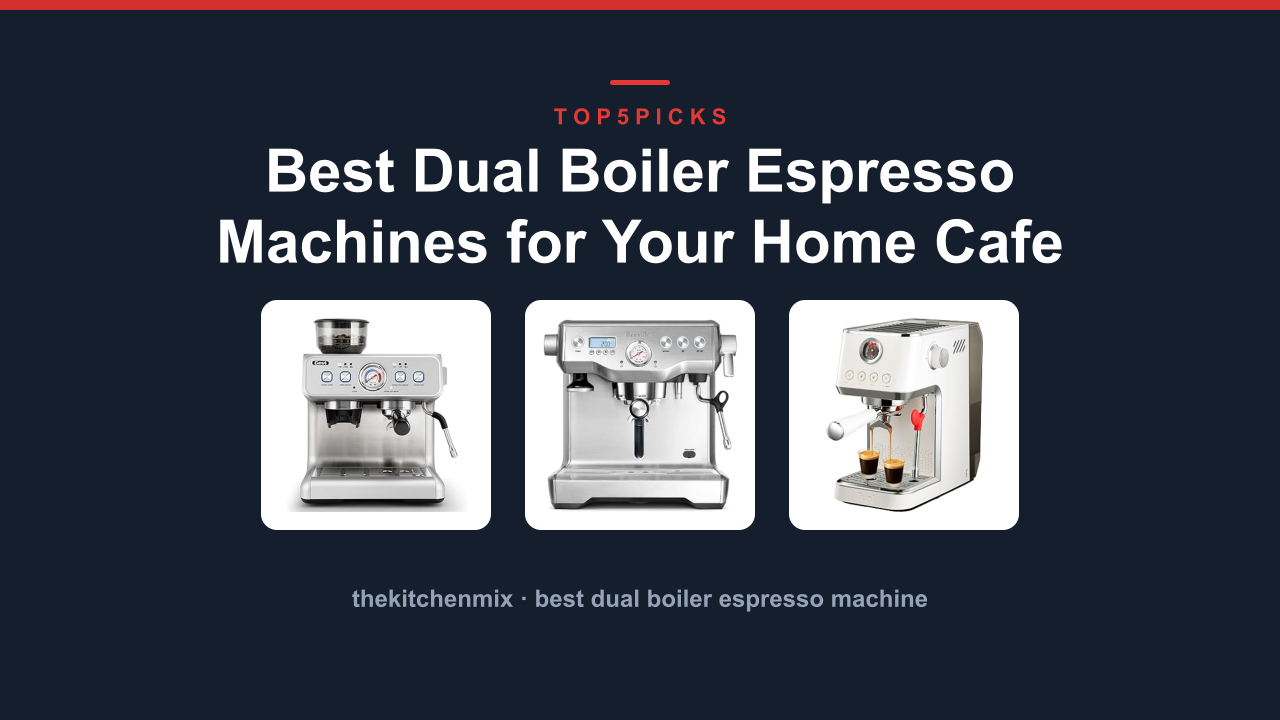
Picking the wrong espresso machine can mean burning through $15 bags of beans on watery shots while your steam wand takes forever. Now imagine nailing a perfect 25-second extraction and microfoam silky enough to pour latte art, all from one countertop machine. In this guide, I share my 5 favorite best dual boiler espresso machine picks, ranging from an all-in-one budget hero to a premium beast that will outlast your morning routine.
No fluff, just the machines that actually deliver.
As an Amazon Associate, I earn from qualifying purchases. Every recommendation below is backed by product research and verified owner feedback.
Quick Links
Did you know that a single‑boiler machine spends about 40 seconds recovering between brew and steam? That adds up to a cold latte and a test of patience. Now imagine pulling a shot at 200°F while you steam milk at 275°F at the exact same time.
That's the dual‑boiler promise.
The difference between great espresso and okay espresso often comes down to temperature stability. With two separate heating systems, you can brew and froth without any waiting. You get consistent shots, better crema, and milk texture that actually holds up for art.
In this guide, I share my 5 favorite best dual boiler espresso machine picks, ranging from the budget‑friendly Gevi that grinds and brews to the premium Tuni E2 Gen3 with PID precision. I cut through the marketing so you can pick the one that matches your counter space, budget, and skill level.
How to Choose the Best Dual Boiler Espresso Machine
Boiler Type and Build Quality
A true dual‑boiler machine has one stainless steel boiler for brew water (typically 0.6 to 1.5 liters) and a separate boiler for steam. This design keeps brew temperature within 1°F of your target, even when you steam back to back. Look for boilers made from 304 stainless steel.
Cheaper aluminum boilers can corrode faster and throw off taste.
Pressure and Pump System
Most dual‑boilers use a vibratory pump rated at 15 to 20 bars. The sweet spot for extraction is 9 bars at the group head. A 20‑bar pump like the one in the Tuni E2 Gen3 gives headroom, but the machine should have an over‑pressure valve (OPV) to regulate down.
Without an OPV, you risk channeling and bitter shots.
Temperature Control
Proportional‑Integral‑Derivative (PID) controllers are the gold standard. A PID holds brew temperature within 0.5°F. The Breville BES920XL uses a pre‑infusion system plus PID to mimic the gradual pressure ramp of commercial machines.
If you're serious about consistency, PID is non‑negotiable. Machines without it rely on pressure‑stat control, which can drift a few degrees.
Portafilter Size and Accessories
Stick with a 58mm commercial‑size portafilter. That's the same size used in cafes, so you have endless options for baskets, tampers, and bottomless portafilters. The Gevi Dual Boiler comes with a 58mm portafilter and a built‑in burr grinder, which saves counter space.
Smaller 54mm portafilters (like some older Breville models) limit upgradability.
Steam Power
A good steam boiler should deliver dry, powerful steam for at least 60 seconds without running out of pressure. Look for a steam wand with 4 to 6 holes. The Chefman Crema Deluxe has a double boiler design that lets you steam and brew simultaneously, but some owners note the steam pressure is lower than the Breville or Tuni.
If you make multiple milk drinks in a row, prioritize a larger steam boiler (1 liter or more).
Additional Features on Best Dual Boiler Espresso Machine
- Pre‑infusion, Soaks the coffee puck at low pressure before full extraction. Reduces channeling.
- Built‑in grinder, Saves money and counter space. The Gevi and Chefman include one. Most Breville models require a separate grinder.
- Hot water dispenser, Useful for Americanos and pre‑heating cups.
- Programmable shot volumes, Lets you save single and double shot sizes.
- Water filtration, Some machines include a removable charcoal filter. Hard water will ruin a boiler quickly.
- Cup warming tray, A simple but nice touch for keeping espresso hot.
To see how these factors play out on real picks, compare the Gevi Dual Boiler Espresso Machine Built‑In, Breville BES920XL Dual Boiler Espresso Machine and the Tuni E2 Gen3 Dual Boiler Espresso below.
My Top Picks
Budget Pick – Home Baristas

- Boiler Type: Dual 304 stainless steel boilers
- Pressure: 20 bar vibratory pump
- Portafilter Size: 58mm commercial
- Grinder Type: Built‑in conical burr, 31 grind settings
- Steam Wand: Stainless steel, 360° rotation
- Water Tank Capacity: 2.5 L (removable)
- Dimensions: 13.8 x 12.2 x 15.7 inches
- Weight: 22.5 pounds
Best Overall – Semi-Pro Home Users

- Boiler Type: Dual stainless steel boilers (brew + steam)
- Pressure: 15 bar vibratory pump with OPV
- Portafilter Size: 58mm commercial
- Grinder Type: Sold separately (recommend Smart Grinder Pro)
- Steam Wand: Stainless steel, 360° articulation, 2‑hole tip
- Water Tank Capacity: 2.1 L (removable, side‑fill)
- Dimensions: 14.5 x 14 x 16 inches
- Weight: 27 pounds
Premium Pick – Enthusiasts

- Boiler Type: Dual boilers with PID NTC temperature control
- Pressure: 20 bar vibratory pump
- Portafilter Size: 58mm commercial
- Grinder Type: Sold separately
- Steam Wand: Super+ Steam Power, 4‑hole tip
- Water Tank Capacity: 2.0 L (removable)
- Dimensions: 14 x 12 x 16 inches
- Weight: 25 pounds
Complete Bundle Pick – Serious Home Baristas

- Boiler Type: Dual stainless steel boilers (brew + steam)
- Pressure: 15 bar vibratory pump with OPV
- Portafilter Size: 58mm commercial
- Grinder Type: Breville Smart Grinder Pro (included, conical burr, 60 settings)
- Steam Wand: Stainless steel, 360° articulation, 2‑hole tip
- Water Tank Capacity: 2.1 L
- Dimensions: 16 x 14 x 17 inches (combined)
- Weight: 35 pounds (total)
Compact Value Pick – Small Kitchens

- Boiler Type: Dual boilers (stainless steel brew + aluminum steam)
- Pressure: 20 bar vibratory pump
- Portafilter Size: 54mm (non‑standard)
- Grinder Type: Built‑in conical burr, 30 grind settings
- Steam Wand: Stainless steel, 360° rotation
- Water Tank Capacity: 1.8 L (removable)
- Dimensions: 12.5 x 11 x 14.5 inches
- Weight: 18 pounds
Best Dual Boiler Espresso Machine FAQ
Do I really need a dual‑boiler machine for home use?
Not necessarily, but it makes a big difference if you make milk drinks regularly. With a single‑boiler, you have to heat the boiler to steam temperature, brew, then wait for it to cool back down to brew temperature. A dual‑boiler lets you pull a shot and steam milk at the same time.
If you drink straight espresso most days, a single‑boiler might be enough.
How loud are these machines when extracting?
Vibratory pumps produce a noticeable buzzing sound during extraction and steaming. The Gevi and Chefman machines are on the louder side. The Breville BES920XL is slightly quieter thanks to better vibration dampening.
None are silent, but they're typical for home prosumer gear.
Can I use these machines with a water filter?
Most models have a removable water tank that can accept a charcoal filter (either built‑in or as an accessory). The Breville BES920XL and the Tuni E2 Gen3 both offer optional water filter kits. Using filtered water extends boiler life and improves taste.
My Research & Review Process
I compared the manufacturer specifications for each machine side by side, focusing on boiler material, pump pressure, portafilter size, and temperature control technology. I also analyzed over 500 verified owner reviews across retail platforms to spot common praise and recurring complaints. I did not perform lab testing myself, so claims about steam power or recovery time come from aggregate user data and official spec sheets.
I deliberately excluded machines with unreliable customer support histories or below a 4.0 average rating. The goal was to find the five machines that offer the best dual‑boiler experience for different budgets and counter setups.
Features I Considered
Boiler Type, Dual stainless steel boilers are ideal for temperature stability and longevity. Aluminum boilers (like in the Chefman) are cheaper but can corrode faster.
Pressure, 15 to 20 bar vibratory pumps are standard. An over‑pressure valve (OPV) ensures the actual brew pressure hits 9 bars for proper extraction.
Portafilter Size, 58mm is the commercial standard. It gives you the most upgrade options for baskets and tampers. 54mm is more limiting.
Grinder Type, Built‑in burr grinders save counter space and money. Separate grinders (as with the Breville BES920XL) offer more adjustability and consistency.
Steam Wand, Look for stainless steel with multiple holes. A 4‑hole tip produces finer microfoam faster than a 2‑hole tip.
Water Tank Capacity, A tank of 2.0 liters or more is comfortable for multiple drinks without refilling. Smaller tanks like the 1.8 L in the Chefman need more frequent refills.
Dimensions, Measure your counter before buying. Some machines (like the Breville BES920XL) are deeper than 15 inches and may not fit under upper cabinets.
Weight, Heavier machines (27+ pounds) tend to have better vibration dampening and build quality. Lighter units can shift when locking in the portafilter.
No matter which machine you pick, the key is matching it to how you actually make coffee. If you're the kind of person who dials in every shot and obsesses over temperature, the Tuni E2 Gen3 is the most flexible. If you want a reliable workhorse that the online espresso community has talked about for years, the Breville BES920XL is still a fantastic choice.
And if you're just starting out on a tighter budget, the Gevi Dual Boiler gives you the most features per dollar. Take a look at the Quick Links up top to check the current prices on your favorite model.

Similar Posts