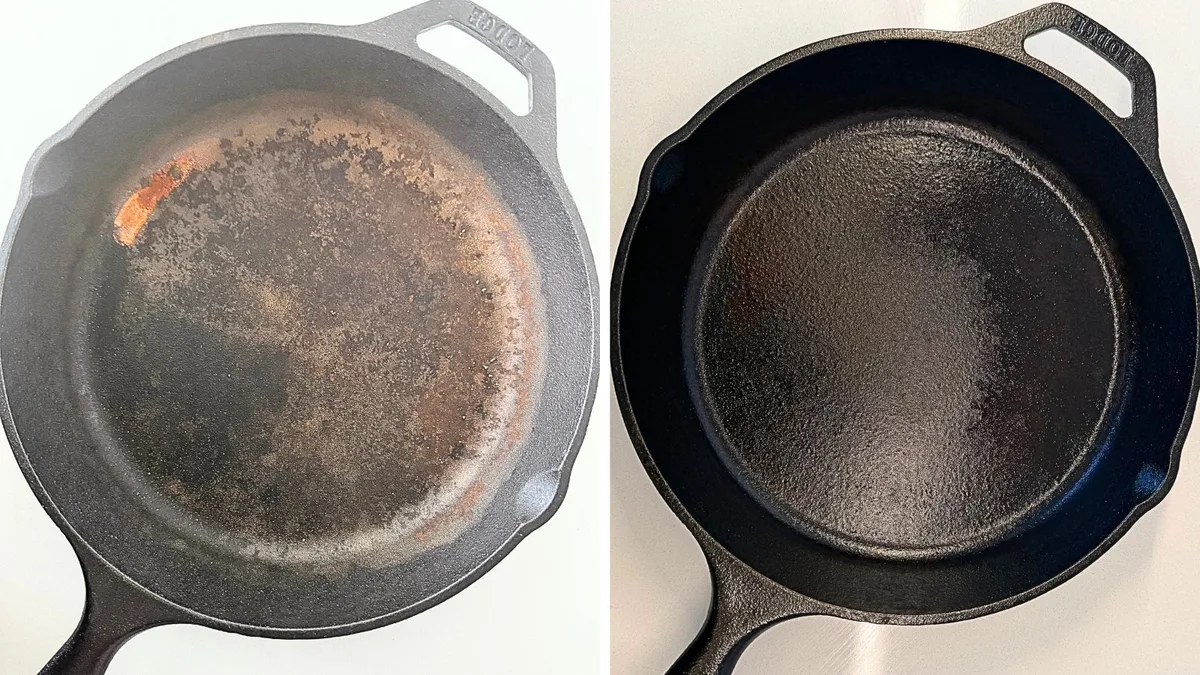
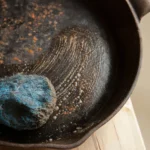
How to Clean Rusted Cast Iron in Minutes
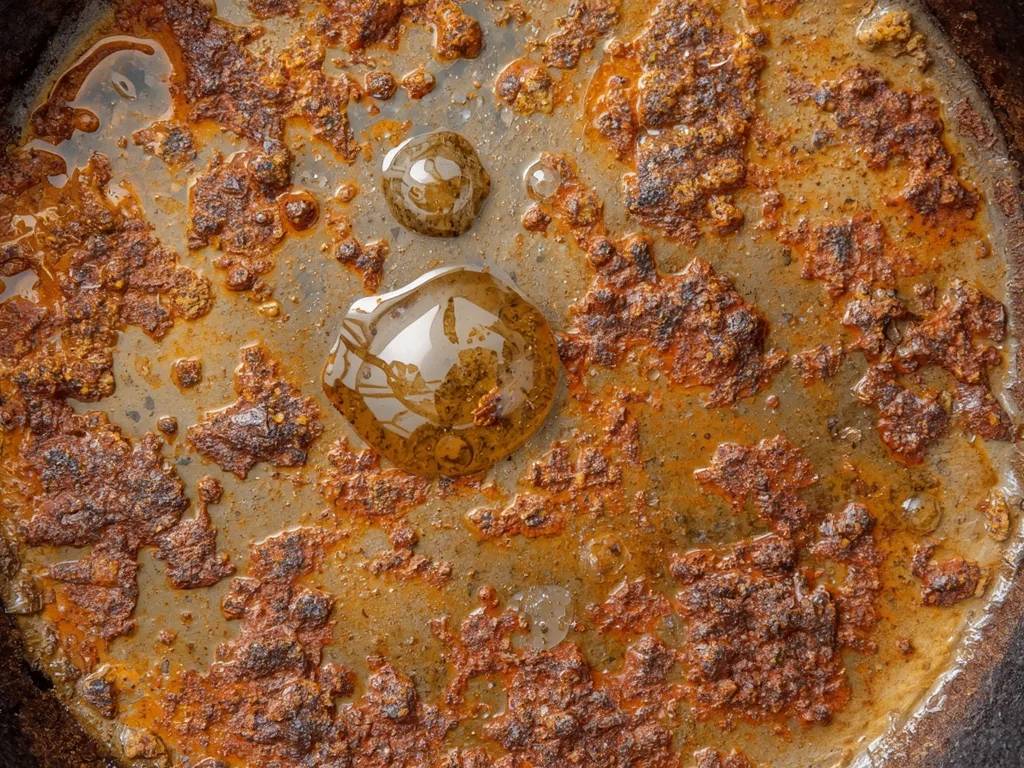
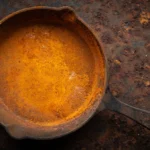
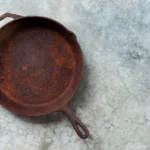
If you've ever pulled a cast iron skillet out of the back of a cupboard and found a dusty orange layer staring back at you, you know that sinking feeling. The good news? How to clean cast iron that is rusted is a completely learnable skill, and most pans come back to life in an afternoon.
Rust looks dramatic, but it's only surface-level damage. The iron itself is usually fine.
Manufacturer specs indicate that a proper reseasoning pass needs an oven temperature between 450°F and 500°F, but the cleaning method depends entirely on how deep the rust goes. In the guide below, we'll break it down by rust severity, using the same restoration steps recommended by cast iron makers and restoration specialists. Grab your steel wool, vinegar, and a clean cloth, because we're about to bring that pan back to life.
Image source: Bing (Web (fair-use with source credit))
How to Clean Rusted Cast Iron in Minutes
Is It Salvageable? How to Tell If Your Rusted Cast Iron Can Be Saved
Rust is just oxidation on the iron surface. It doesn't mean the pan is ruined. You can almost always save it unless the metal has cracked, warped, or become severely pitted with holes.
A quick visual scan tells you which category you're in.
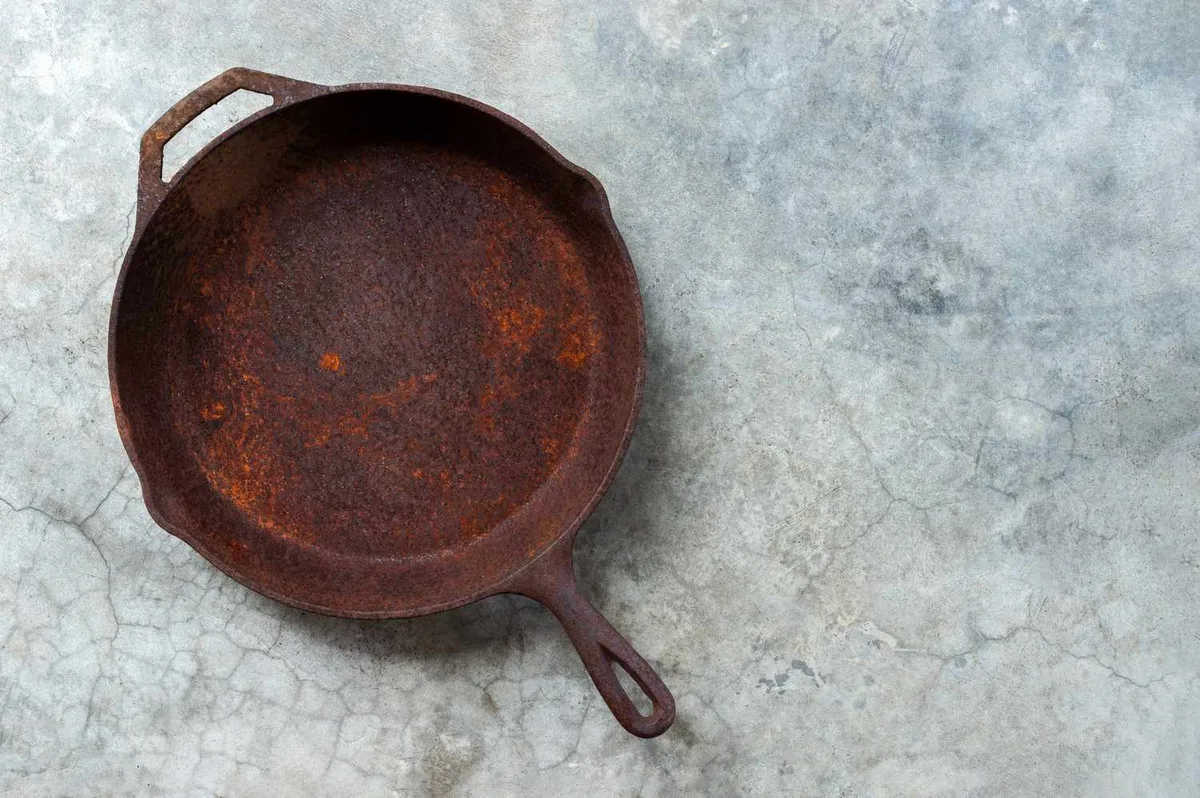
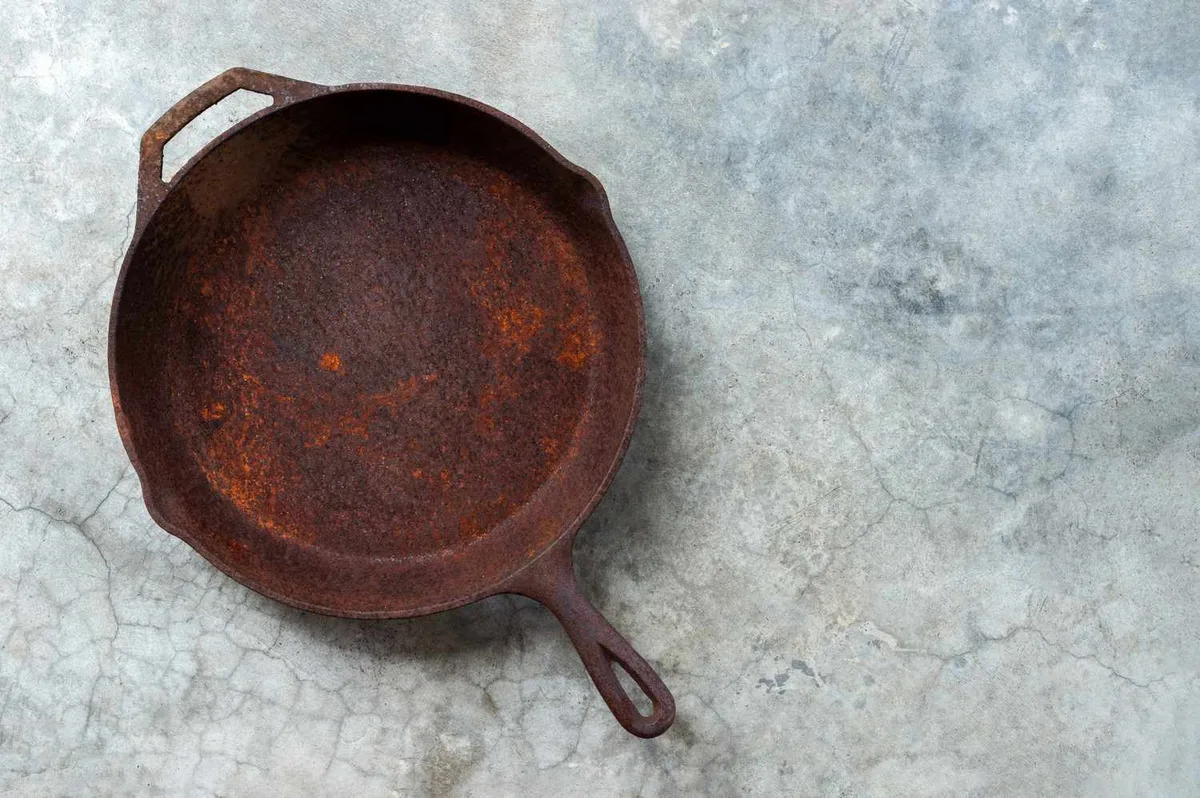
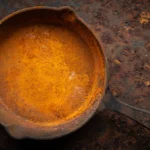
Start by checking the surface. Light rust looks like a dusty orange powder that wipes off on a paper towel. Moderate rust shows up as rough, flaky patches with some texture under your fingertips.
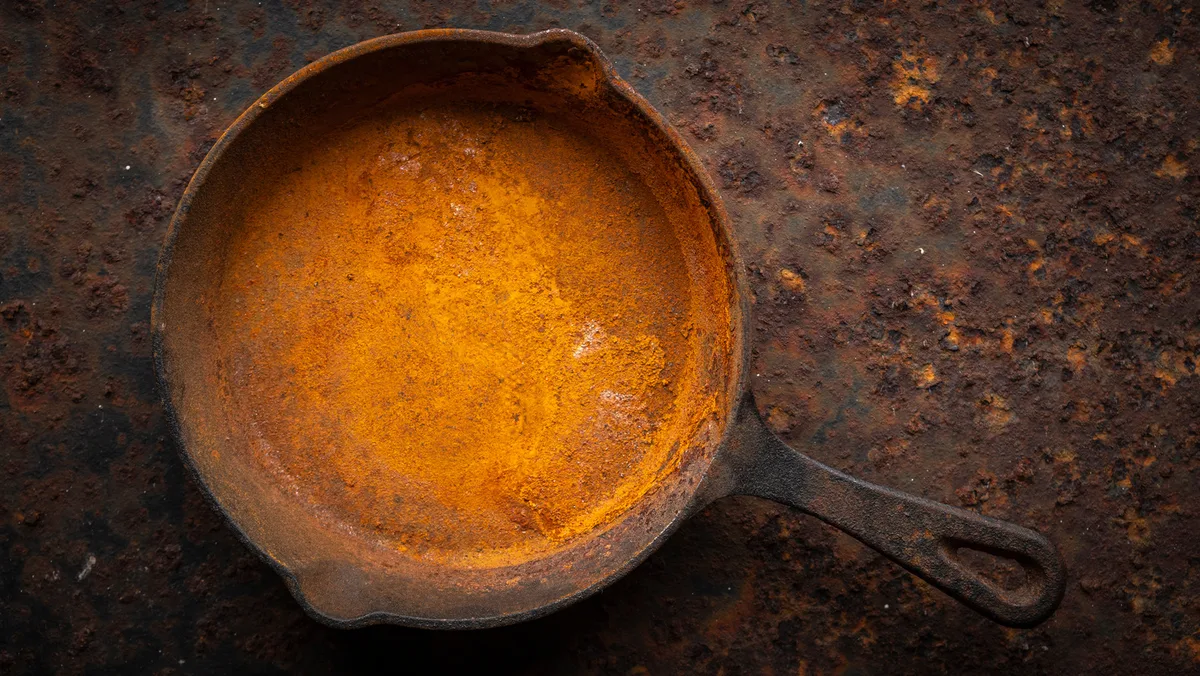
Heavy rust forms a thick brown crust that chips away easily and often hides pitting underneath.
Run your hand across the pan. If you feel deep pits or see any hairline cracks, be cautious. Pitting is still salvageable if the pan is otherwise solid, but cracks and warping are deal-breakers.
A warped pan won't sit flat on your stove, and a cracked one can split wide open under heat.
If the pan passes that check, you're good to go. Even a heavily rusted family heirloom can be restored with patience. Aggregate restoration guides from vintage cast iron collectors report that pans from the early 1900s routinely come back to full service after a thorough cleaning and reseasoning.
Now, one more test: smell it. A musty odor is no big deal, but a chemical or metallic reek might mean the pan was used to melt lead or solder at some point. If that's the case, skip the restoration and retire the pan.
Lead contamination is not worth the risk.
The Quick Guide: What to Grab Based on Rust Severity
Before you start scrubbing, figure out which category your pan falls into. That decision drives every tool you'll use. Here's the simple breakdown:
| Rust Severity | What to Use | Time Estimate |
|---|---|---|
| Light (speckled orange, wipes off) | Steel wool (0000 grade), dish soap, water, oil | 15–20 minutes |
| Moderate (rough, flaky patches) | 1:1 vinegar-water soak, steel wool, baking soda paste, oil | 1–2 hours |
| Heavy (thick crust, chipping, pits) | Electrolysis setup or commercial rust remover, heavy scrubbing, oven seasoning | 3–24 hours |
For light rust, you're just scrubbing the surface. For moderate rust, a vinegar soak loosens the corrosion so you can scrub it away. For heavy rust, manual scrubbing alone will drain you, so an electrochemical setup or a heavy-duty rust remover is the smarter path.
If you don't have steel wool on hand, a chainmail scrubber works, but it's slower on rust. Avoid sandpaper on vintage pans. It removes the original casting marks and destroys collector value.
For modern Lodge pans, fine grit sandpaper is fine if you're careful. Manufacturer guidance, including the Lodge Cast Iron care page, points to the same general process.
Remember to grab a lint-free cloth or paper towels, plus a neutral oil with a smoke point above 400°F. Canola or grapeseed oil are solid defaults. We'll get into seasoning details in the next sections.
Light Rust (Speckled Orange): The Simple Scrub-and-Season Fix
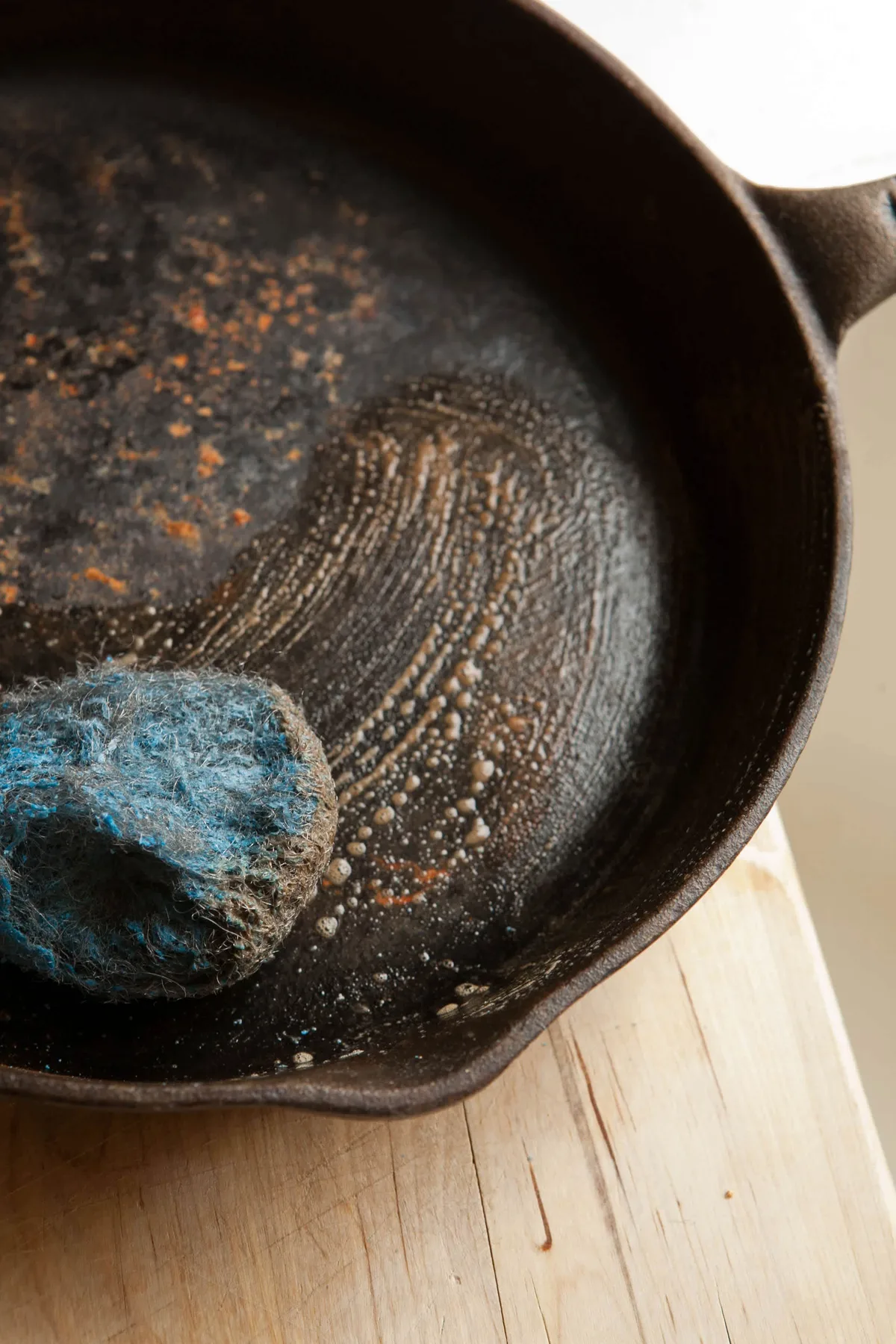
For light rust, the thing that fools most people is thinking they need a chemical stripper. You don't. Start with a dry scrub.
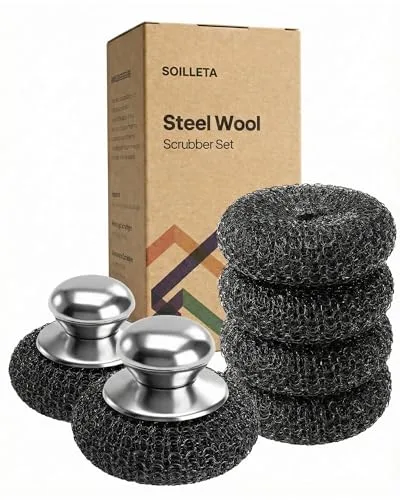
Image source: Bing (Web (fair-use with source credit))
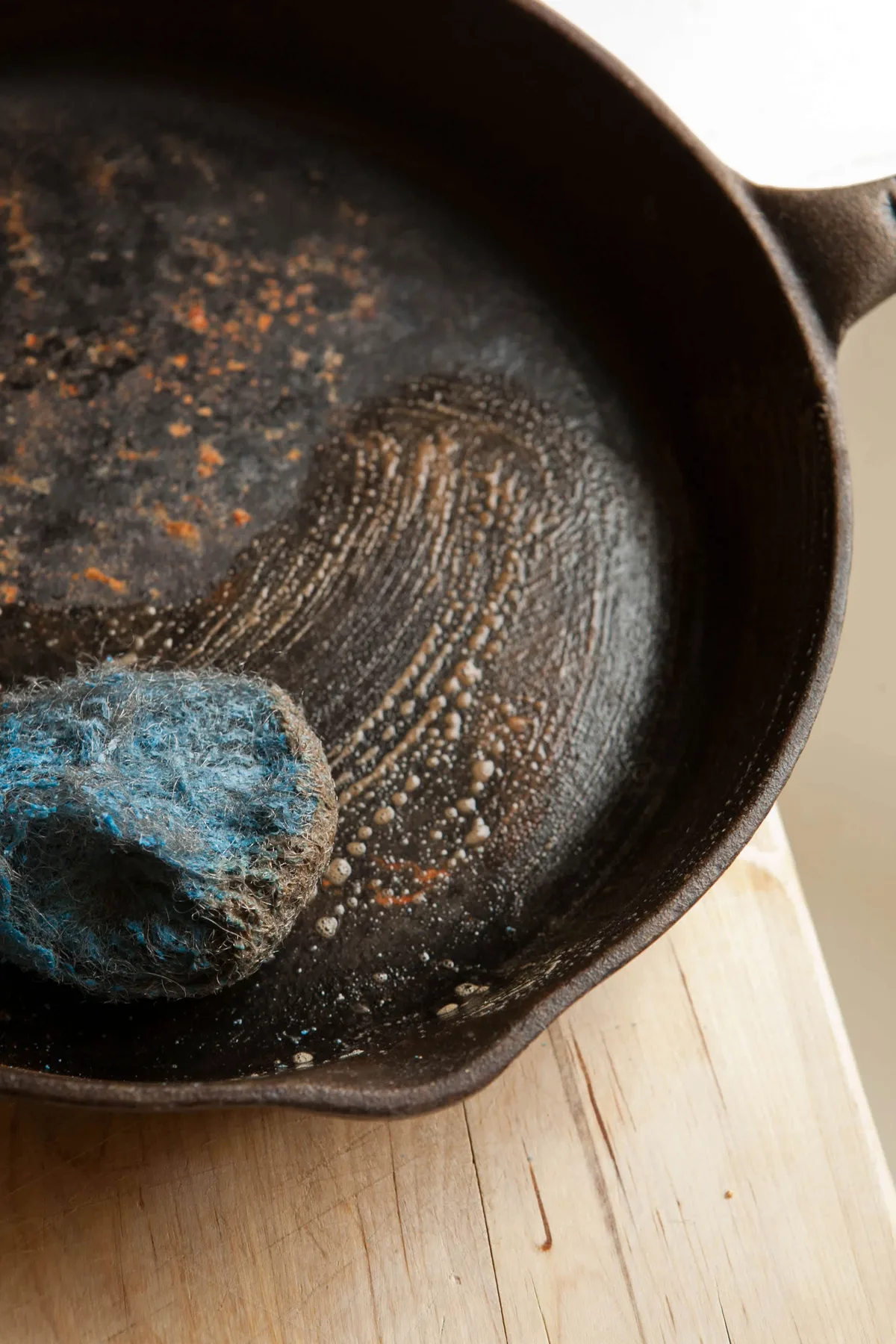
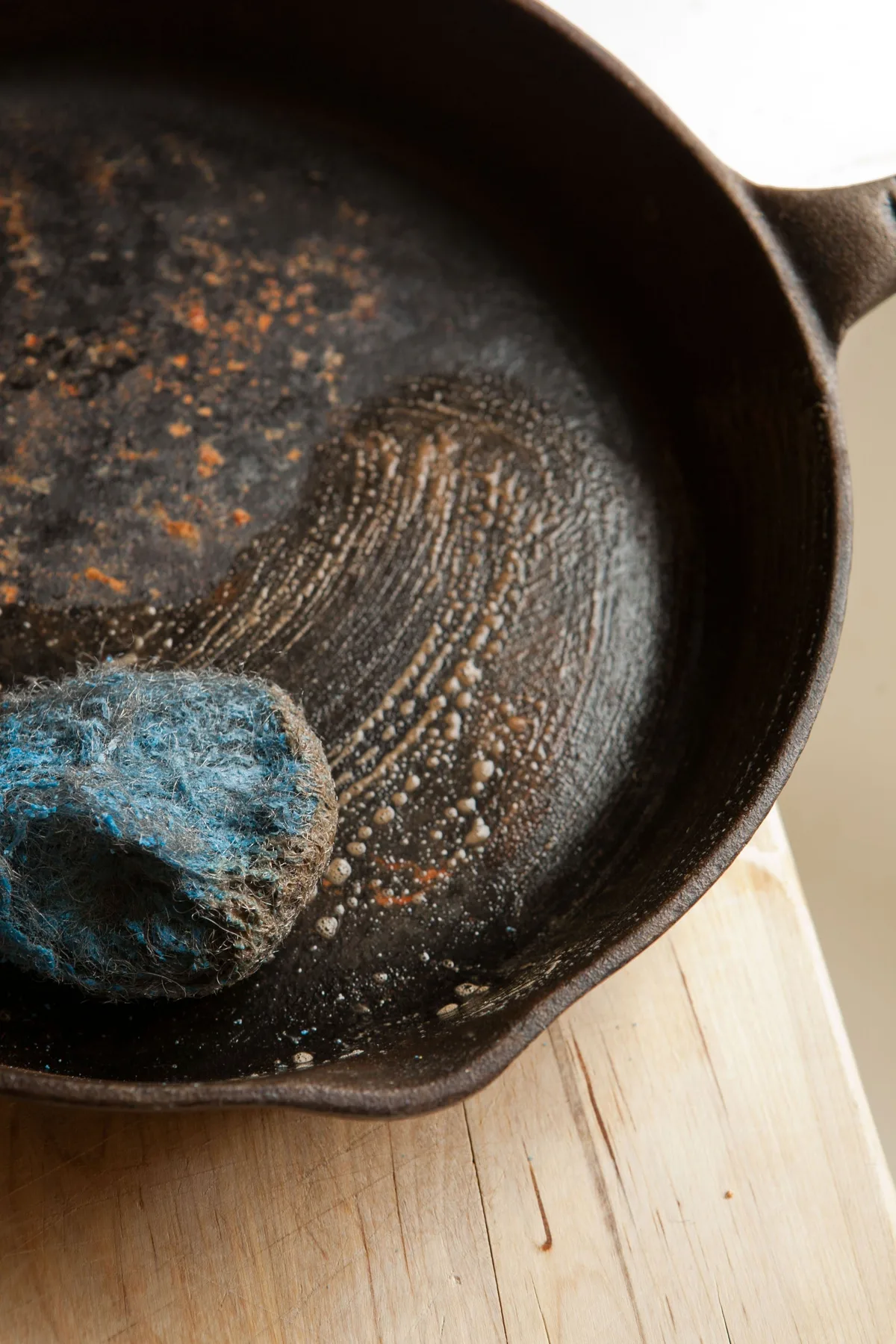
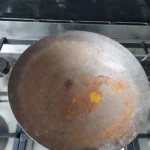
Sprinkle one tablespoon of coarse salt into the pan. Use it as the abrasive. Dry scrub with a steel wool pad, using circular pressure.
The salt lifts the rust without eating into the seasoning layer beneath.
If the orange dust is gone after a minute, rinse the pan with warm water and a drop of mild dish soap. Soap is fine here. It only harms seasoning if you're scrubbing aggressively with it repeatedly on a well-seasoned pan.
Dry the pan completely. Put it on a stovetop over low heat for five minutes to evaporate every bit of moisture. Then rub a thin layer of oil over the whole surface, using about one teaspoon.
Wipe it off like you're actually trying to remove it. That's the key step. A thick oil coat turns sticky.
Bake at 450°F for an hour, pan upside down on the oven rack with foil below to catch drips. Then turn the oven off and let the pan cool inside. One layer is enough for light rust, but two layers never hurt.
After that, your pan is back in business.
Moderate Rust (Rough, Flaky Patches): Vinegar Soak and Rebuild
Moderate rust means the corrosion has eaten through the old seasoning and is now embedded into the top layers of the iron. Scrubbing alone won't do it. You need to dissolve it first.
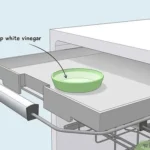
Mix equal parts distilled white vinegar and water in a plastic tub or sink. Submerge the pan completely. Set a timer for 15 minutes.
Check the pan and run a steel wool pad over the surface. If rust lifts, scrub it off and return the pan to the vinegar for another 10 to 15 minutes.
Now the warning: never leave the pan in vinegar for more than 30 minutes total. Acetic acid doesn't just eat rust. It eats the iron underneath.
Pitting starts quickly, especially on older pans. If you're going to step away, take the pan out of the solution, rinse it, and come back later.
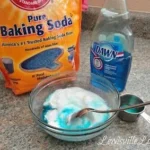
Once the rust is gone, neutralize the vinegar by scrubbing with a paste of baking soda and water. Rinse again, then dry completely. Heat the pan on low on the stovetop for a few minutes.
You'll see what looks like "flash rust" forming immediately. That's normal. It's just oxygen hitting raw iron.
There's a neat trick: after drying, oil the pan immediately. The oil seals the metal and stops the rusty haze. Then run the full oven seasoning cycle, repeating for three to five layers.
Your pan will look a little patchy at first. That's fine. The seasoning will even out with cooking.
Heavy Rust (Thick Crust or Pitting): Electrolysis or Pro-Level Methods
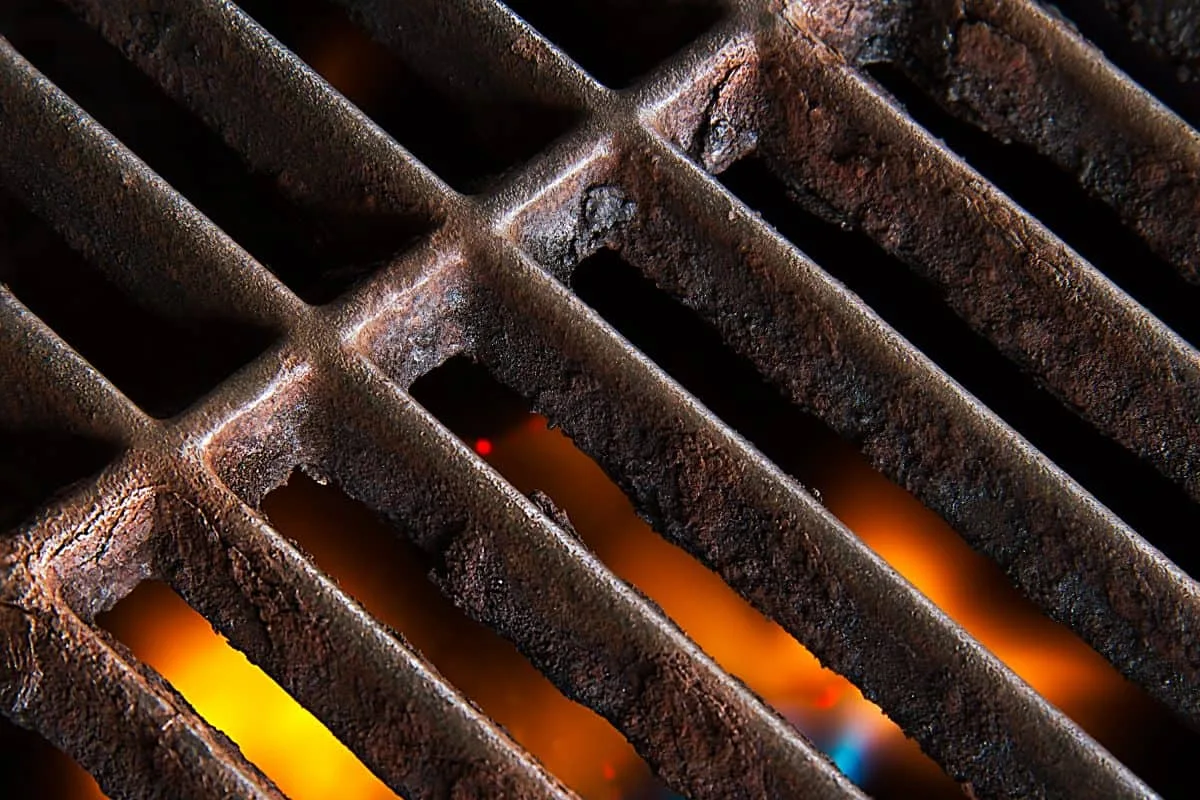
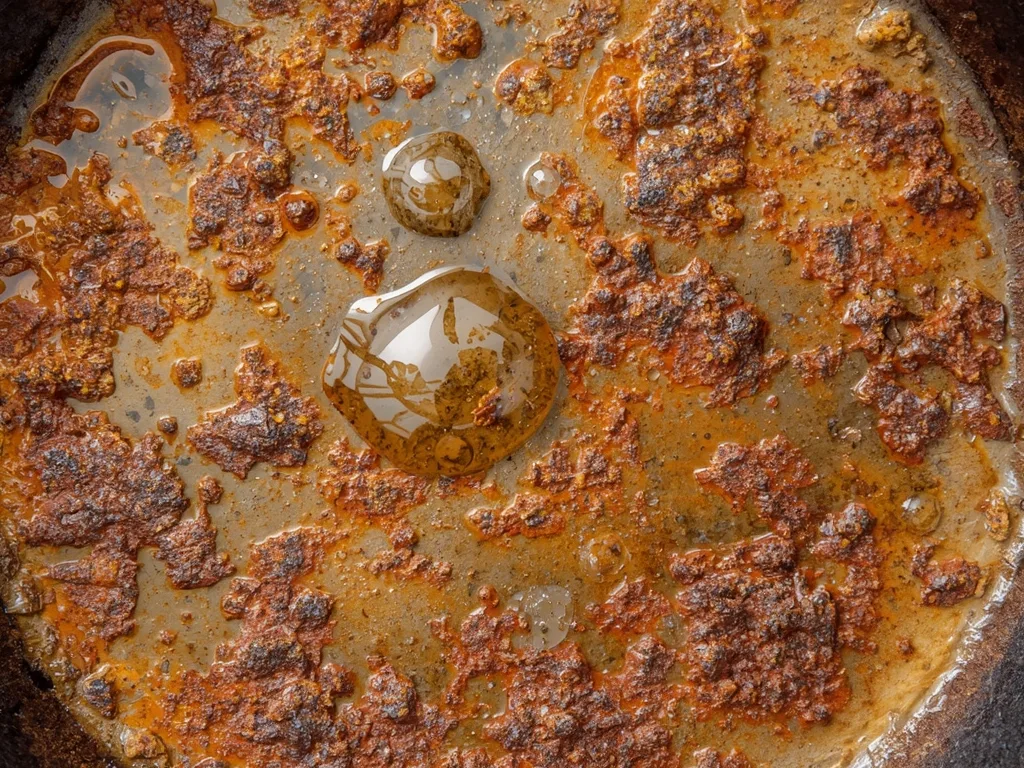
If the rust is thick enough to flake off in chunks, or if you see pitting, skip the vinegar. A vinegar soak won't touch that crust, and excessive scrubbing will wear the pan unevenly. The best home method is electrolysis.
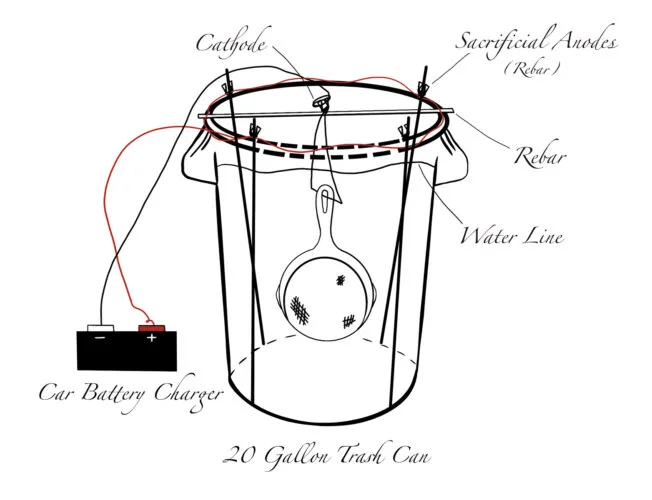
Image source: Bing (Web (fair-use with source credit))
Electrolysis sounds like science fair territory, but it's simple. You need a plastic bucket, a car battery charger, a piece of graphite or stainless steel, and a solution of washing soda and water. The charger sends a low DC current through the solution.
The rust lifts off the iron, leaving bare metal behind. It takes anywhere from 8 to 24 hours, depending on the crust depth.
If that sounds intimidating, commercial rust removers containing phosphoric acid or oxalic acid work too. They convert the rust into a neutral layer you can scrub away. Follow the product's soak times exactly.
These acids are strong enough to bleach clothing and irritate skin, so wear gloves and eye protection. Work outdoors or in a ventilated space.
After the rust is gone, you'll see raw grey iron with possible pits. Pitted iron is perfectly cookable. Just oil and season it as usual.
The pits will fill in over time with polymerized oil.
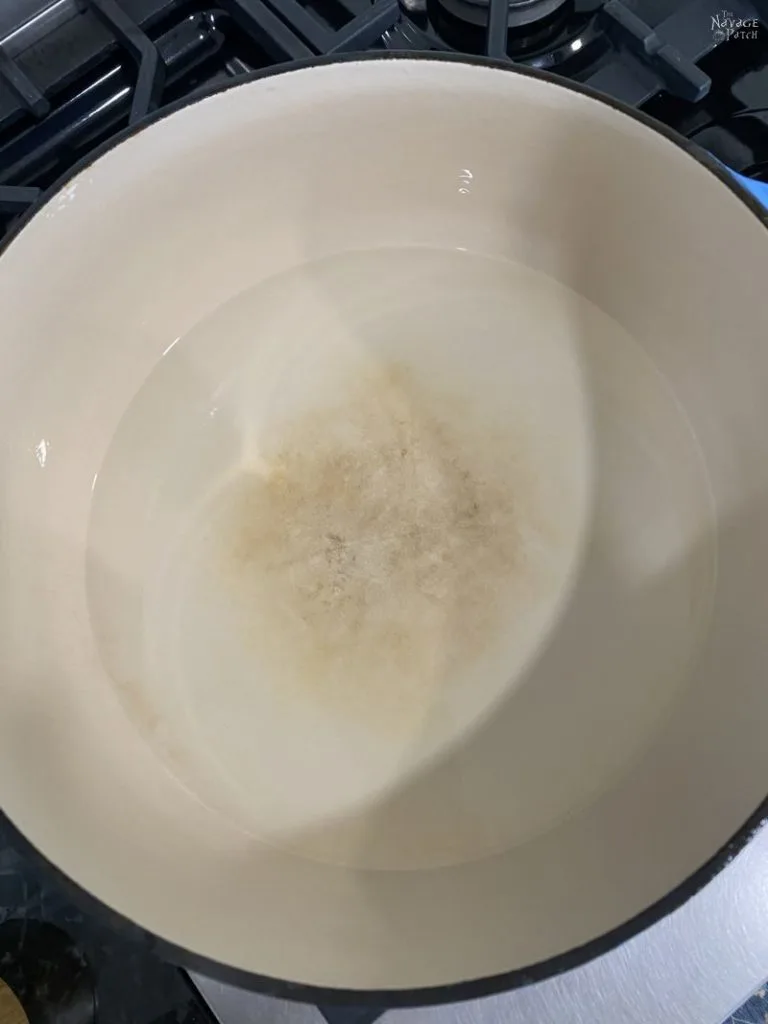
If the pan is cracked, warped, or has any holes, don't bother. Replace it. Also, never use this method on enameled cast iron.
The acid and current will wreck the coating.
What Not to Do — Common Mistakes That Ruin the Pan
A few wrong moves can undo hours of work or permanently damage the iron. Here's what to avoid.
Never soak longer than 30 minutes in vinegar. Acetic acid keeps eating after the rust is gone. It will pit the iron, and those pits trap food and rust forever.
Skip the self-cleaning oven cycle. The extreme heat burns off rust and seasoning, but it also stresses the metal. Pans can warp, crack, or lose their original temper completely.
Don't use sandpaper on vintage pans. It erases casting marks and drops collector value to near zero. Stick with steel wool or electrolysis for old iron.
Avoid the "too much oil" mistake. A thick oil coat turns sticky and gummy. Apply, then wipe it off like you're trying to remove it. The polymerized layer should be whisper thin.
Do not let the pan air dry. Water droplets pull iron oxide out of the metal. Always heat dry on the stove over low heat.
Skip harsh oven cleaners on modern seasoning. They can eat through the polymerized layer and leave residue. If you need a full strip, electrolysis is cleaner and safer.
Don't cook acidic food right after reseasoning. Tomato sauce and vinegar will pull the fresh layer right off. Give the seasoning a week of normal cooking first.
How to Keep Rust from Coming Back (A 2-Minute Maintenance Habit)
Rust returns when moisture sits on bare iron. The habit that stops it is embarrassingly simple.
After washing, dry the pan with a towel. Then set it on a low burner for 2 minutes. That evaporates any water hiding in the grain of the metal.
Next, apply a dime-sized drop of oil and rub it across the whole surface. Wipe it off thoroughly. The thin leftover film seals out oxygen and moisture.
Store the pan in a dry place. If you live in a humid climate, skip the lid or leave a paper towel inside. That tiny crack lets air circulate.
Do this every single time. Even a short stint in the sink invites orange specks. Two minutes of habit beats two hours of vinegar scrubbing later.
If you're not cooking with the pan for a while, add an extra protective coat before storing. It's the same oil you use for cooking, just a touch more.
If you spot a small orange dot weeks later, don't panic. Rub it with dry steel wool for a minute, oil the spot, and move on. Catch it early and it's a 30-second fix.
FAQs — Quick Answers on Soaking, Oven Temp, and Flash Rust
How long can I leave cast iron in vinegar?
Never more than 30 minutes total. Check at 15-minute intervals and scrub between soaks. The acid dissolves rust, but it also attacks the iron itself.
Pitting starts quickly after that half-hour mark.
What temperature should I use to reseason cast iron?
Bake at 450°F to 500°F. Each layer takes one hour. Use an oil with a smoke point above 400°F, like canola or grapeseed.
If the oil smokes in the oven, you're near the top of its range.
How do I fix flash rust after cleaning?
Flash rust appears when bare iron meets air and moisture. Fix it fast by heating the pan slightly, then wiping on a thin layer of oil immediately. The oil seals the surface and stops the reaction.
No scrubbing needed.
Can I season over existing rust spots?
No. Seasoning cannot bond to rust. Scrub or soak until the rust is completely gone, then season.
If you skip this, the rust keeps eating the metal under your seasoning, and it will eventually flake off.
Can I use these methods on enameled cast iron?
No. Vinegar, steel wool, and electrolysis will ruin enamel. For enameled pieces, use warm water, mild soap, and a soft brush.
The enamel is the rust protection, so you never need to strip it.

Similar Posts