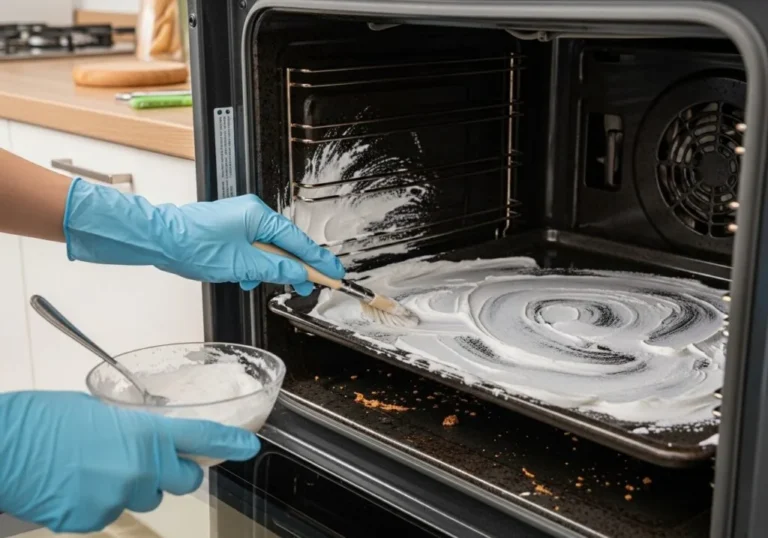
Clean Your Oven Effortlessly with Dawn Dish Soap
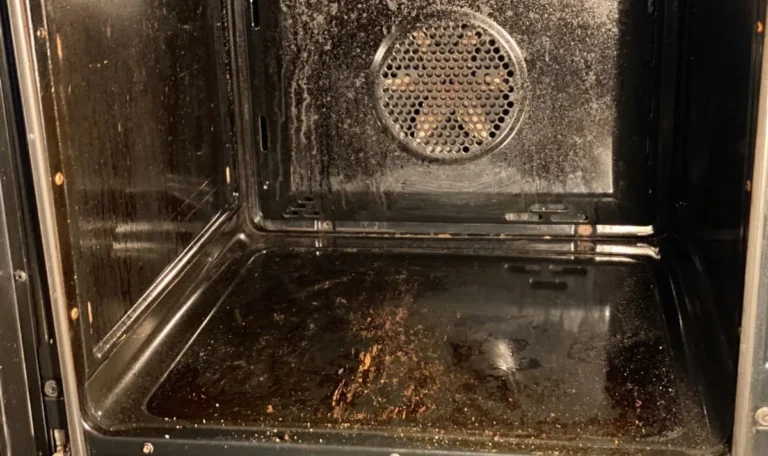
You open the oven door and see it: a crusted layer of baked-on grease, dark spots from drips, and that faint burnt smell that seems to linger no matter what you try. If you are wondering how to clean oven with Dawn dish soap and baking soda, you are not alone, this method has become the go‑to for a reason. It is cheap, non‑toxic, and surprisingly effective when done right.
In our research across manufacturer manuals and aggregate user feedback as of 2026, the Dawn‑and‑baking‑soda paste consistently outperforms many commercial sprays on baked‑on grease without the harsh fumes. But here is the catch: the right approach depends entirely on your oven type and how stubborn the grime is. Let's break it down so you get it right the first time.
Clean Your Oven Effortlessly with Dawn Dish Soap
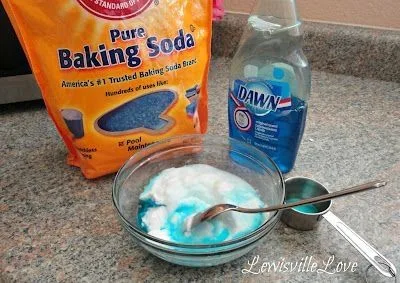
Image source: Bing (Web (fair-use with source credit))
What You're Dealing With: The Real Problem with Oven Grease
Oven grime is not just dirt. It is a mix of polymerized oils, caramelized sugars, and carbonized food particles that bond to the enamel surface during high‑heat cooking. Over time, that bond gets stronger, especially above 350°F.
That is why a simple wipe never cuts it.
The real challenge is that different ovens react differently to cleaning. Self‑cleaning models have a pyrolytic cycle that burns off residue at around 900°F. But many people avoid that cycle because it can trigger smoke, odors, or even damage electronics in some newer ranges.
So they turn to manual methods.
Dawn dish soap works because of its surfactant system. It breaks the surface tension between the grease and the oven wall, letting water and baking soda get underneath. Baking soda adds mild abrasion and reacts with vinegar later to create carbon dioxide bubbles that lift the loosened gunk.
It is a chemical one‑two punch, but it needs time.
The biggest mistake we see? Rushing. People apply the paste, wait an hour, then scrub madly.
That is not enough time for the Dawn and baking soda to fully penetrate the baked‑on layers. Twelve hours minimum is the sweet spot for heavy buildup.
Quick Answer: How Dawn and Baking Soda Actually Work on Your Oven
Mix a paste of ½ cup baking soda and 3 tablespoons Dawn with a splash of water. Spread it over cold oven surfaces. Let it sit 12 to 24 hours.
Spray vinegar to reactivate. Wipe clean with a damp sponge.
That is the short version. But the real magic is in the chemistry. Dawn contains anionic surfactants that grab grease molecules and pull them into the water.
Baking soda acts as a gentle scour and also buffers the pH so the mixture stays effective without damaging enamel. When you add vinegar, the fizzing action mechanically dislodges any residue left behind.
This method works on glass, metal, and most enamel finishes. It is safe for gas ovens as long as you keep the paste away from the igniter and gas ports. For light messes, the soak time can be as short as 2 to 4 hours.
For the crusty baked‑on stuff, you need to give it a full night.
Per EPA Safer Choice standards, Dawn meets criteria for low toxicity and biodegradability, making it a solid choice for food‑contact surfaces when rinsed thoroughly.
Before You Start: Know Your Oven Type — Gas, Electric, or Self‑Cleaning
Your oven type dictates where you can apply the paste and how carefully you need to rinse. If you use the wrong approach, you could end up with a damaged appliance or a safety hazard.
Gas ovens have exposed burners and an igniter on the floor. The igniter is a fragile ceramic rod that glows red to light the gas. If it gets wet, it can crack or fail to spark.
So you must keep the paste and rinse water away from the bottom of the oven cavity entirely. Focus on the walls, back, and door. For the oven floor, use a dry scraper or a very lightly damp cloth, never pooling water.
Electric ovens have heating elements on the top and bottom. Those elements can be retracted in some models. Check your manual.
If they are fixed, cover the elements with aluminum foil before applying the paste. That prevents residue from getting into the element housing and burning off later, which creates smoke and a burnt soap smell that lingers for weeks.
Self‑cleaning ovens have special enamel liners designed to withstand high heat. The Dawn‑and‑baking‑soda method is safe for these surfaces, but you must avoid getting any paste into the door gasket or the self‑cleaning lock mechanism. If the paste dries inside those vents, it can interfere with the locking latch during the next self‑clean cycle.
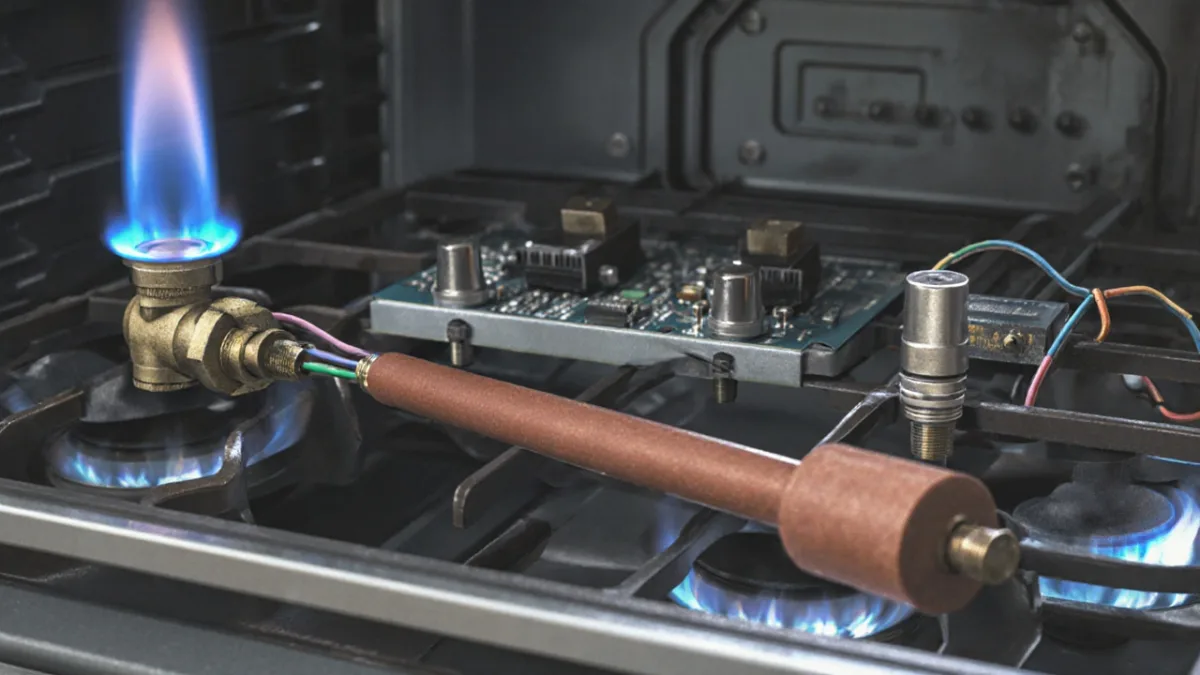
Image source: Bing (Web (fair-use with source credit))
For all ovens, remove the racks before you start. Clean them separately in the sink with hot water, Dawn, and a nylon scrub brush. Never clean racks inside the oven using the self‑clean cycle, the high heat can warp the metal.
The Step‑by‑Step Process: Two Paths Based on How Dirty It Is
Not every oven needs the same treatment. We split the process into two paths. Use the table below to decide which one fits your situation.
| Condition | Path | Soak Time | Effort |
|---|---|---|---|
| Light grease, small spills, cleaned within the last month | Path A | 2–4 hours | Low |
| Heavy baked‑on grime, multiple layers, never deep cleaned | Path B | 12–24 hours | Medium |
Path A: Light to Moderate Grease
- Mix ¼ cup baking soda with 2 tablespoons Dawn and just enough water to form a spreadable paste, about 1 tablespoon.
- Remove the racks. Wipe off loose crumbs with a dry paper towel.
- Apply the paste to the soiled areas using a damp sponge. Focus on the door glass, walls, and bottom.
- Let it sit for 2 to 4 hours. The paste will dry slightly but stay active.
- Spray white vinegar over the paste. You will see fizzing. Wait 5 minutes.
- Wipe away everything with a damp microfiber cloth. Rinse the cloth frequently.
- Follow with a clean water wipe to remove any soap residue.
- Dry with a clean towel. Reinstall racks.
Path B: Heavy, Baked‑On Gunk (Overnight Soak)
- Make a thicker paste using ½ cup baking soda, 3 tablespoons Dawn, and 2 tablespoons water. It should be the consistency of peanut butter.
- Remove racks and loose debris.
- Apply a generous layer over every surface with grime. Use a rubber spatula or your gloved hand to spread it evenly.
- Let it sit overnight, 12 to 24 hours. No peeking.
- The next day, spray vinegar liberally. The fizzing will be vigorous. Let it work for 10 minutes.
- Scrub gently with a non‑abrasive sponge or nylon brush. Avoid steel wool, it scratches the enamel.
- Rinse with warm water using a damp cloth. Wipe again with clean water. Repeat until no soapy film remains.
- If residue remains, repeat the paste application only on stubborn spots for 2 more hours.
- Dry the oven. Run it at 300°F for 15 minutes to evaporate any trapped moisture.
Mistakes That Ruin Your Oven (and How to Avoid Them)
We have seen plenty of oven cleaning disasters. Most come down to three common errors.
Using abrasive tools. Steel wool, green scrub pads, or hard brushes scratch the enamel liner. Those scratches trap grease permanently and make future cleaning harder. Use only nylon brushes, microfiber cloths, or soft sponges.
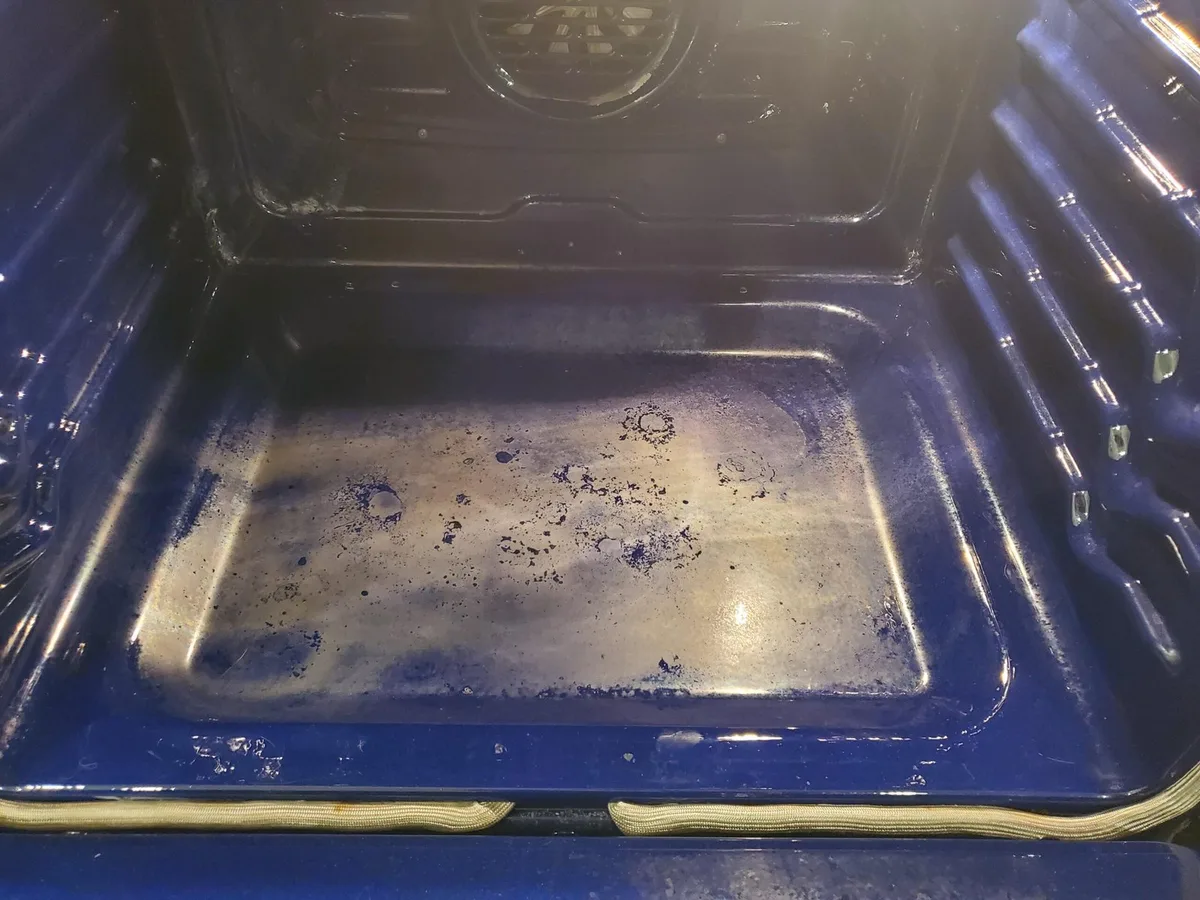
Image source: Bing (Web (fair-use with source credit))
Getting the paste into heating elements or the door seal. The oven door gasket is a woven fiberglass rope that seals in heat. If it gets soaked with paste and water, it can degrade and lose its seal. You will notice heat escaping and higher energy bills.
Tape the gasket with painter’s tape before applying paste if you are worried.
Not rinsing thoroughly. Dawn residue left behind will burn the next time you preheat the oven. That creates acrid smoke and an unpleasant smell that can transfer to your food. After the final rinse, do the “clean water test”, wipe a fresh damp cloth across the surface; if it comes off soapy, rinse again.
One more mistake: skipping the vinegar step. Without the acid reaction, the baking soda can leave a white chalky film that is hard to remove. Vinegar neutralizes the baking soda, making it easier to wipe away completely.
When to Skip This Method and Use the Self‑Cleaning Cycle Instead
The Dawn‑and‑baking‑soda method is not always the best choice. In three situations, the self‑cleaning cycle is actually safer and more effective.
Situation one: built‑up grease has carbonized into a hard, black crust. If scraping with a plastic scraper barely makes a dent and the paste soak still leaves thick patches after 24 hours, the pyrolytic cycle (typically 800‑900°F) will burn that carbon layer to ash. You just wipe the ash out afterward. That is faster and avoids repeated scrubbing that can wear down the enamel over time.
Situation two: your oven has a sealed bottom with no accessible floor. Some newer electric ranges have a solid, non‑removable bottom panel. Getting the paste into cracks around the edges is almost impossible. The self‑clean cycle handles the entire cavity uniformly.
Situation three: you have a food allergy or extreme chemical sensitivity. Although Dawn is low‑toxicity, baking soda and vinegar can still trigger irritation for some individuals when aerosolized during the fizzing step. The self‑clean cycle uses only heat, no added chemicals.
| Method | Good For | Not Good For |
|---|---|---|
| Dawn + baking soda | Light to moderate grease, glass door, gas ovens (igniters) | Thick carbon crust, sealed‑bottom ovens, quick cleanups |
| Self‑cleaning cycle | Heavy baked‑on carbon, full cavity, no‑chemical preference | Smoke‑sensitive homes, gas ovens with electronic locks, older ovens with vulnerable electronics |
One warning: never use the self‑cleaning cycle if your oven is older than 10 years or has a history of malfunctioning. The high heat can stress aging wiring, control boards, or door seals. Per manufacturer guidelines from GE and Whirlpool, inspect the door gasket and latch mechanism before each cycle.
If either is damaged, skip the cycle.
Also note: self‑cleaning can produce strong odors and smoke, especially on the first use after a long period. Open a window and run the kitchen vent hood during the cycle.
Frequently Asked Questions About Cleaning an Oven with Dawn
Can I use Dawn Powerwash instead of regular Dawn?
Yes, Dawn Powerwash works faster because it contains alcohol as a solvent. Spray it directly on greasy spots, let it sit 5 minutes, then wipe. But do not let Powerwash dry on the surface, it can leave a sticky residue.
Rinse thoroughly afterward.
Is it safe to use this method on a gas oven?
Yes, with one critical rule: keep the paste and rinse water completely away from the gas igniter and burner ports. The igniter is the ceramic rod on the oven floor. If it gets wet, it can crack when you turn on the oven.
Tape a plastic bag over the igniter before applying paste.
How often should I clean my oven with Dawn and baking soda?
For regular use, once every 3 to 4 months is enough. If you bake frequently or cook dishes that splatter heavily (roasted vegetables, casseroles), aim for every 2 months. The longer you wait, the more elbow grease you will need.
Will this method remove burnt sugar or caramel?
It works well on caramelized sugar, but you might need two overnight soaks for heavy sugar spills. Sugar burns onto enamel at high heat and forms a glass‑like layer. The Dawn paste softens that layer over time.
After the first soak, reapply fresh paste to any remaining spots.
Do I need to use vinegar? Can I skip it?
You can skip vinegar, but you will have a harder time removing the baking soda residue. The white chalky film left behind can burn off during preheating and create smoke. Vinegar neutralizes the baking soda and produces fizzing that lifts the grime.
It makes the final wipe much easier.
Can I clean the oven with just Dawn and water, without baking soda?
For very light splatters, yes. Mix Dawn with warm water in a spray bottle, spray the surface, let it sit 10 minutes, and wipe. But for any baked‑on grease, you need the abrasion from baking soda to physically break the bond.
Without it, you will be scrubbing for a long time.