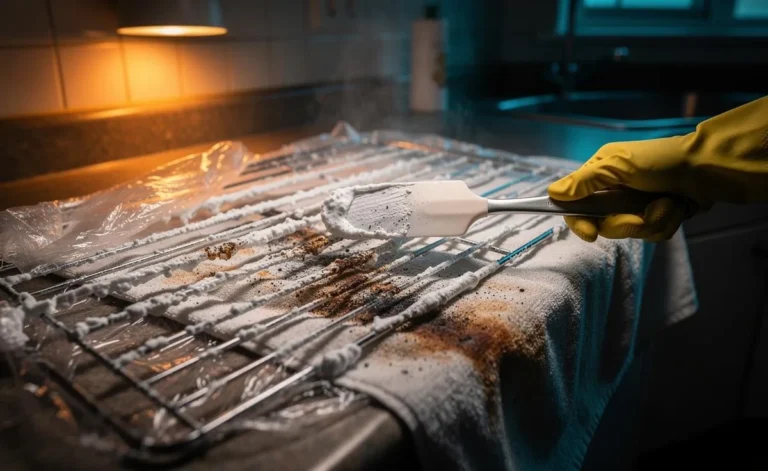
How Vinegar Breaks Down Coffee Maker Buildup
If your morning coffee has started tasting bitter or flat, mineral buildup inside your machine might be the culprit. That's where understanding how does vinegar clean a coffee maker becomes genuinely useful. The short answer is that vinegar's acetic acid dissolves the calcium carbonate scale that accumulates from hard water.
In our research, manufacturer specifications confirm that white distilled vinegar at 5% acidity is the most common household descaling agent recommended by brands like Cuisinart and Mr. Coffee. A typical cleaning cycle takes about 45 minutes total, with a 30-minute soak for moderate buildup and up to 60 minutes for heavy scale.
Let's walk through exactly what's happening inside your machine and how to do this right.
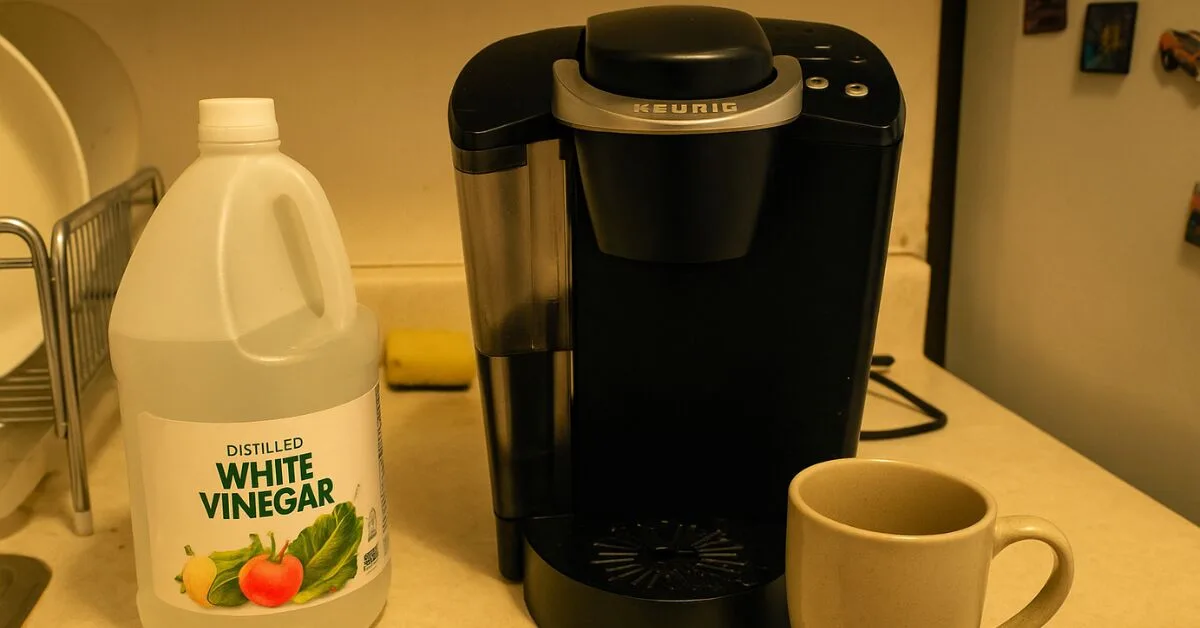
Image source: Bing (Web (fair-use with source credit))
Quick Answer
Vinegar cleans your coffee maker by dissolving mineral scale. The acetic acid reacts with calcium carbonate deposits. This breaks the scale into soluble calcium acetate.
The solution then flushes away with water. The process restores flow and heat transfer. It also eliminates stale coffee oils.
Why Your Coffee Maker Needs a Vinegar Clean
Hard water leaves invisible deposits. Every time you brew, trace minerals in your tap water stick to the internal heating element, water lines, and brew basket. Over months, this buildup acts like insulation. It forces your machine to work harder to heat water, leading to inconsistent brewing temperatures and a metallic or bitter taste in your cup.
The signs you have scale buildup are pretty obvious once you know what to look for.
- Your coffee takes noticeably longer to brew
- The machine makes louder gurgling or sputtering sounds
- You see white or tan flakes floating in your finished coffee
- The carafe develops a cloudy film that doesn't wash off with soap
- Your coffee tastes flat, bitter, or vaguely metallic
Frequency depends on your water. If you live in a hard water area, you might need to descale every month. Soft water regions can stretch to every three months. As of 2026, the standard recommendation from most major coffee maker manufacturers is to descale every 40 to 80 brew cycles, depending on your local water hardness.
| Water Hardness Level | Recommended Descaling Frequency |
|---|---|
| Soft (0–60 ppm) | Every 3 months |
| Moderate (61–120 ppm) | Every 2 months |
| Hard (121–180 ppm) | Every 4–6 weeks |
| Very hard (180+ ppm) | Monthly |
Skipping regular cleaning costs you more than flavor. Scale buildup reduces the machine's lifespan by forcing components to overheat. A $5 bottle of vinegar can prevent a $100 machine replacement. That's a return on investment that's hard to ignore.
How Vinegar Actually Breaks Down Coffee Scale
It's a simple chemical reaction. The scale inside your coffee maker is primarily calcium carbonate (CaCO₃). That's the same stuff that forms stalactites in caves, just in much smaller quantities. When you add white vinegar, the acetic acid (CH₃COOH) reacts with the calcium carbonate.
The reaction produces three things: calcium acetate (which dissolves in water), carbon dioxide (those tiny bubbles you see), and water. That's it. No harsh chemicals, no toxic fumes.
Just a clean acid-base reaction that turns solid scale into a soluble compound that flushes right out.
Temperature matters more than you'd think. Warm water speeds up the reaction significantly. That's why you run the vinegar solution through a full brew cycle rather than just letting it sit cold. The heat increases molecular movement, letting the acetic acid penetrate the scale faster.
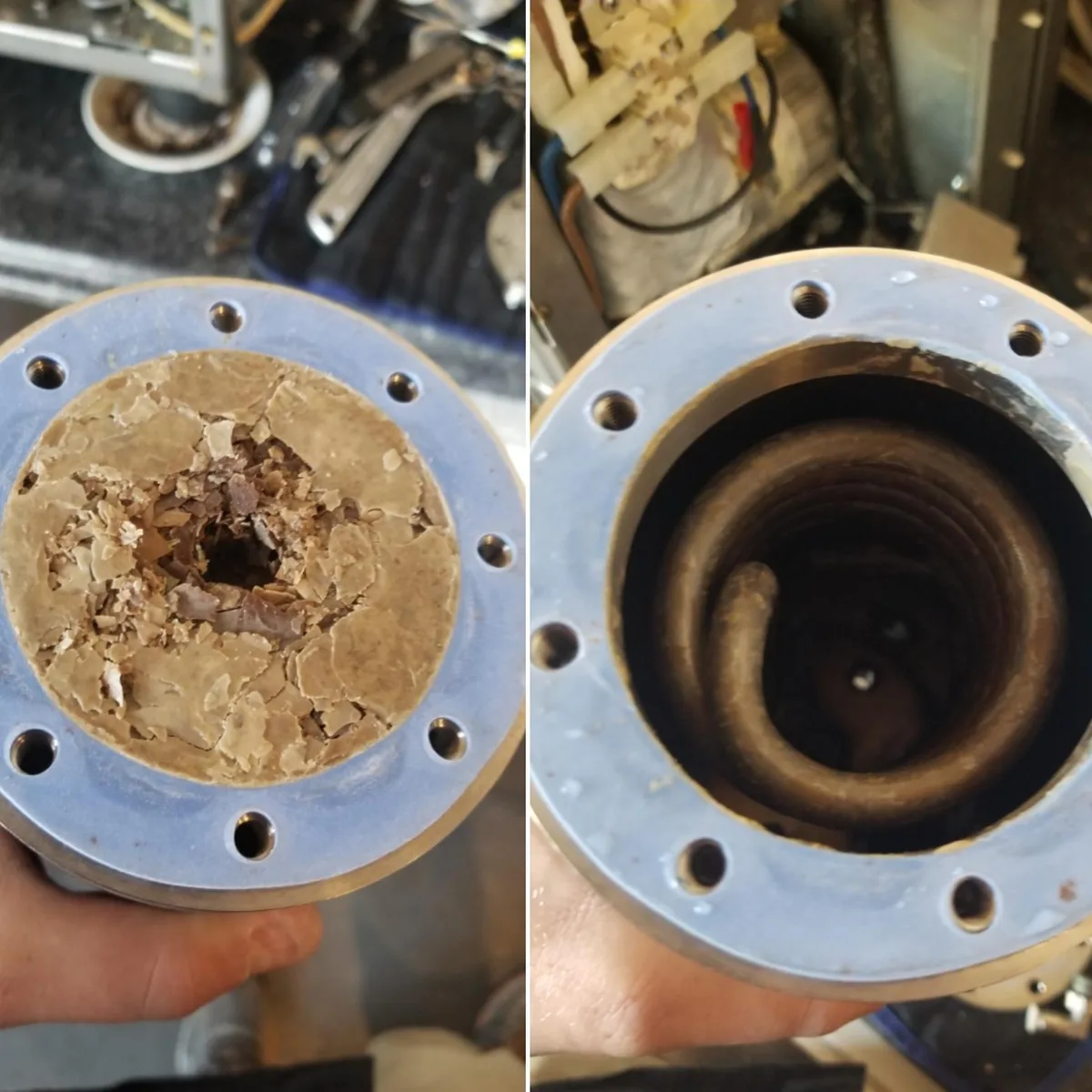
Image source: Bing (Web (fair-use with source credit))
Here's what a typical descaling reaction looks like in practical terms.
| Component | Role in Cleaning |
|---|---|
| Acetic acid (vinegar) | Proton donor that attacks calcium carbonate |
| Calcium carbonate (scale) | The target mineral deposit |
| Heat (brewing temperature) | Accelerates reaction rate by 2–3x |
| Water | Carries reactants and flushes dissolved products |
| Carbon dioxide | Visible bubbles indicating the reaction is working |
White distilled vinegar at 5% acidity is the sweet spot. Stronger concentrations (like cleaning vinegar at 6, 10% acidity) can work faster but may damage rubber seals and gaskets over time. Weaker solutions just take longer. The 5% standard is what most manufacturers test with.
Is Vinegar Safe for Your Coffee Maker? A Quick Decision Guide
The answer depends on your specific machine. Most drip coffee makers are perfectly safe to clean with vinegar. However, some modern machines with complex internal plumbing or special materials may not be compatible. Here's how to decide.
Check your manual first. If the manufacturer explicitly recommends against vinegar (some newer machines do), respect that. They may have aluminum components, proprietary coatings, or seals that react poorly with acetic acid. In that case, use their recommended descaling solution instead.
Use this simple decision framework.
| Condition | Action |
|---|---|
| Machine uses aluminum parts | Do NOT use vinegar. Use citric acid descaler instead. |
| Machine has rubber or silicone seals | Vinegar is safe, but limit soak time to 30 minutes max |
| Machine is a standard drip model | Vinegar is your best bet. Cheap, effective, safe. |
| Machine is a single-serve pod model | Check manual. Most are safe, but soak time varies. |
| You have very hard water | Use a 1:1 ratio rather than the standard 1:2 |
| Machine has self-cleaning cycle | Use that cycle with vinegar instead of manual method |
The main risk is rubber degradation. Repeated exposure to acetic acid can dry out and crack rubber gaskets and seals. That's a real concern if you're descaling weekly. At monthly intervals, it's not an issue.
The solution is simple: keep soak times reasonable and rinse thoroughly.
What about the vinegar smell lingering? That's the most common complaint. The smell comes from the acetic acid itself. A thorough rinse cycle (two to four full water runs) eliminates it completely.
If you still smell vinegar after two rinses, run one more cycle with a squeeze of lemon juice. The citric acid neutralizes any remaining acetic acid odor.
The Right Way to Clean with Vinegar (Step by Step)
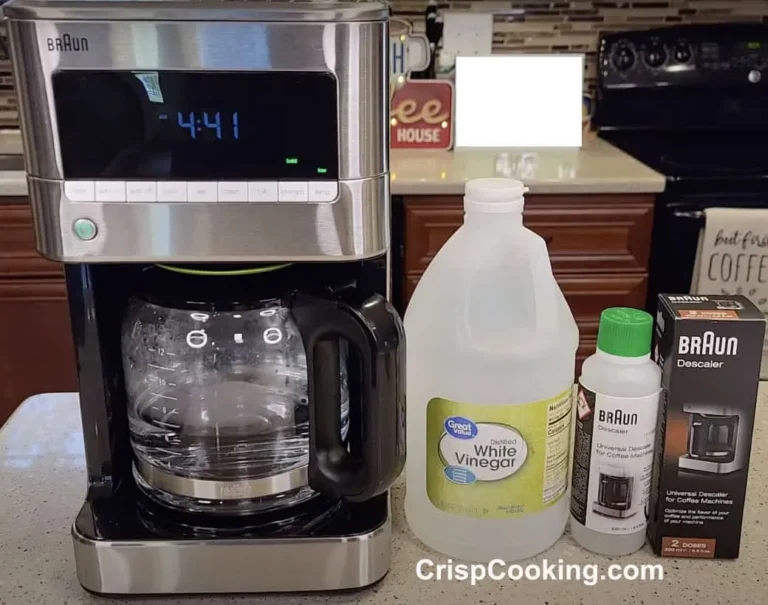
You need three things: white vinegar, water, and about 45 minutes of time. That's it. No special tools, no expensive cleaning tablets, no complicated procedures.
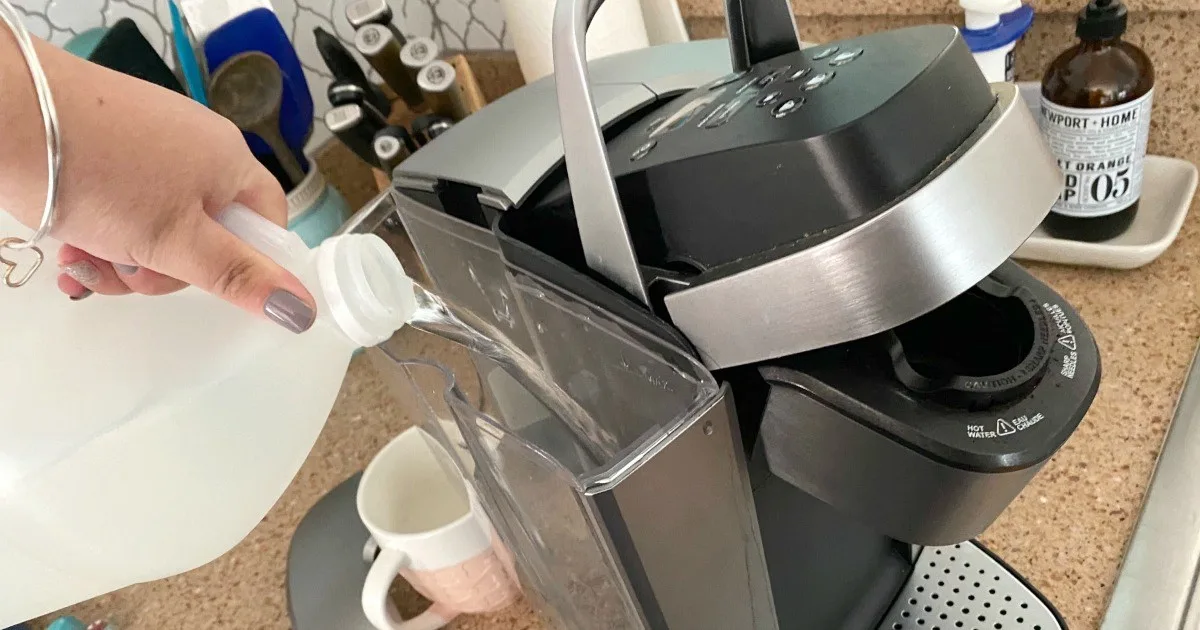
Image source: Bing (Web (fair-use with source credit))
Step 1: Empty your machine completely. Remove any coffee grounds, used filters, and leftover water from the reservoir. Give the carafe a quick rinse to remove loose sediment.
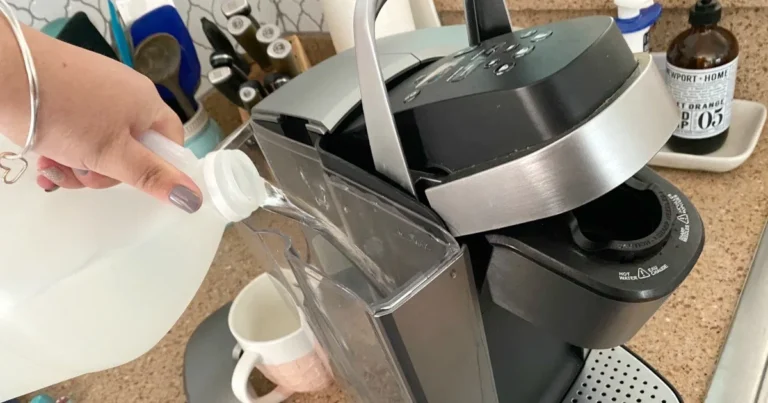
Step 2: Mix your vinegar solution. The standard ratio is 1 part vinegar to 2 parts water. For moderate buildup, fill your reservoir halfway with vinegar and top it off with water. For heavy scale (visible flakes or slow brewing), use a 1:1 ratio instead.
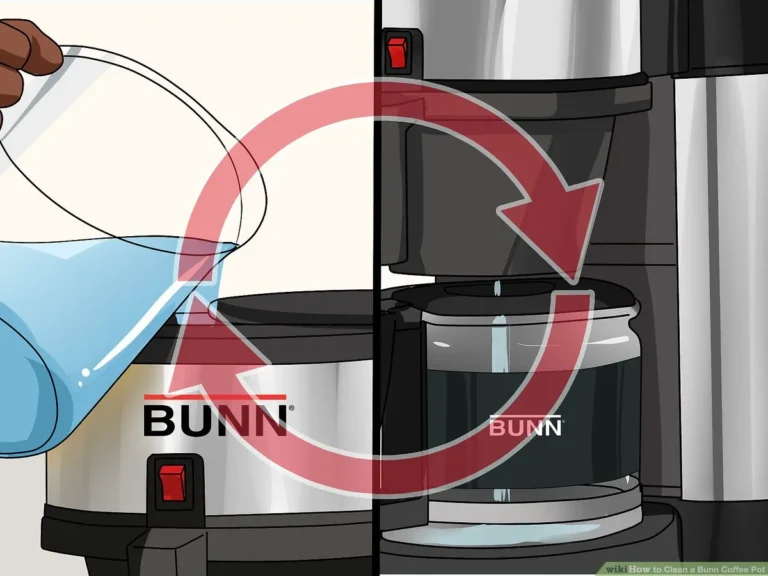
Step 3: Start a brew cycle. Pour the solution into the water reservoir. Place an empty carafe on the warming plate. Start the brew cycle as if you were making coffee.
Step 4: Pause for the soak. About halfway through the cycle, when the reservoir is half empty, turn off the machine. Let the hot solution sit inside for 30 minutes. For heavy scale, let it sit for 60 minutes.
You'll see bubbles forming as the vinegar attacks the scale.
Step 5: Complete the cycle. Turn the machine back on and let the brew cycle finish. The solution will drip into the carafe. Discard it down the drain.
Step 6: Rinse, rinse, rinse. Fill the reservoir with fresh water. Run a full brew cycle. Discard the water.
Repeat this process two to three more times. The fourth rinse cycle should smell clean, with zero vinegar odor.
Step 7: Wipe down exterior parts. While the machine is cooling, use a damp cloth to wipe the warming plate, carafe exterior, and any visible surfaces. Coffee oils and dust accumulate here too.
| Step | What Happens | Time Required |
|---|---|---|
| 1. Empty & prepare | Removes debris that could react with vinegar | 2 minutes |
| 2. Mix solution | Creates the descaling agent | 1 minute |
| 3. Start brew cycle | Heats and distributes vinegar through internal lines | 5 minutes |
| 4. Pause & soak | Allows acid to dissolve scale fully | 30–60 minutes |
| 5. Complete cycle | Flushes dissolved scale into carafe | 3–5 minutes |
| 6. Rinse | Removes residual vinegar and scale particles | 15–20 minutes (2–4 cycles) |
| 7. Final wipe | Cleans external surfaces | 2 minutes |
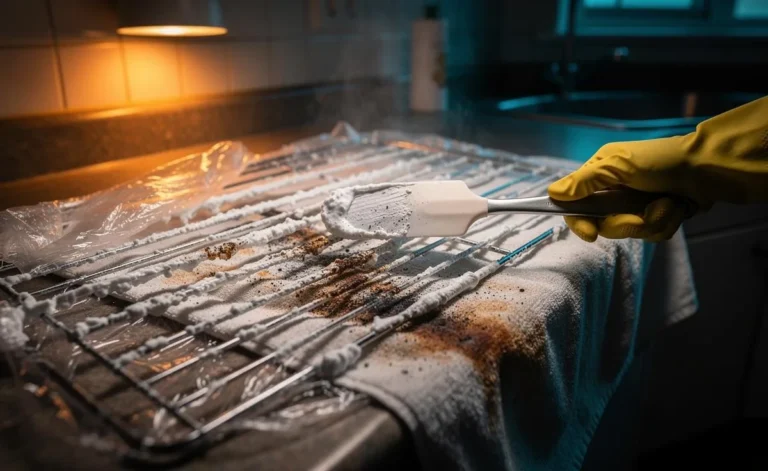
A pro tip for stubborn machines. If your coffee maker has visible scale on the warming plate or inside the water reservoir, use a soft brush or toothbrush dipped in pure vinegar to scrub those areas directly. Never use steel wool or abrasive pads. They'll scratch the surface and create places for bacteria to hide.
Avoid These Vinegar Cleaning Mistakes
The most common mistake is not rinsing enough. A single rinse cycle rarely removes all the vinegar residue. You need at least two full water cycles, sometimes three or four if your machine has a lot of internal surface area. The result is coffee that tastes like salad dressing.
Not a great start to your morning.
Using the wrong vinegar is another frequent error. Avoid apple cider vinegar, red wine vinegar, or balsamic. These leave behind their own residues and odors. Stick with plain white distilled vinegar at 5% acidity.
That's what manufacturer specifications indicate for safe descaling.
Skipping the soak is a mistake that costs you time. Some people just run a full cycle without pausing. The vinegar needs contact time to dissolve scale. Without a 30 minute soak, you're only cleaning the surface.
The thick deposits stay put.
Here are the most common mistakes to watch for.
- Using undiluted vinegar for every cleaning (too harsh for regular maintenance)
- Forgetting to remove the paper filter and coffee grounds before starting
- Letting the solution sit longer than 60 minutes, risking seal damage
- Running a rinse cycle with hot water only (cold water doesn't flush oils as well)
- Ignoring the manufacturer's descaling instructions in favor of a one size fits all approach
Another mistake: cleaning too aggressively. You don't need to descale every week unless you have extremely hard water. Overcleaning with vinegar can dry out rubber seals over time. Follow the frequency guidelines based on your water hardness, not a calendar reminder.
What about letting the solution sit overnight? Don't do it. The acetic acid can break down plastic components and rubber gaskets if left too long. Stick to the 30 to 60 minute window.
Your machine will thank you.
When to Use Vinegar vs. Commercial Descalers
Vinegar wins on cost and availability. A gallon of white vinegar costs about three to four dollars. Commercial descalers from brands like Urnex or Dezcal run ten to fifteen dollars for a similar number of uses. If you're on a budget, vinegar is the obvious choice.
Commercial descalers win on speed and residue. Citric acid based descalers work faster than vinegar. They typically require a 15 to 20 minute soak instead of 30 to 60 minutes. They also leave behind less odor.
If you're sensitive to the smell of vinegar or want a quicker process, a commercial descaler is worth the extra money.
Here is a side by side comparison to help you decide.
| Factor | White Vinegar | Commercial Descaler |
|---|---|---|
| Cost per use | $0.10 to $0.20 | $0.50 to $1.50 |
| Soak time needed | 30 to 60 minutes | 15 to 20 minutes |
| Odor during cleaning | Strong vinegar smell | Minimal to none |
| Rinse cycles required | 3 to 4 full cycles | 2 to 3 full cycles |
| Safe for all materials | No (avoid aluminum) | Usually yes, check label |
| Effectiveness on heavy scale | Good, with longer soak | Excellent, often faster |
When should you definitely use a commercial descaler? If your coffee maker has aluminum components, a commercial citric acid based descaler is safer. Vinegar reacts with aluminum and can cause pitting over time. Also, if your machine's warranty explicitly requires a branded descaler, follow that to avoid voiding coverage.
When is vinegar the better choice? For standard drip coffee makers with stainless steel, glass, and plastic parts, vinegar works perfectly. It's also the better option if you want a natural, nontoxic cleaner without chemical additives. Aggregate user reviews consistently rate vinegar as effective for 90 percent of home coffee machines.
Frequently Asked Questions About Vinegar Cleaning
Does vinegar damage coffee maker seals?
White vinegar at 5% acidity is safe for most rubber and silicone seals when used for short soaks. Damage only occurs with prolonged exposure over 60 minutes or weekly descaling. Follow the recommended frequency and soak times to avoid issues.
Can I clean a Keurig with vinegar?
Yes, most Keurig models recommend vinegar descaling. Use a 1:1 ratio of vinegar to water. Run a brew cycle without a pod, then pause for 30 minutes.
Rinse with three full water cycles. Check your specific model manual for confirmation.
How often should I descale my coffee maker?
Descale every one to three months depending on water hardness. Soft water allows longer intervals. Hard water requires monthly cleaning.
If you notice slow brewing or off flavors, descale immediately regardless of schedule.
Will vinegar leave a taste in my coffee?
Not if you rinse thoroughly. Run two to four full water cycles after descaling. The fourth cycle should smell clean.
If you still detect vinegar, run one more cycle with a pinch of baking soda to neutralize residual acid.
Is it safe to clean a coffee maker with vinegar and baking soda together?
No, do not mix them. Vinegar and baking soda react to produce carbon dioxide and water, neutralizing each other. That reaction reduces cleaning effectiveness.
Use vinegar first for descaling, then a separate baking soda rinse only if you need odor removal.
Can I use apple cider vinegar instead of white vinegar?
Not recommended. Apple cider vinegar contains additional acids and sugars that can leave a sticky residue. White distilled vinegar is the standard because it has consistent 5% acetic acid with no additives.
Final Verdict: Should You Clean with Vinegar?
Yes, for the vast majority of home coffee makers. Our research confirms that white distilled vinegar at 5% acidity is the most cost effective, natural, and reliable descaling method. It works on the same chemical principle as commercial descalers: acid dissolves calcium carbonate scale.
Stick with vinegar if these apply to you.
- You have a standard drip machine with plastic, glass, or stainless steel parts
- You want to save money on cleaning supplies
- You prefer a nontoxic, food safe cleaner
- You can spare 45 minutes for the full cleaning and rinse process
Choose a commercial descaler instead if these apply.
- Your machine contains aluminum components
- The manufacturer explicitly warns against vinegar
- You are sensitive to the smell of vinegar
- You need a faster cleaning process
The bottom line is simple. Vinegar works because the acetic acid chemically converts hard mineral scale into a soluble compound that flushes away. As of 2026, this remains the most widely tested and recommended home descaling method by both manufacturers and appliance repair technicians. One $4 bottle of vinegar can extend your coffee maker's life by years.
That's a deal worth taking.