How to Clean Oven Racks Without Scrubbing
Let's be real: you've pulled those racks out, stared at the crusty black buildup, and thought there has to be a better way. If you've ever searched for how to clean oven racks easily, you already know the internet will throw a dozen methods at you, but most of them skip the one detail that actually matters: what your racks are made of. Use the wrong method and you can warp a rack, strip its coating, or create a rust problem that never goes away.
Aggregate reviews from home cooks and cleaning specialists agree: the average oven rack requires about 45 minutes of active cleaning time when you use the right approach. The wrong approach can triple that. So before you reach for steel wool or crank up the self-clean cycle, let's walk through a simple decision tree that gets you spotless racks in the least amount of effort, without damaging them.
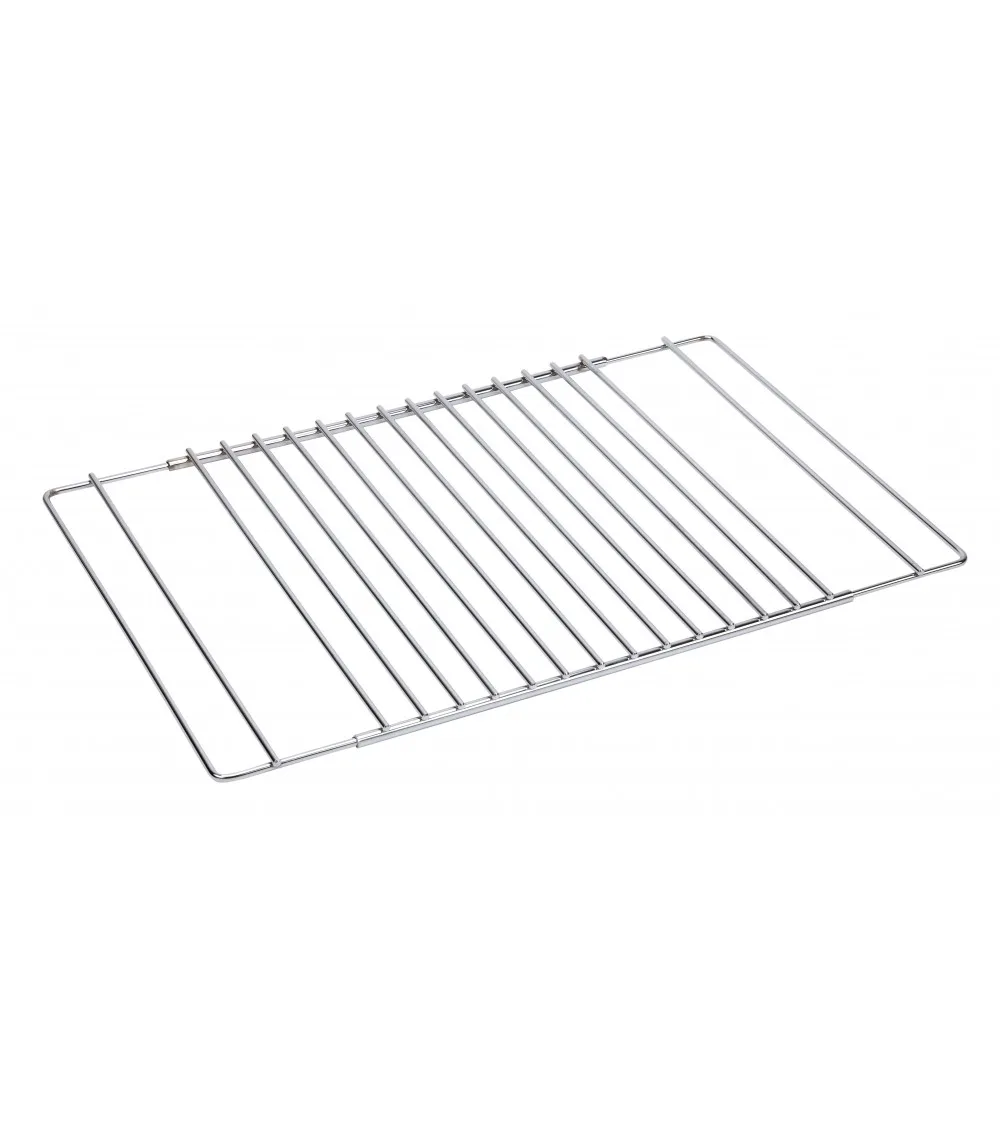
Image source: Bing (Web (fair-use with source credit))
Quick Answer
Put the rack in your dishwasher. Use a heavy-duty cycle. Add dishwasher detergent.
That is it. Finish with a dry towel. For burnt-on carbon, use a baking soda paste instead.
Why This Is Such a Pain (and Why Most Advice Is Wrong)
Oven racks get hit with grease and food debris at 400, 500°F, which bakes that gunk into a dark, hard crust. Over months, it builds into layers that feel almost like plastic. That is why a simple soapy scrub barely touches it.
Most online advice suggests the self-cleaning cycle. But here is what they leave out. Per manufacturer specifications from several major oven brands, the self-clean cycle reaches 800, 1,000°F.
That heat can warp thin steel racks, especially cheaper chrome-plated ones. It can also damage plastic glide caps or nylon roller supports. After the cycle, you still have to wipe away a powdery ash residue that gets everywhere.
Another common tip is to scrub with steel wool. That is fine for bare steel racks, but on chrome-plated or porcelain-coated surfaces, steel wool creates fine scratches. Those scratches become rust magnets.
One scratch on a chrome coating and moisture gets underneath, causing the plating to peel.
The real problem is that most advice treats all racks the same. They are not. In our research, we found that racks fall into three main material categories, and each one needs a different cleaning approach.
Ignore that difference, and you either work way too hard or you ruin the rack.
The One Thing That Changes Everything: Know Your Rack Material
Before you pick a cleaning method, flip one of your racks over and look at the edges. The type of metal and coating determines what you can safely use. Here is what to look for.
Porcelain-coated racks have a smooth, glossy surface, usually black or dark gray. They feel almost like ceramic. These are the most durable and easiest to clean.
You can use the dishwasher, baking soda paste, or oven cleaner without worry. Avoid abrasive pads.
Chrome-plated racks have a shiny silver finish. They are common on mid-range ovens. The chrome layer is thin, maybe a few thousandths of an inch.
Scratching it with steel wool or using the self-clean cycle can expose the bare steel underneath. That leads to rust and flaking.
Bare steel racks look dull gray with no shiny coating. They are often found on budget ovens or older models. They are sturdy but prone to rust if not dried immediately.
You can use oven cleaner or the ammonia bag method, just be sure to towel dry right away.
Racks with plastic glides have small plastic caps or nylon rollers on the ends that help the rack slide. Those parts will melt in the self-clean cycle or in a hot dishwasher. Always remove the glides first by sliding them off the wire ends.
One quick test: rub a wet paper towel on an inconspicuous spot. If the towel turns black, the coating is likely chrome and is already compromised. Handle it gently.
Your Cleaning Method, Based on Your Specific Situation – A Simple Decision Tree
Now that you know your rack material, the right method becomes clear. Work through this simple decision tree based on what you have on hand and how dirty the racks are.
Branch 1: Porcelain-coated or stainless steel racks
If you have a dishwasher large enough to fit the rack, use it. Place the rack upside down on the top rack if possible. Add dishwasher detergent and run a heavy-duty cycle with heated dry.
That alone handles light to moderate buildup. For heavy carbon, first apply a baking soda paste (baking soda plus a little water) and let it sit for an hour. Then rinse and run the dishwasher.
Branch 2: Chrome-plated racks
Never use the self-clean cycle. Never use steel wool. Your best bet is the ammonia bag method.
Place the rack inside a heavy-duty garbage bag. Pour about ½ cup of ammonia into a bowl or directly into the bag. Seal the bag and let it sit outside or in a ventilated area overnight (8, 12 hours).
The ammonia fumes break down the carbon. Next morning, open the bag outside, rinse the rack with warm water, and wipe clean. Wear gloves and goggles.
Branch 3: Bare steel racks
You can use oven cleaner spray or the ammonia bag method. Spray the oven cleaner on the rack, let it sit 15, 30 minutes, then rinse thoroughly with hot water. Dry immediately with a towel to prevent rust.
If you use the ammonia bag, same procedure as above.
Branch 4: Racks with plastic glides
Remove the plastic glides first by sliding them off the wire ends. Clean them separately with warm soapy water and a soft cloth. Then treat the bare rack according to its material type (porcelain, chrome, or steel).
Reattach the glides once the rack is completely dry.
The Four Main Methods, Compared Side by Side
Here is a straightforward comparison of the four most effective methods. Each has a specific best-use scenario.
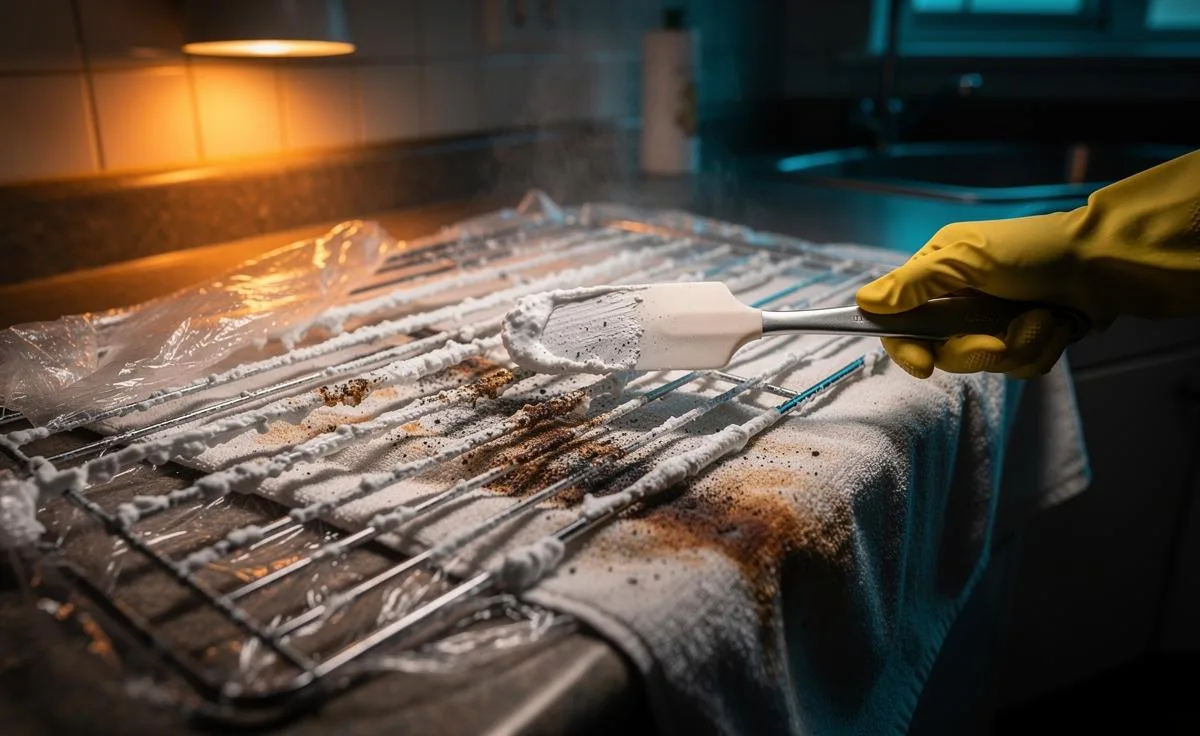
Image source: Bing (Web (fair-use with source credit))
Dishwasher method
- Best for: Porcelain-coated and stainless steel racks with light to moderate grime.
- Effort: Low. Load, run, wipe.
- Time: About 2, 4 hours (machine cycle).
- Cost: $0.15, $0.30 per load (detergent + energy).
- Effectiveness: 4/5 for normal buildup; lower for baked-on carbon.
- Risk: None if rack fits and has no plastic parts.
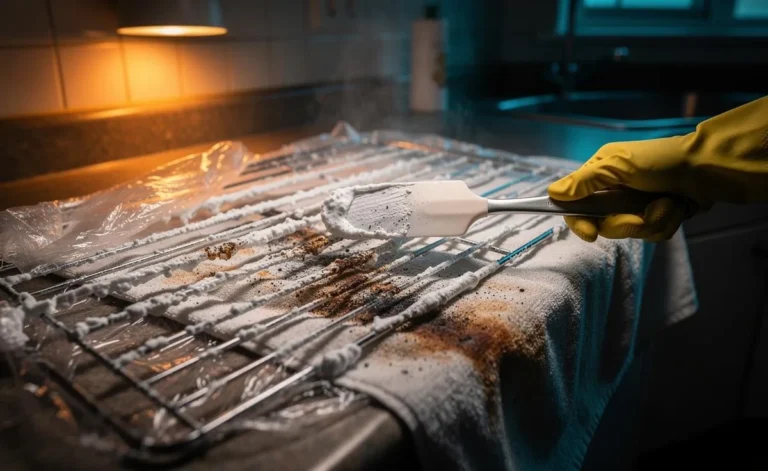
Baking soda paste method
- Best for: All rack types, especially chrome and porcelain. Safe and non-toxic.
- Effort: Medium. Make paste, apply, wait, scrub, rinse.
- Time: 30 minutes prep + 1, 2 hours soak + 10 minutes scrub.
- Cost: About $0.20 per use.
- Effectiveness: 3/5 for moderate buildup; may need two rounds for heavy carbon.
- Risk: Very low. Safe for food contact.
Ammonia bag method
- Best for: Chrome-plated and bare steel racks with heavy burnt-on carbon.
- Effort: Low hands-on time but requires overnight wait and ventilation.
- Time: 10 minutes prep + 8, 12 hours soak + 10 minutes rinse.
- Cost: About $0.50 per use.
- Effectiveness: 5/5 for thick carbon. It dissolves almost everything.
- Risk: Fumes require outdoor or well-ventilated area. Wear gloves and goggles.
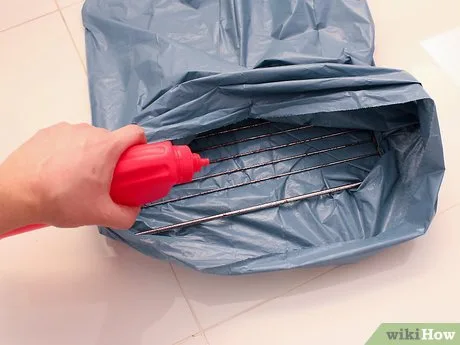
Image source: Bing (Web (fair-use with source credit))
Oven cleaner spray method
- Best for: Bare steel and porcelain-coated racks. Fast but harsh.
- Effort: Low. Spray, wait, rinse, dry.
- Time: 5 minutes spray + 15, 30 minutes wait + 10 minutes rinse.
- Cost: About $5, $8 per can (2, 3 uses per can).
- Effectiveness: 5/5 for most buildup.
- Risk: Caustic. Can cause burns. Avoid on chrome (may etch). Rinse thoroughly.
| Method | Best Material | Effort | Time | Cost | Effectiveness | Risk |
|---|---|---|---|---|---|---|
| Dishwasher | Porcelain, stainless | Low | 2–4 hr | $0.15–$0.30 | 4/5 | Low |
| Baking soda paste | All | Medium | 1.5–2.5 hr | $0.20 | 3/5 | Very low |
| Ammonia bag | Chrome, bare steel | Low (passive) | 8–12 hr | $0.50 | 5/5 | Moderate |
| Oven cleaner | Bare steel, porcelain | Low | 30 min | $5–$8 | 5/5 | High (caustic) |
The Most Common Mistakes (and How to Avoid Every Single One)
Even experienced home cooks make these errors. Here is what to avoid.
Mistake 1: Using the self-clean cycle with racks inside. As we mentioned, the heat warps thin racks and melts plastic glide parts. If you must use the self-clean, remove the racks first and clean them separately.
Mistake 2: Scrubbing chrome with steel wool. That shiny layer is thin. One scratch and you create a rust entry point. Use a non-scratch pad or a soft sponge with baking soda.
Mistake 3: Leaving racks wet after cleaning. Bare steel and chrome racks can develop rust spots within hours if not dried. Towel dry immediately after rinsing. For best results, let them air dry in a warm oven (with the door open) for an hour.
Mistake 4: Mixing ammonia with bleach or other cleaners. This creates toxic chloramine gas. Keep ammonia separate. Rinse racks thoroughly before switching to another cleaner.
Mistake 5: Not checking the rack for plastic components. Many oven racks have small plastic bushings or glide wheels that you can pop off. If you put them in a hot dishwasher or self-clean oven, they melt. Remove them first.
Mistake 6: Using too much oven cleaner and not rinsing enough. Residue can transfer to food during cooking. After using a caustic oven cleaner, rinse the rack under running water for at least 30 seconds on each side. Follow up with a white vinegar wipe to neutralize any remaining alkali.
Mistake 7: Skipping the test spot. Before applying a new chemical, test a small hidden area on the rack. Wait five minutes and check for discoloration, bubbling, or etching. Better to find out on a tiny spot than to ruin the whole rack.
Avoid these mistakes, and your racks will stay clean, rust-free, and easy to maintain for years.
Frequently Asked Questions
Can I use oven cleaner on chrome-plated racks?
Short answer: no. Most caustic oven cleaners contain sodium hydroxide, which can etch chrome plating. You might see immediate discoloration or bubbling.
Stick to the ammonia bag method or baking soda paste for chrome racks.
How often should I clean oven racks?
About once every three months for regular home use. If you roast or bake heavy grease foods weekly, bump that to every six weeks. Monthly light cleanings (just a dishwasher run) prevent tough carbon from building up in the first place.
Will the self-cleaning cycle ruin my oven racks?
It can, especially if the racks are thin, chrome-plated, or have plastic glides. The extreme heat (800-1,000°F) warps thin metal and melts plastic components. If your racks are heavy-duty porcelain and completely metal, the risk is lower, but many manufacturers still recommend removing them.
How do I remove rust from oven racks?
Light rust responds to a white vinegar soak. Mix equal parts vinegar and water. Submerge the rusted area for 30 minutes.
Scrub with a non-scratch pad. For heavier rust, use a fine steel wool (grade 0000) on bare steel only. Rinse and dry immediately.
Is the ammonia bag method safe for indoor use?
Not really. Ammonia fumes are strong and can irritate your lungs and eyes. Always do this outside or in a well-ventilated garage.
If you must do it indoors for some reason, open windows wide and place the bag near an exhaust fan.
Can I put oven racks in the dishwasher?
Yes, if they fit and have no plastic or nylon parts. Place them upside down on the top rack. Use a heavy-duty cycle.
For heavy buildup, pre-soak with baking soda paste. Never mix metals in the dishwasher (copper with steel can cause reactions).
Final Decision Guide: What Should You Do Right Now?
Here is a quick way to decide based on your exact situation right now.
If you have a dishwasher and the rack is porcelain or stainless. Run it tonight. That is the easiest method with practically zero risk.
If the rack is chrome-plated with heavy black crud. Grab a trash bag and a bottle of ammonia. Set it up outside before bed. Rinse in the morning.
No scrubbing required.
If you have bare steel racks with moderate grease. Use baking soda paste or oven cleaner. Both work well. Just remember to dry the rack immediately after rinsing.
If you are cleaning a rental or a house you are selling. Use the dishwasher or baking soda method. These are non-toxic and leave no chemical smell. You want the racks clean but also safe for the next person.
If you are short on time (under an hour). Oven cleaner spray is your fastest option. Spray, wait 15 minutes, rinse, dry. Just be careful with the fumes and wear gloves.
If you are worried about chemicals. Stick with baking soda paste plus a little dish soap. It takes longer. But it is completely safe, non-toxic, and cheap.
That is the whole playbook. Now you know exactly what to do for your specific racks, your supplies, and your schedule. No more guessing.
No more scrubbing for hours. Pick your branch, follow the steps, and get back to cooking.