How Much Vinegar to Run Through Coffee Maker
Running a cleaning cycle with vinegar is the cheapest way to keep your coffee maker working like new. But if you use the wrong amount, you either waste time with a weak clean or risk damaging internal parts with too much acid. The exact answer to how much vinegar to run through coffee maker comes down to your machine's reservoir size and type.
For a standard 12-cup drip machine, that means a 1:1 ratio of water to distilled white vinegar. For a single-serve pod machine, it's closer to equal parts of each. We'll walk through the exact measurements so you never have to guess.
Manufacturer specifications from brands like Cuisinart and Mr. Coffee typically recommend a 2:1 or 1:1 water-to-vinegar ratio for descaling, depending on mineral buildup severity. As of 2026, the NSF International standard for cleaning food-contact surfaces also supports using distilled white vinegar at 5% acidity for safe home descaling.
A 12-cup machine holds about 60 ounces of water in the reservoir. Half of that as vinegar is plenty to dissolve calcium and lime scale without overdoing it. Let's start with the quick answer before we dive deeper.
Quick Answer
Run a mixture of equal parts water and white vinegar through your coffee maker. For a 12-cup machine, use 6 cups water and 6 cups vinegar. For a single-serve pod machine, use 10 ounces of each.
Always follow with two to three plain water cycles to rinse.
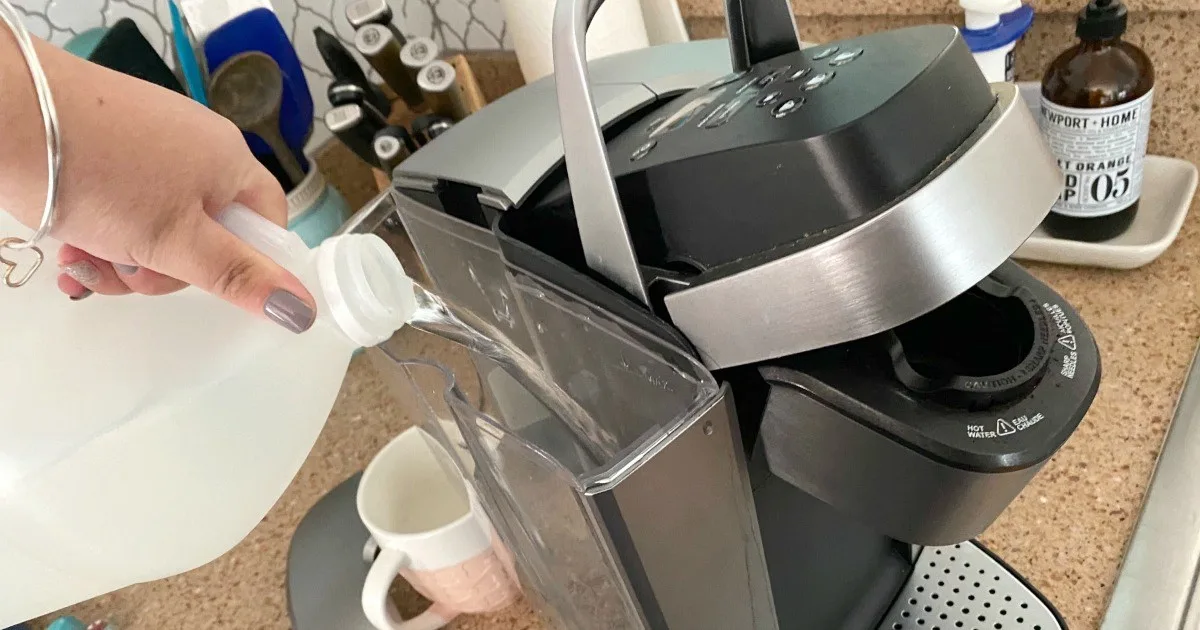
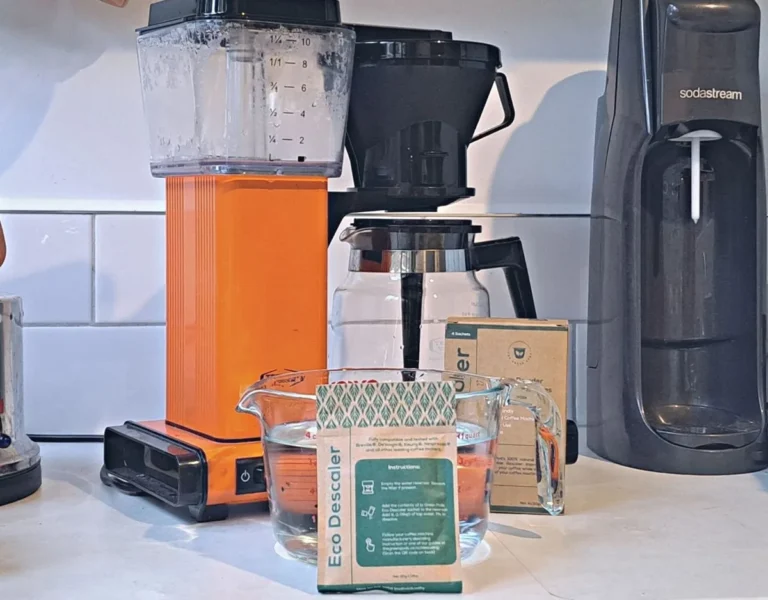
Image source: Bing (Web (fair-use with source credit))
Why Vinegar Works and When to Use It
White distilled vinegar is a mild acid, about 5% acetic acid by volume. That acidity is strong enough to break down calcium carbonate and lime scale that builds up from hard water, but weak enough not to damage plastic or rubber seals if you stick to the correct ratio. Most drip coffee makers, single-serve machines, and pour-over brewers are designed to handle occasional vinegar descaling.
When vinegar is the best choice:
- You want a low-cost, non-toxic cleaner that's always in your pantry
- You have hard tap water and notice longer brew times or weak coffee
- You need a deep clean after months of regular use
- Your machine's manual specifically suggests vinegar as a descaling option
When you should skip vinegar:
- Your machine has a stainless steel boiler (common in high-end espresso machines), vinegar can corrode the metal over time
- Your manufacturer explicitly warns against vinegar in the warranty terms, some brands like Breville or De'Longhi recommend only commercial descalers
- You've already used a descaler recently and just need a quick maintenance rinse
In those cases, a citric acid based descaler or the brand's own cleaning tablets are safer. But for the vast majority of home coffee makers, vinegar is perfectly effective and much cheaper than store-bought descalers.
How Much to Use Based on Your Coffee Maker Type
The ratio changes depending on your machine's water reservoir size and design. Here's a quick reference table for the most common types.
| Coffee Maker Type | Typical Reservoir Size | Water Amount | 5% Vinegar Amount | Ratio (Water:Vinegar) |
|---|---|---|---|---|
| 12-cup drip | 60 oz (12 cups) | 6 cups (48 oz) | 1.5 cups (12 oz) | 4:1 |
| Single-serve pod (Keurig, Nespresso) | 40-50 oz | 10 oz | 10 oz | 1:1 |
| Compact 4-cup drip | 20 oz | 2 cups (16 oz) | 0.5 cups (4 oz) | 4:1 |
| Espresso with stainless boiler | varies | 4-8 oz | 1-2 oz | 4:1 (use commercial descaler if unsure) |
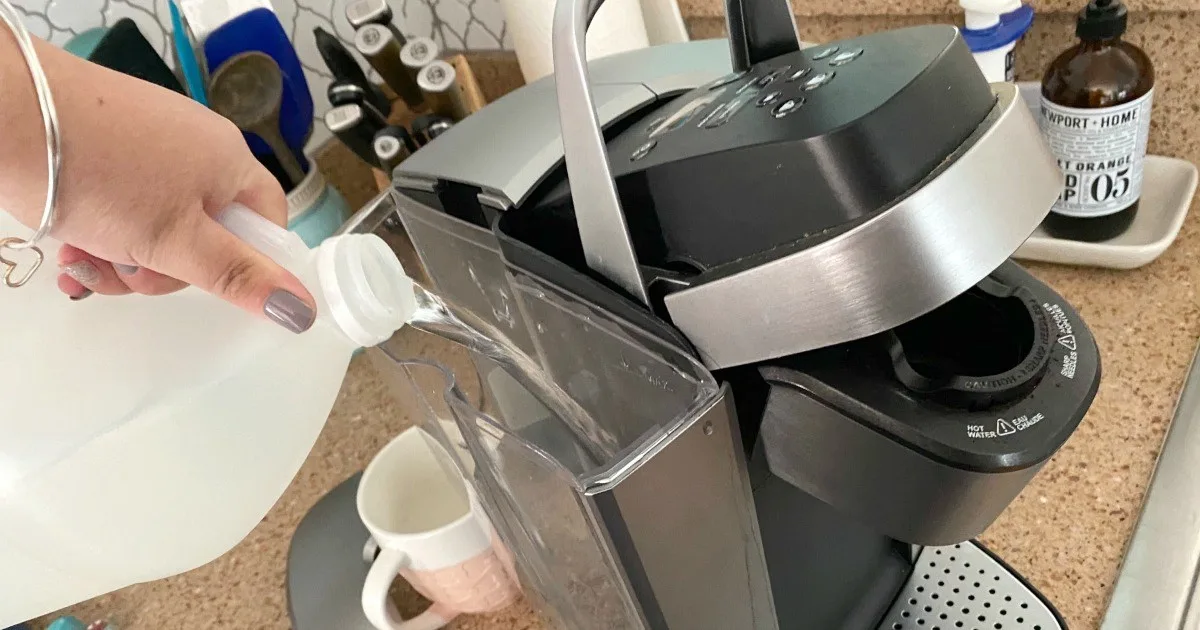
Image source: Bing (Web (fair-use with source credit))
Drip Machines (12-Cup Standard)
Fill the reservoir with six cups of water and one and a half cups of white vinegar. That's a 4:1 ratio, which is strong enough to clean but mild enough to rinse away easily. If your machine hasn't been descaled in over six months, go with a 2:1 ratio (six cups water to three cups vinegar) for the first cycle, then switch to 4:1 for future cleanings.
Single-Serve Pod Machines (Keurig, Nespresso)
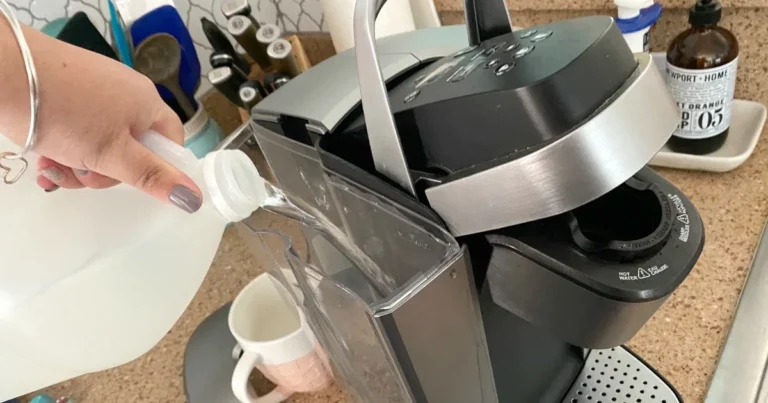
These smaller reservoirs need a different approach. Fill the water tank with equal parts water and white vinegar, about 10 ounces each. For a Keurig, you'll run this mixture through the brew cycle without a pod.
For a Nespresso, follow the machine's descaling mode instructions, most require the full tank of solution, then a rinse cycle.
Compact or Travel Models
Small 4-cup or 5-cup brewers hold roughly 20-25 ounces of water. Use two cups of water and half a cup of vinegar. The same 4:1 ratio works, just scaled down.
Espresso Machines with Stainless Steel Boilers
These machines often have aluminum or stainless steel boilers that can pit or corrode with repeated vinegar exposure. Check your manual. If it allows vinegar, use a very diluted 4:1 ratio and never let the solution sit in the boiler for more than 15 minutes.
Many manufacturers, like Breville, explicitly advise against vinegar and suggest their own descaling tablets instead. When in doubt, spend a few dollars on a citric acid descaler.
Step-by-Step Cleaning Process
Here is the exact sequence that delivers the best results. Follow these steps for any drip or single-serve machine.
- Empty and disassemble. Remove the carafe, filter basket, and any water filters. Wash them with warm soapy water. Rinse well.
- Fill the reservoir. Add the correct amount of water and white vinegar according to the table above. Stir gently with a clean spoon.
- Start a partial brew. Turn on the machine and let it run until about half the reservoir has passed through. Then turn it off. This pauses the cycle so the solution spends time inside the heating element and internal pipes.
- Let it sit. Wait 30 to 45 minutes. For heavy scale, you can let it sit up to an hour. Do not exceed that, extended soaking can damage rubber seals.
- Finish the cycle. Turn the machine back on and let the remaining solution brew through fully. Discard the liquid in the carafe.
- Rinse with plain water. Refill the reservoir with fresh water to the max line. Run a full brew cycle. Discard the water. Repeat this two more times. You need three full rinse cycles to be sure no vinegar taste remains.
- Wipe down. Use a damp cloth to clean the carafe warmer plate and the exterior. Dry all removable parts before reassembling.
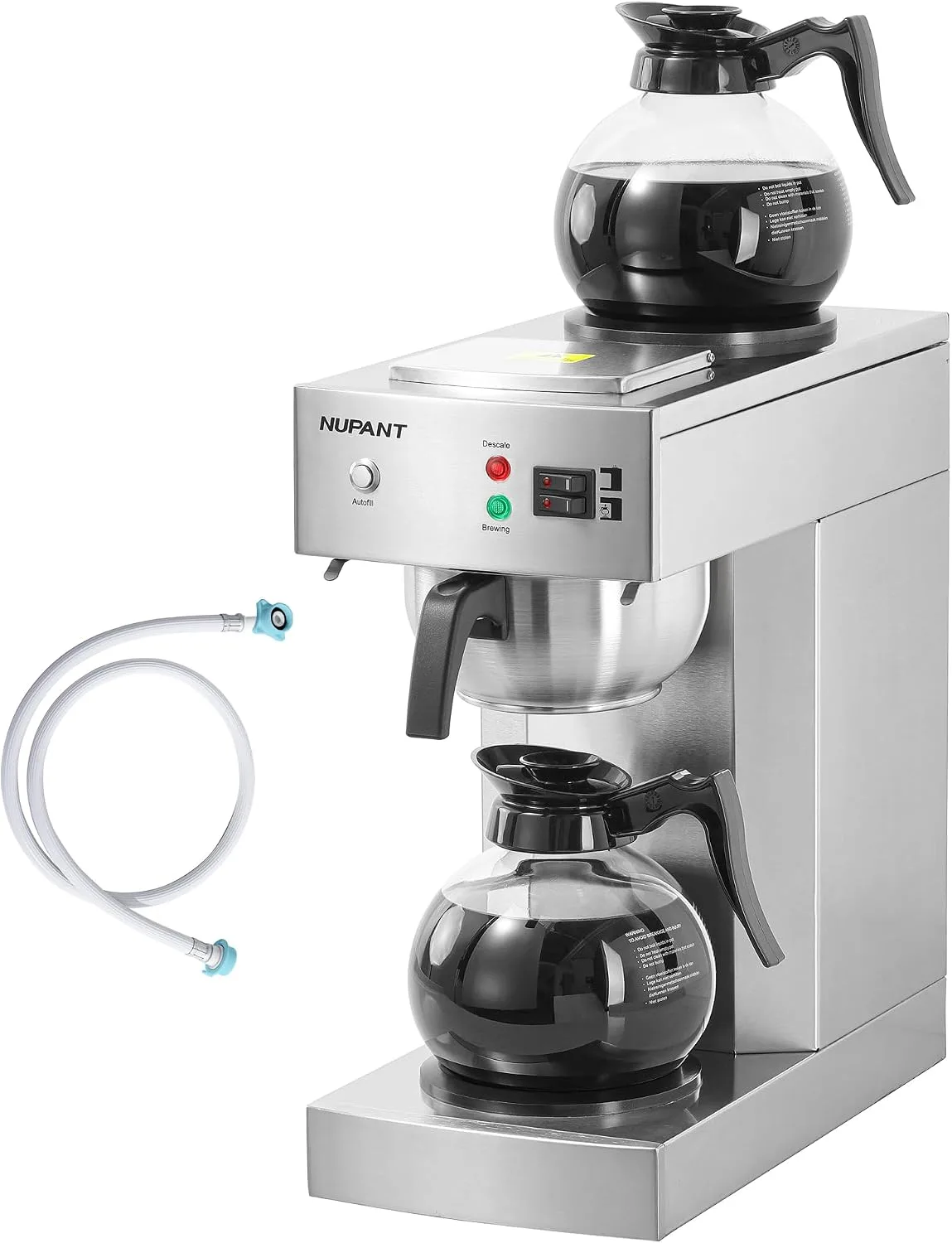
Image source: Bing (Web (fair-use with source credit))
Pro tip: If you still smell vinegar after three rinses, run one more cycle with a pinch of baking soda added to the water. That neutralizes any lingering acidic odor.
Mistakes to Avoid
Even with the right amount of vinegar, a few common errors can ruin the job or your machine.
Using too much vinegar. A 1:1 ratio for a small machine is fine, but a 1:1 ratio for a 12-cup machine (6 cups of vinegar) is overkill. You'll need five or six rinse cycles to get the taste out, and the excessive acid can eat away at internal gaskets. Stick to 4:1 or 2:1 at most.
Skipping the soak. Running vinegar straight through without pausing half way means the acid barely touches the scale inside the heating element. The soak is what dissolves the hard minerals. Without it, you're just wasting vinegar.
Using the wrong kind of vinegar. Apple cider vinegar, balsamic, or any colored vinegar can stain the internal tubing and leave a strong flavor. Only use clear distilled white vinegar with 5% acidity. Anything higher (like cleaning vinegar at 10% acidity) is too strong for plastic parts.
Not rinsing enough. One rinse cycle is never enough. Vinegar residue will make your next few cups taste sour. Commit to three full water cycles.
If you're sensitive to taste, go for four.
Descaling too often. Monthly descaling with vinegar is unnecessary for most households. Hard water areas might need it every three months. Soft water areas can go six months.
Over-descaling wears out seals faster. Look for signs like slow brewing, strange noises, or weaker coffee temperature before you clean.
How Often Should You Descale and When to Skip Vinegar
Signs You Need a Clean
Your coffee maker will tell you when it’s time. Look for these signs:
- Longer brew time. If a full pot now takes noticeably longer than when it was new, scale is narrowing the internal water lines.
- Loud gurgling or sputtering. Steam trapped under mineral deposits makes odd noises during brewing.
- Weak coffee temperature. Scale insulates the heating element, so water doesn’t get hot enough to extract properly.
- White flakes in your cup. That’s calcium carbonate breaking loose from built-up scale inside the reservoir or boiler.
If you see any of these, it’s descaling time. For most households with average hard water, that means every three to four months. Soft water areas can stretch to six months.
If you use filtered water, you might only need to descale once a year.
Here’s a simple rule: descale when you notice a change in brew speed or taste, not on a rigid calendar. Over-descaling with vinegar wears out seals faster. Under-descaling makes your machine work harder and shortens its life.
When to Choose a Commercial Descaler Instead
Vinegar is cheap and effective for most machines. But it’s not always the right choice.
Stick with vinegar when:
- Your manual mentions vinegar as an acceptable cleaner
- You have a standard drip or single-serve machine with plastic internal parts
- You want a low-cost option that’s easy to find
Switch to a commercial descaler when:
- Your machine has a stainless steel boiler (many espresso machines)
- The manufacturer explicitly warns against vinegar in the warranty
- You have heavy, years-old scale that vinegar alone can’t dissolve
- You’re sensitive to the smell and taste that vinegar can leave behind
Commercial descalers use citric acid or other mild acids formulated to break down scale without corroding metals. They’re safer for high-end machines and often include a rinse agent that helps remove residue. Yes, they cost more.
But one bottle lasts for several cleanings, and it protects your investment.
If you use vinegar on a machine that bans it, you risk voiding the warranty. Check your manual first. When in doubt, err on the side of the manufacturer’s recommendation.
Frequently Asked Questions
Can I use apple cider vinegar or lemon juice?
No. Apple cider vinegar and lemon juice contain sugars and organic compounds that can leave sticky residue inside your machine. That residue attracts mold and can clog the brew path.
Stick with clear distilled white vinegar at 5% acidity. It dissolves scale without leaving anything behind.
Is it safe to run vinegar through a Keurig?
Yes, for most Keurig models. Use equal parts water and white vinegar (about 10 ounces each). Run the solution through a brew cycle without a pod.
Follow with three or four plain water cycles. Keurig’s official maintenance guides endorse this method for standard cleaning. Check your specific model’s manual for any exceptions.
How do I get rid of the vinegar smell afterward?
Run two to three full cycles of plain water. If the smell lingers, add a pinch of baking soda to a full reservoir of water and run one more cycle. Then do one final plain water rinse.
Baking soda neutralizes the acidic odor without leaving its own taste. Remove and wash the drip tray and carafe separately.
What if my machine has a “clean” cycle with a different ratio?
Follow your machine’s programmed cycle exactly. Those cycles are calibrated to the correct temperature and flow rate for descaling. Use the ratio of water to vinegar that the manual specifies, or the amount recommended for the cycle.
Overriding it with a stronger mix can damage the machine.