How to Bring a Rusty Cast Iron Skillet Back to Life
So, you finally decided to tackle how to restore rusty cast iron skillet. Good call. That orange mess can look like a lost cause, but it's actually a quick fix with the right steps.
Rust doesn't destroy the pan; it just eats the seasoning layer and gets at the raw iron beneath.
In our research, the standard vinegar-and-scrub method works for most rust levels. Manufacturer specs from Lodge confirm that the key is stripping rust without damaging the iron underneath. As of 2026, the process remains the same: remove the rust, neutralize it, dry it fast, and rebuild the seasoning layer.
Quick Answer
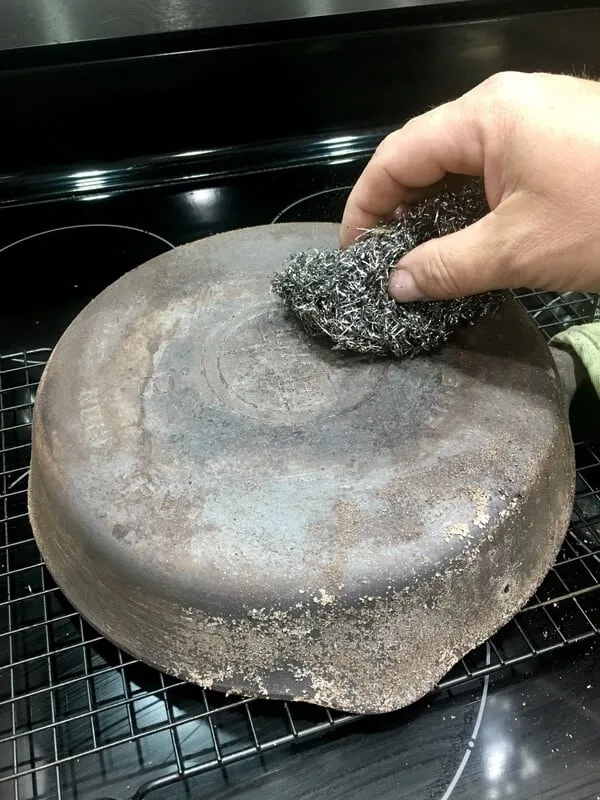
Scrub the skillet with steel wool, soak it in vinegar for moderate rust, neutralize with baking soda, dry it fast, then coat the pan with a thin layer of oil. Bake it upside down at 450°F for an hour. Repeat the oil coat three to six times until the surface is smooth and black.
First, Read the Rust: A Visual Guide to What You're Working With
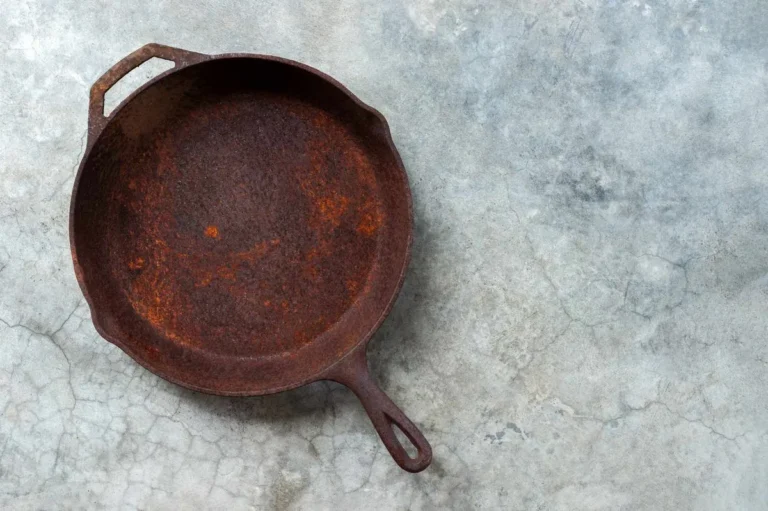
Look at the rust before you touch anything. The fix depends entirely on what you're seeing. Light rust looks like a dusting of orange powder on an otherwise smooth surface.
Heavy rust appears as flaking scales or lumps. Deep pitting shows up as dark craters or rough texture that catches your fingernail.
Here's a quick test to help you decide. Rub your finger across the surface. If a powdery orange residue lifts onto your skin, that's light surface rust.
It scrubs off in minutes. If chunks flake off or you see tiny holes where the iron has corroded, you're dealing with deeper damage.
- Light rust: fine orange dust, smooth feel, easy to scrub
- Heavy rust: flaking or scaling, rough patches, needs vinegar soak or electrolysis
- Pitting: visible holes or craters, may require extended soaking, but the pan is usually still salvageable
The longer rust sits, the deeper it eats. A pan left in a damp basement for six months will have more aggressive corrosion than one that got wet last week. So take a solid look before you grab the steel wool.
This visual read sets the tone for everything that follows.
Tools and Materials: What to Grab (and What to Skip)
You don't need a fancy kit to restore most rusty skillets. The essentials cost under $15: steel wool, white vinegar, baking soda, paper towels, and a seasoning oil. Some cases call for heavier equipment, but you can handle 80% of skillets with basic kitchen supplies.
| Tool | Use | When You Need It |
|---|---|---|
| Steel wool (fine and coarse) | Scrubbing rust off | Most rust levels |
| White vinegar | Loosening rust during a soak | Moderate to heavy rust |
| Baking soda | Neutralizing vinegar residue | After any vinegar soak |
| Chainmail scrubber | Reaching rough spots | Stubborn patches |
| Lye or oven cleaner | Stripping old seasoning | If you're also removing tough seasoning |
| Electrolysis setup | Removing rust without scrubbing | Heavy pitting, intricate details, collectible pans |
Skip the wire brush. It's too aggressive for cast iron and leaves scratches that trap debris. Skip the orbital sander for vintage pans, too.
It removes the smooth surface profile that gives older skillets their nonstick character.
If you're dealing with surface rust only, your shopping list is just steel wool, vinegar, and oil. Anything heavier, and you'll know it from the visual test above.
Restore Step by Step: Visual Cues at Every Stage
Follow the process in stages and watch the surface change at each step. Here's the flow that works for most rust problems:
- Scrub first. Hit the rust with steel wool under running water to remove loose flakes. If orange starts to fade to gray-silver, you can skip the soak entirely.
- Soak in vinegar for moderate to heavy rust. Mix equal parts white vinegar and water. Submerge the skillet. Check it after 30 minutes, because the soak is tied to visual cues.
The 30-Second Vinegar Soak Check
Pull the pan out after 30 minutes. Rinse it and scrub with steel wool. If rust lifts easily and leaves shiny gray iron, the soak did its job.
If rust remains, return it to the vinegar and check again every two to three hours. Never soak overnight without checking, because vinegar eats into the iron once the rust is gone.
Neutralize after the soak. The acid residue triggers flash rust. A quick baking soda paste stops it. Apply it, let it sit for five minutes, then rinse.
Dry immediately. Rust forms on bare iron in seconds. Use paper towels and then a low oven set to 200°F for 10 minutes. You'll see bare gray iron with a slight sheen.
Watch for flash rust. It appears as an orange haze. If it shows up, you missed a spot or drying took too long. Scrub it off with steel wool and start drying again.
Seasoning: What the Pan Should Look Like at Each Coat
Seasoning is where the magic happens. The pan goes from dull gray to warm brown and finally to slick, black nonstick. Each coat takes about an hour, and you'll see clear progress after every round.
Applying the Oil So Thin It Feels Like a Mistake
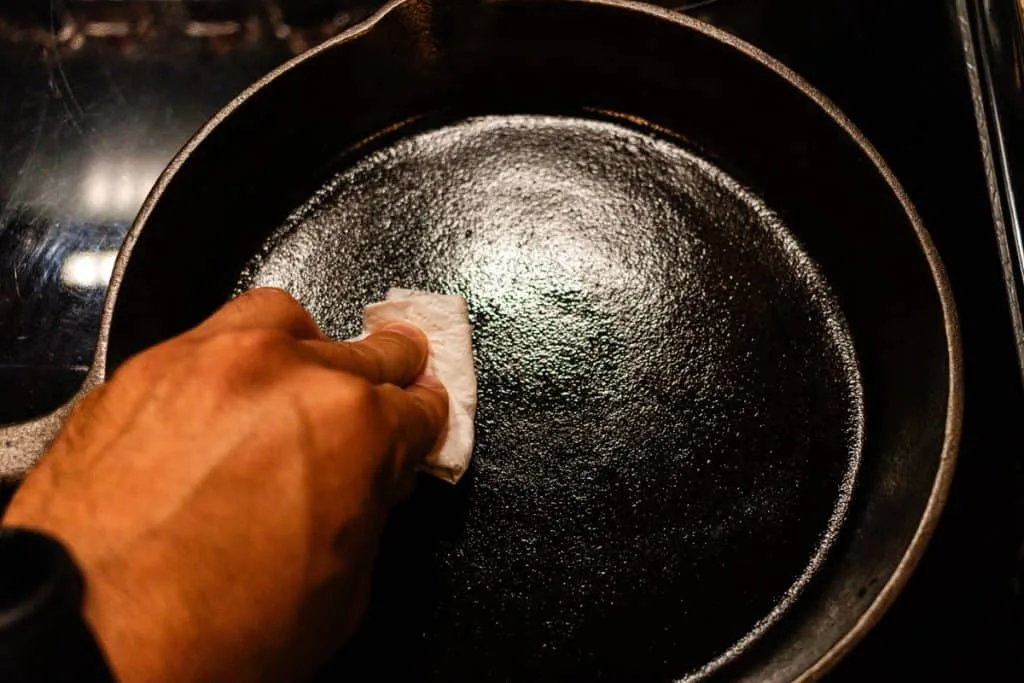
Put a drop of oil on the skillet, then rub it all over with a paper towel. The trick is to buff it off as if you never wanted it there in the first place. The surface should look dry, not greasy.
A heavy layer turns sticky and gummy in the oven.
Oven Time and the Shift from Gold to Black
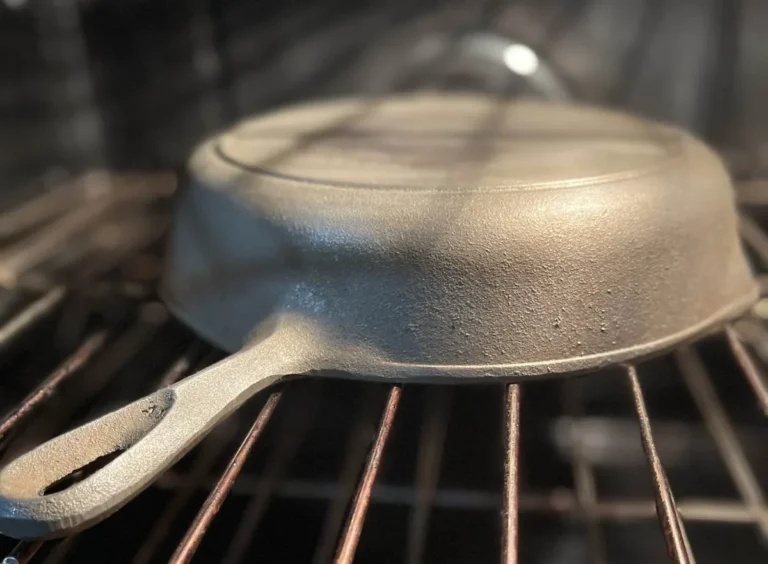
Place the skillet upside down in a cold oven. Set it to 450°F, and bake for one hour. After the hour, turn off the oven and let the pan cool inside.
Do this three to six times for a reliable nonstick layer.
- Coat 1: pan turns a light gold-brown
- Coat 2: deep brown with a matte finish
- Coat 3: dark bronze, almost black in places
- Coat 4 or more: glossy dark black
If the pan looks blotchy or spotty, the oil was uneven. Let it cool and apply another coat. The color shift is your progress tracker, so trust what you see.
Common Visual Mistakes That Ruin a Restoration
Restoration failures usually boil down to a few visual misreads. Here's what to avoid:
- Over-soaking leaves the iron pitted. Those tiny craters collect food and make the surface rough. If you see gray sludge forming in the vinegar, you've waited too long.
- Over-scrubbing smooths the pan unevenly. Cast iron needs micro-texture for seasoning to grip. Scrubbing until the surface is shiny and "cleaned" can actually polish it slick, which makes seasoning flake later.
- Sticky oil gloss is a dead giveaway of too thick a coat. The surface looks shiny and tacky, and it never dries. Strip it with oven cleaner and start over.
- Flash rust is the sneakiest culprit. It appears as a thin orange haze within minutes of drying. If it's there, the pan wasn't dry or acid wasn't fully neutralized.
The visual rule of thumb: a good restored skillet looks matte, feels smooth but not slippery, and has a uniform color. Any patchiness or glossy spots means you need to fix the process.
When to Keep Going vs. When to Stop: Smooth, Pitted, or Warped?
Most rusted skillets are worth saving. Even a heavily pitted pan can cook well after a proper restore. The pits become seasoning traps that fill in over time, giving the surface a slightly bumpy texture that still releases food fine.
The real question is whether the pan is structurally sound. If the skillet sits flat and the cooking surface still holds a consistent layer of seasoning, keep going. Pitting takes longer to build up but never makes the pan useless.
Pitting That Won't Matter vs. Pitting That Signals a Lost Cause
Deep pits along the cooking surface are cosmetic. They look rough when bare, but seasoning layers fill them after several coats. Pits at the edges or the outside of the pan matter even less.
You stop when the iron itself is compromised. If a section of the wall is thin, cracked, or flaking off in layers, that pan needs retirement. Cracks in cast iron cannot be welded safely for cooking.
Warped Skillets: The One Problem You Can't Fix
A warped pan rocks on the burner. No amount of seasoning fixes that. Heat distribution becomes uneven, and food cooks in patches.
Check your skillet's flatness before you invest hours. Place it on a flat surface. If it spins or rocks, you're dealing with a structural defect, not a rust issue.
Skip the restoration and look for another pan.
Keeping It Rust-Free: Quick Visual Checks for Daily Maintenance
Once you restore the skillet, rust prevention becomes a daily habit. The good news is it takes less than a minute. The bad news is skipping it once can bring back the entire problem.
The evening check is simple. After cooking, wash with hot water and a stiff brush. Dry the pan on the stovetop over low heat until you see no steam.
Then rub in a tiny layer of oil while the pan is still warm.
Dry, Oil, Store: The 30-Second Habit
That routine covers three things: dry, oil, store. Each step builds on the last.
Dry the pan completely. Heat speeds this up, so leave it on the burner for a minute. Oil the interior and the rim, then wipe it down with a paper towel.
Store it somewhere dry. A pantry shelf beats a cabinet near the dishwasher.
When to Reseason vs. When to Just Clean
You'll know the seasoning is fading when food starts sticking. That's when the surface looks gray or brown instead of black. A single new seasoning coat fixes it.
If the pan looks fine but feels tacky, that's leftover oil residue. Clean it with water and a brush, then dry and reapply a fresh thin coat. Trust the visual cues: dry and matte is good, greasy or gray means it needs attention.
Frequently Asked Questions
How long does it actually take to restore a rusty cast iron skillet?
Light surface rust takes about 30 minutes, including scrubbing and one seasoning layer. Moderate rust needs a vinegar soak plus drying time, so expect two to four hours. Heavy pitting can stretch across a full day, mostly because the seasoning needs multiple oven cycles.
Can I use soap on a freshly seasoned pan?
Yes, a small amount of dish soap is fine. Modern detergents don't contain lye, so they won't strip seasoning. The trap isn't soap, it's soaking.
Never let a cast iron skillet sit in soapy water, because that attacks the seasoning layer.
Is vinegar safe for all rust levels?
Vinegar is safe for light and moderate rust when diluted 50/50 with water. It's not ideal for deep pitting, because the acid keeps eating the iron after the rust is gone. Check the pan every 30 minutes and never leave it soaking overnight.
Why does my skillet keep flashing orange after I dry it?
That orange haze is flash rust. It happens when bare iron stays wet too long, or when vinegar residue wasn't fully neutralized. Scrub the haze with steel wool, apply baking soda paste, rinse, and dry in a warm oven for 10 minutes before oiling.