Remove Rust from Cast Iron Skillet Without Scrubbing
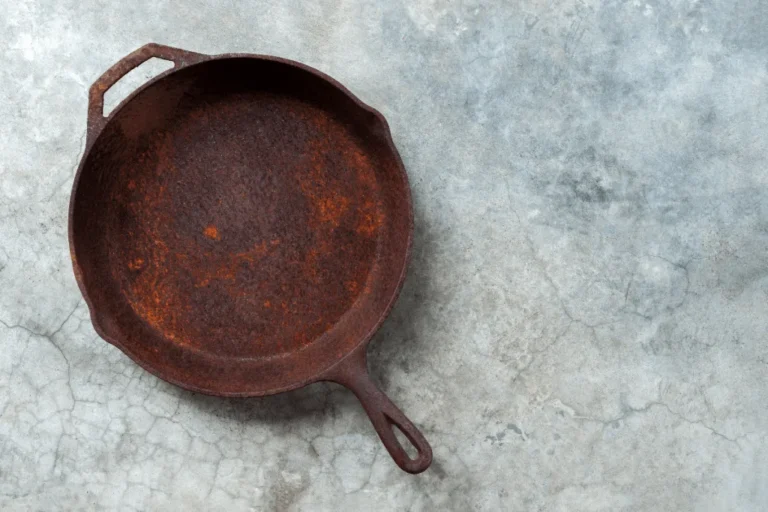
Learning how to remove rust off cast iron skillet is a genuinely useful skill, and it is far easier than most people expect. Rust looks like a death sentence for the pan, but it is usually just surface oxidation sitting on top of healthy iron. With the right method, you can restore the cooking surface in an afternoon.
The key is to match the treatment to the rust level before you grab any abrasive.
Our research points to one reliable benchmark: a 50/50 white vinegar and water solution dissolves iron oxide, but only if the soak stays between 30 and 60 minutes. Longer than that, the acid starts eating the underlying metal. As of 2026, the standard guidance from cast iron manufacturers is to assess rust first, then strip, dry, and re-season in that order.
Here is how to decide which branch fits your skillet.
Quick Answer: Assess Your Rust Level First
Here is how to remove rust off cast iron skillet. Use a salt scrub for light spots. Use a vinegar soak for heavier rust.
Then dry and re-season immediately.
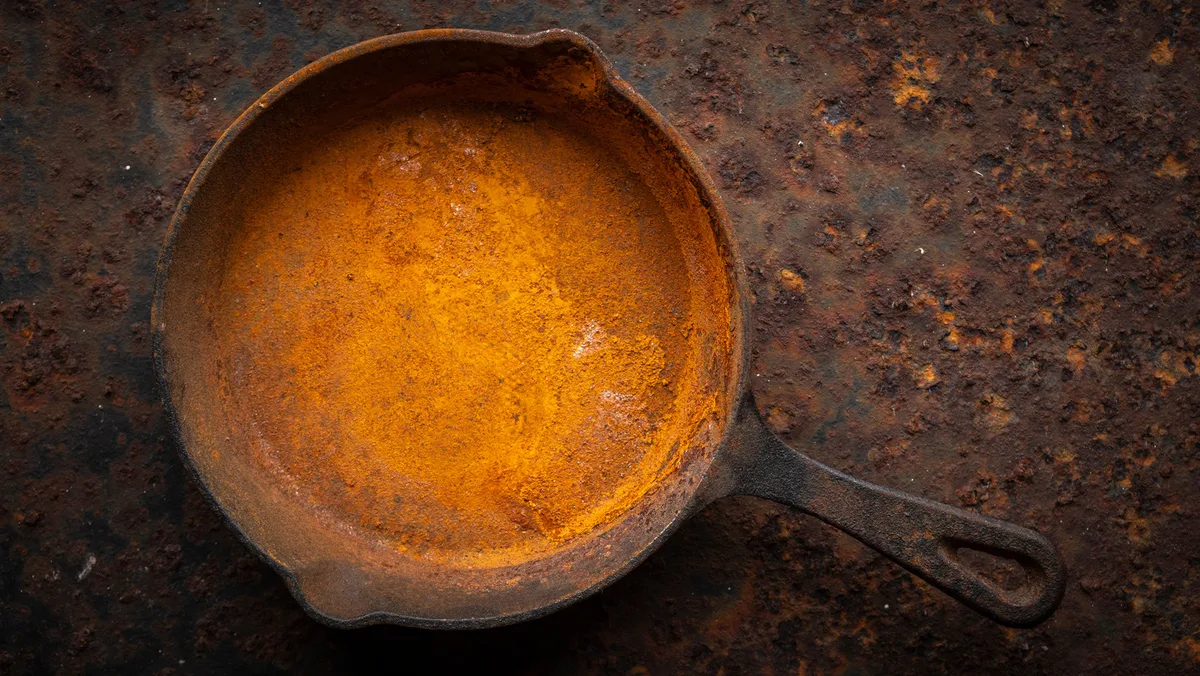
Before you choose a method, run your finger across the rusty area. Does it feel gritty but smooth underneath? That is surface rust, and it is the easiest fix.
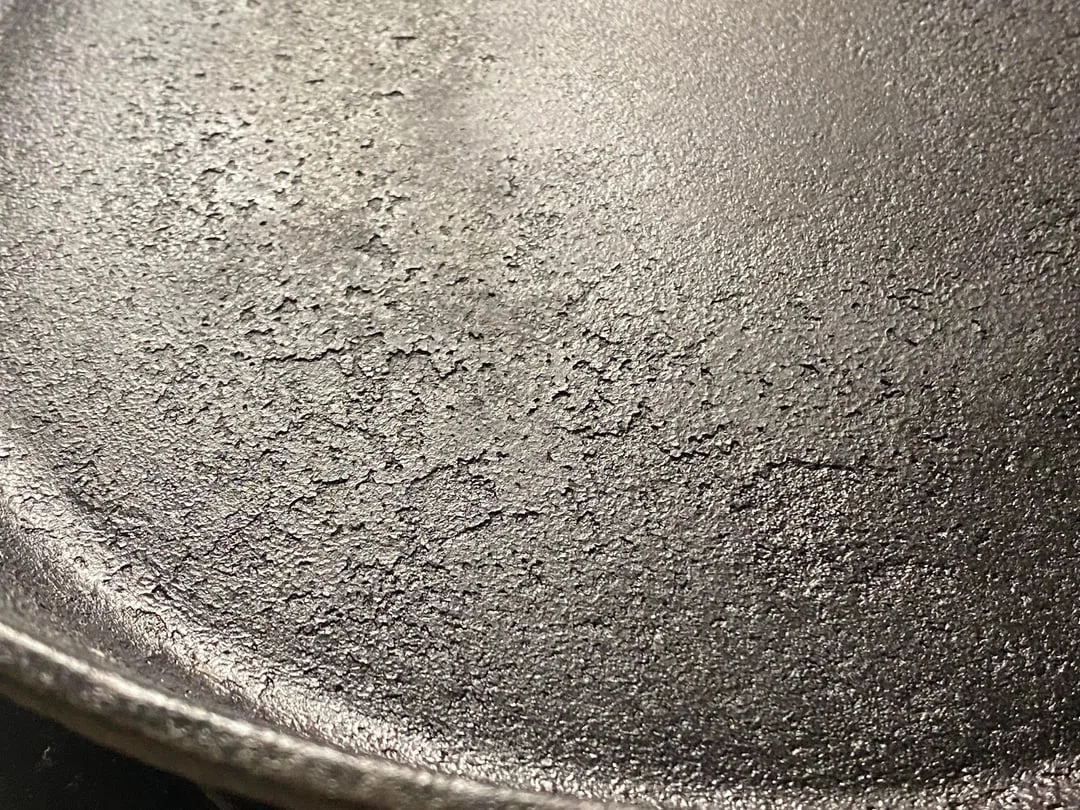
Do you feel craters or bumps? That means pitting, and the rust has started eating into the iron. That skillet needs a longer soak or electrolysis, not just a quick scrub.
The Right Method for Your Rust Level (Decision Branches & Steps)
The table below matches rust severity to the safest removal method. Restoration guides and aggregate user reviews agree on these timelines, and they hold up for both vintage and modern skillets.
| Rust looks like | Condition of the pan | Method | Time |
|---|---|---|---|
| Light orange freckles | Smooth to the touch, seasoning mostly intact | Salt and oil scrub | 5 minutes |
| Brown patches, slightly rough | Seasoning is thin or patchy around the rust | 50/50 vinegar soak + scrub | 30 to 60 minutes |
| Thick reddish crust | Bare metal, little or no seasoning left | Oven cleaner strip, then vinegar | 24 hours |
| Deep pitting | Vintage or heirloom pan with a smooth surface | Electrolysis | 12 to 24 hours |
If your skillet lands on the vinegar soak, the workflow is simple. Mix equal parts white vinegar and water in a plastic tub. Submerge the pan completely, and check it every 15 minutes.
Scrub with #0000 steel wool or a stiff nylon brush. Rinse with hot water, then dry on a low burner for three minutes. Re-season right away so flash rust does not form.
For light rust, skip the soak. Sprinkle coarse salt into a little oil and scrub in circles. The salt acts as a gentle abrasive and lifts the rust without grinding away the iron underneath.
Wipe it out, dry the pan, and add a fresh oil layer.
Manufacturer guidance, including Lodge's official care page, is clear: remove every trace of rust before rebuilding the seasoning. Oil trapped over rust will not stop the reaction. It only hides the problem for a few weeks.
Mistakes to Avoid (What Ruins a Pan)
Most wrecked skillets are not victims of rust. They are victims of the wrong removal tool. Here are the mistakes that show up over and over in restoration forums and manufacturer care guides:
- Never use sandpaper or an angle grinder. Both remove the base iron along with the rust. On a vintage skillet, that destroys the smooth cooking surface that makes the pan valuable.
- Never soak in vinegar overnight. The acetic acid will etch the iron, leaving it rough and prone to sticking. Thirty to sixty minutes is the safe window.
- Never skip the drying step. Bare iron can flash rust within minutes of touching water. Dry it on a hot burner even if you are about to season it.
- Never season over rust. The rust will bleed back through the oil layer and keep spreading underneath.
- Never use olive oil for seasoning. It has a low smoke point, so it burns and turns sticky instead of hardening.
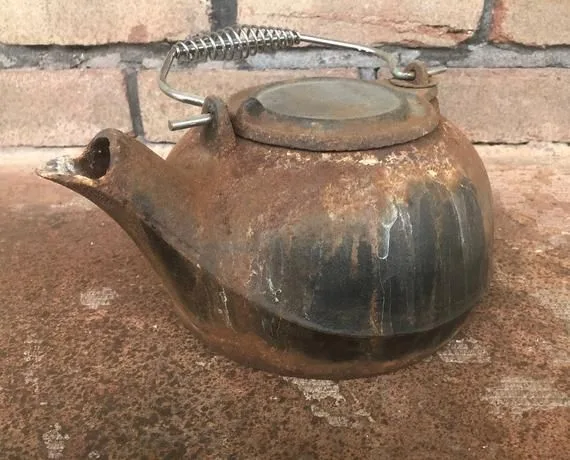
The pitted surface in the image above is permanent. Once the rust has eaten small craters into the iron, you cannot polish them out. The skillet still works, but food may stick in those dimples.
That is why heavy rust needs a gentle approach like electrolysis instead of aggressive grinding.
How to Re-Season After Rust Removal
Re-seasoning is not a finish you paint onto the pan. It is a layer of oil heated past its smoke point until it polymerizes into a hard, plastic-like coating. That coating is what keeps moisture off the iron.
Here is the sequence that works on bare iron:
- Wash the skillet with dish soap and hot water. Soap is fine here because the old seasoning is gone.
- Dry it with a towel, then set it on a low burner for two to three minutes.
- Rub a thin layer of vegetable oil, canola, or Crisco over the entire pan.
- Wipe the oil off like you are trying to remove every trace. The pan should look almost dry.
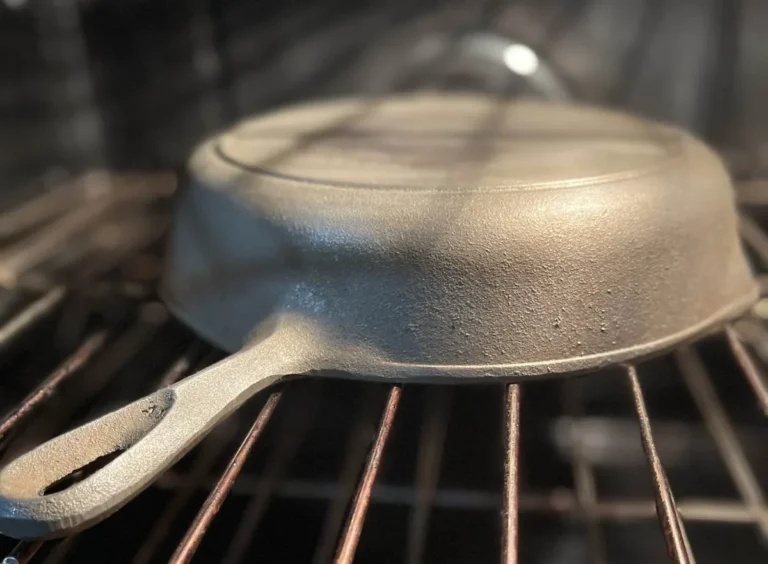
- Place the skillet upside down in a 450°F oven. Put a baking sheet on the lower rack to catch drips.
- Bake for one hour, then turn off the oven and let the pan cool inside.
- Repeat two or three times to build a durable base layer.
Skip flaxseed oil. It creates a hard but brittle coating that tends to flake off during cooking. Vegetable oil and Crisco are more forgiving and easier to maintain.
When the pan looks dark and satiny instead of greasy, the seasoning is set. If you see a little smoke during baking, that is normal. It means the oil is polymerizing into the coating you want.
Long-Term Maintenance (Keep Rust Away for Good)
Rust returns when moisture meets bare iron. Your job is simple: keep a thin layer of oil between the pan and the air. These habits take about thirty seconds after every meal.
- Dry the skillet on a stovetop burner after every wash. A towel alone is not enough.
- Rub in a micro-layer of oil while the pan is still warm. Use less than a teaspoon.
- Never leave the skillet soaking in the sink or resting on a dish rack.
- Store it in a dry cabinet. A damp basement or outdoor shed will undo all your work.
- If you live in a humid climate, check the pan once a month and re-oil it if it feels dry.
Acidic foods deserve extra care. Tomato sauce, vinegar-heavy dishes, and citrus can eat into the seasoning and expose bare iron. Wash and dry the pan right after cooking those meals.
These habits prevent the problem before it starts. A seasoned skillet is not indestructible, but with thirty seconds of drying and a thin film of oil, it can stay rust-free for decades.
When to Give Up (Cracks, Warps, & Holes)
Not every skillet deserves your time. Some damage is permanent, and knowing the difference saves you a wasted weekend. Rust is fixable.
Cracks, warps, and holes are not.
Cracks are the biggest red flag. They expand when the pan heats up, and a cracked skillet can fail mid-cook. That sends hot oil everywhere.
Toss it.
A warped skillet rocks on flat burners. Heat distribution goes uneven, and cooking times go haywire. You can keep a warped pan for baking or camping over an open fire, but for daily kitchen use, it is done.
Holes from deep rust mean the iron is structurally finished. If light shines through the metal, the pan has no future. Dispose of it and move on.
Two more scenarios that are instant disqualifiers: lead and floodwater. If a skillet was used to melt lead or it got caught in a flood, throw it away. You cannot fully remove those contaminants from porous iron, and the health risk is not worth saving a pan.
Pitting, by contrast, is cosmetic. The pan cooks fine, even if it looks rough. Don't give up on pitting alone.
When in doubt, remember this: cracks, warps, holes, lead, floodwater. Everything else is salvageable.
Frequently Asked Questions
Can I use oven cleaner to remove rust from a cast iron skillet?
Yes. Yellow-cap oven cleaners that contain sodium hydroxide strip old seasoning and soften rust. Coat the pan, seal it in a trash bag, and wait 24 hours.
Then scrub with fine steel wool. Follow up with a quick vinegar soak if rust patches remain.
How long should I soak a rusty cast iron skillet in vinegar?
Keep the soak between 30 and 60 minutes. Check every 15 minutes and scrub loose rust as it lifts. Longer soaks will etch the iron, leaving a rough surface that food sticks to.
If rust remains after an hour, drain, scrub, and start a fresh soak.
Is it safe to cook in a cast iron skillet after removing rust?
Yes, once you re-season it properly. Seasoning forms a polymerized oil layer that seals the bare iron. Wash the skillet, dry it on a burner, and bake on thin coats of oil at 450°F.
Repeat two or three times before cooking.
What is the fastest way to remove rust from a cast iron skillet?
For light freckles, a salt and oil scrub takes about five minutes. For heavier rust, a 50/50 vinegar soak for 30 minutes is the quickest reliable method. Electrolysis is gentler but takes 12 hours or more.
Match the method to the rust level.
How do I stop rust from coming back?
Dry the skillet on a burner after every wash. A towel is not enough because trapped moisture hides in the pores. Rub in a thin layer of oil while the pan is warm, and store it in a dry place.
Acidic foods can strip seasoning, so re-oil after cooking tomato sauce or citrus.