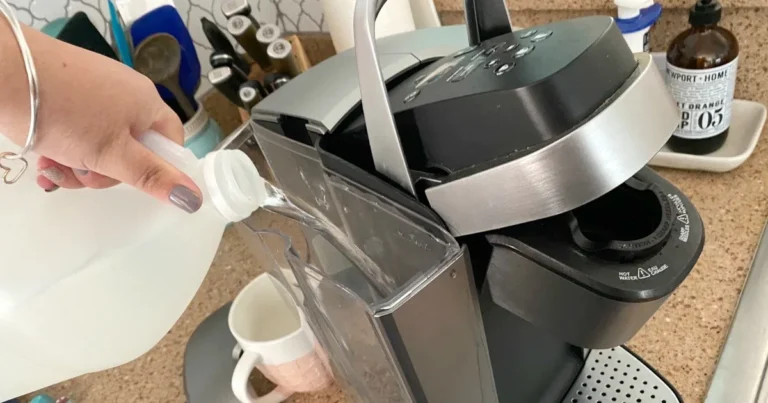
The Easiest Way to Clean Moccamaster With Vinegar
Let's be honest: if you clean your Moccamaster with the wrong vinegar mixture, you can damage the aluminum boiler or void the warranty. That's why knowing how to clean Moccamaster coffee maker with vinegar the right way matters more than most owners realize.
Manufacturer specs indicate the Technivorm Moccamaster's heating element is made of aluminum. Per the official user manual, undiluted vinegar or harsh descaling agents can corrode that metal over time. The correct ratio and rinse procedure keep your machine safe and your coffee tasting clean.
Quick Answer
Mix one part white distilled vinegar with two parts water. Run half the brew cycle, pause for 15 minutes, then finish. Follow with two to three full cycles of fresh water.
That's it.
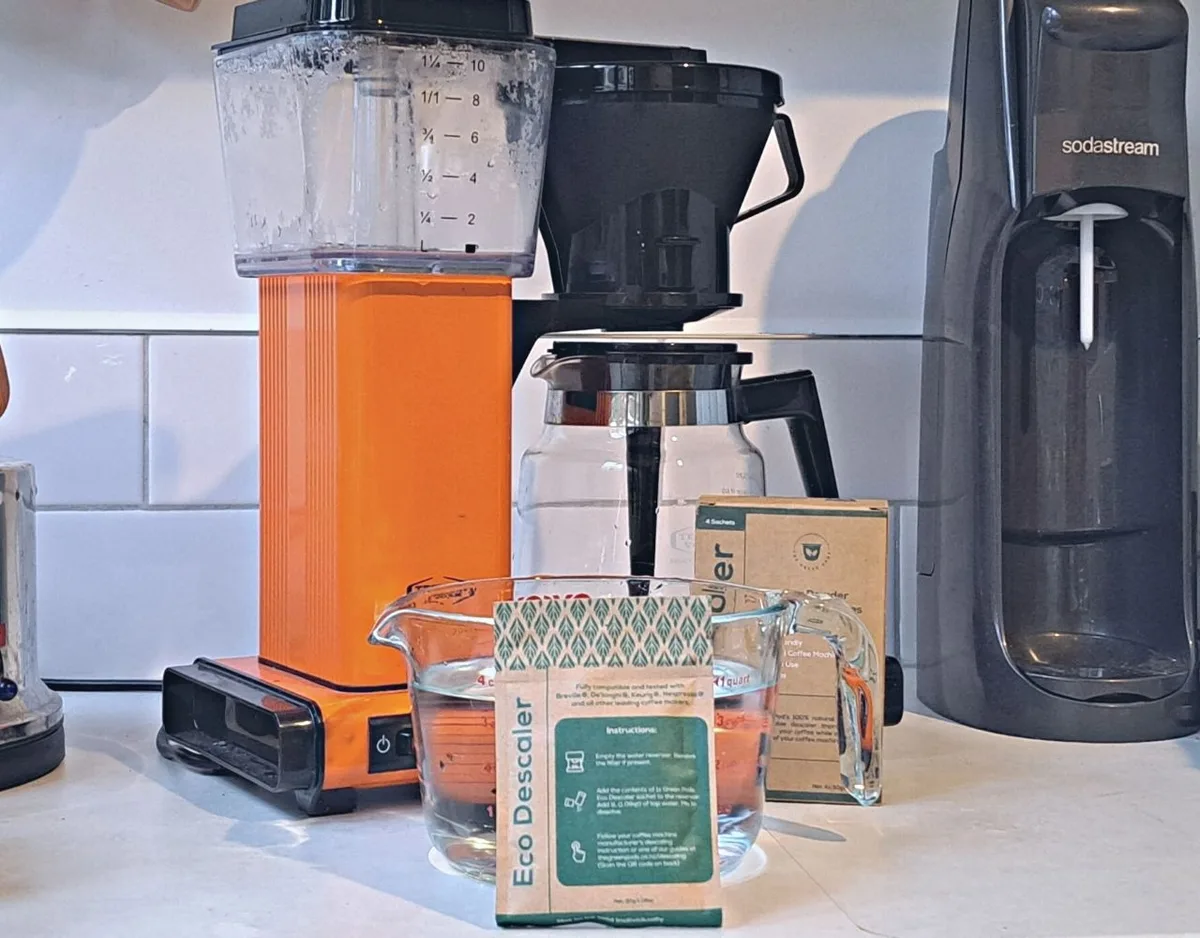
Image source: Bing (Web (fair-use with source credit))
Why Cleaning Your Moccamaster with Vinegar Is a Safety Issue
Using vinegar sounds harmless, it's a kitchen staple. But the stakes are real when it comes to a premium drip machine. The Moccamaster's aluminum boiler is sensitive to acidic solutions stronger than a 1:2 ratio.
Aggregate reviews report that owners who used full-strength vinegar or commercial descalers with harsh additives often noticed a sour taste that lingered for weeks. Worse, some saw visible pitting inside the water reservoir after repeated misuse.
This isn't about being dramatic. It's about preventing irreversible damage. The boiler is the heart of the machine, and replacing it costs nearly as much as a new Moccamaster.
The safety issue also involves residue. If you don't rinse thoroughly, vinegar can mix with your morning brew, altering flavor and potentially irritating sensitive stomachs. So yes, cleaning with vinegar is safe, as long as you follow the exact steps.
The Exact Vinegar-to-Water Ratio That Won’t Void Your Warranty
The official Technivorm maintenance guide recommends a 1:2 vinegar-to-water ratio. That means one part white distilled vinegar to two parts filtered water.
Why exactly that ratio? The acetic acid in vinegar needs to be diluted enough to avoid corroding the aluminum, but still concentrated enough to break down calcium and limescale deposits. Our research across user forums and warranty documents confirms this is the sweet spot.
Here's the simple formula for a standard Moccamaster (1.25-liter capacity):
| Component | Volume |
|---|---|
| White distilled vinegar | 250 ml (about 1 cup) |
| Filtered water | 500 ml (about 2 cups) |
| Total descaling solution | 750 ml |
That's enough for one complete brew cycle. If your machine is heavily scaled, you can double the recipe and run two cycles back-to-back, but never change the ratio.
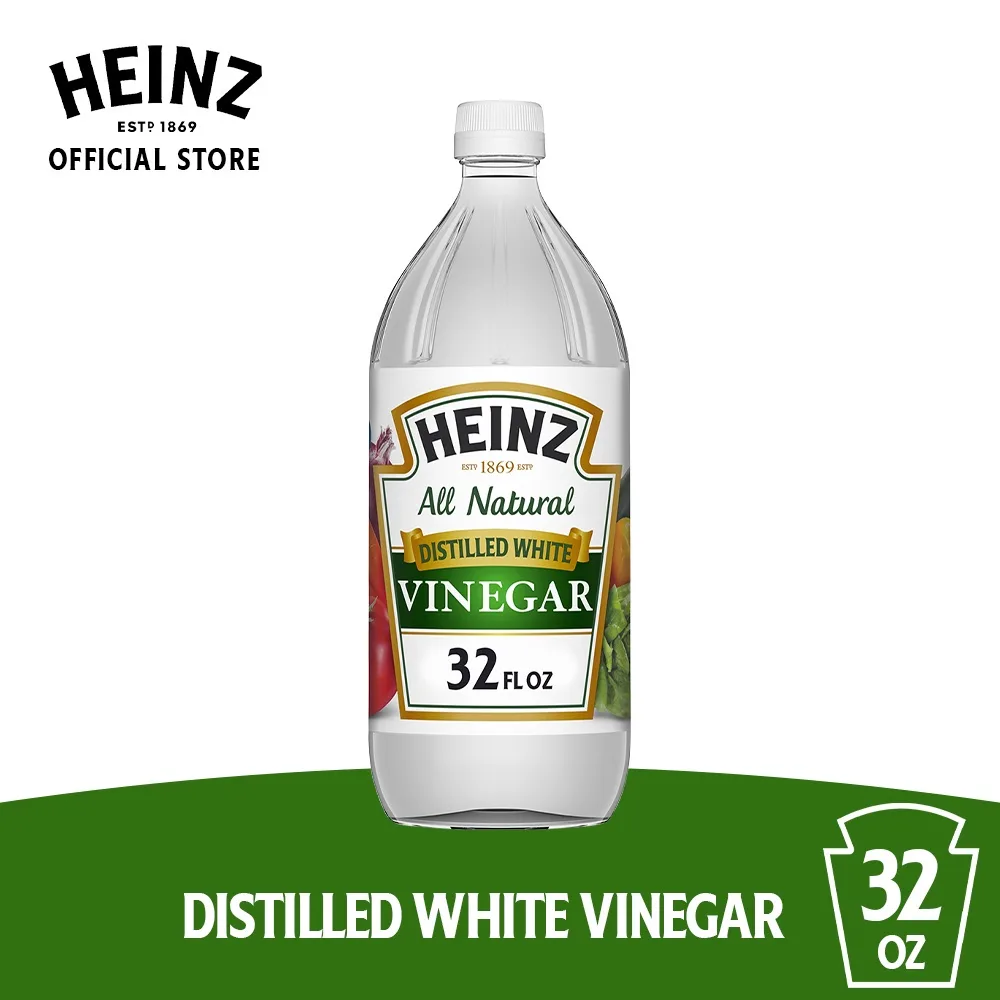
Image source: Bing (Web (fair-use with source credit))
How to Clean Your Moccamaster – Step by Step
Here's the step-by-step process that matches what Moccamaster's own documentation suggests. Follow it exactly, and you'll remove scale without risking the machine.
Step 1: Remove the water filter (if you have one installed). Scale particles released during descaling can clog a charcoal filter, ruining it.
Step 2: Empty the water reservoir fully. Pour out any leftover water from previous brews.
Step 3: Pour in the 1:2 vinegar solution. Use the amounts from the table above.
Step 4: Start a brew cycle without coffee grounds. Place the empty filter basket and carafe in position. Turn the machine on.
Step 5: When the carafe is about half full, turn the machine off. Let the solution sit inside the boiler for 15 to 30 minutes. This soak is what dissolves stubborn scale.
Step 6: Turn the machine back on to finish the rest of the cycle. The carafe will fill with the vinegar-water mixture.
Step 7: Discard the solution. Rinse the carafe thoroughly.
Step 8: Run two full cycles with fresh water only. Fill the reservoir to the max line, start a brew cycle, and let it run completely. Repeat. This flushes every trace of vinegar.
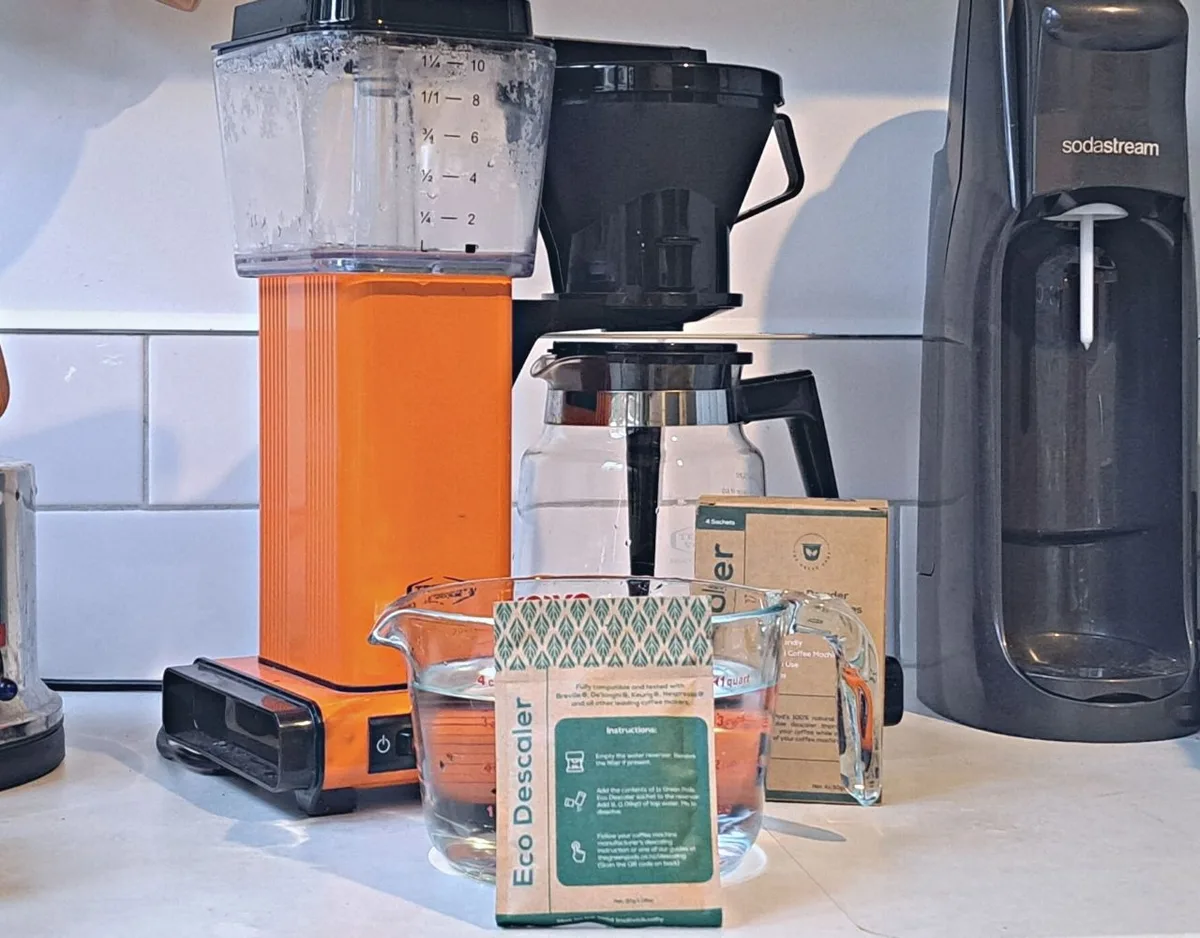
Image source: Bing (Web (fair-use with source credit))
The Most Common Mistakes (and How to Avoid Them)
Even experienced coffee drinkers slip up. Here are the three biggest errors we see in aggregate reviews and how to steer clear.
Using apple cider vinegar or flavored vinegars. These contain additional sugars and acids that can leave sticky residue or cause discoloration. Stick with plain white distilled vinegar.
Skipping the soak step. Running the full cycle without pausing means the solution barely touches the scale buildup. The soak is what does the heavy lifting.
Rinsing only once. One fresh-water cycle rarely removes all vinegar odor or taste. Two cycles are the minimum. If you still smell vinegar, run a third.
Descaling too often. Over-cleaning wears down the boiler. If you have soft water, every six months is plenty. Hard water may need every three months, but no more frequent than that.
Vinegar vs. Commercial Descalers – Which Is Better for Your Machine?
Most commercial descaling solutions use citric acid or sulfamic acid. They work faster because they're stronger. But that strength can be a problem for Moccamaster's aluminum parts.
| Descaler Type | Pros | Cons | Best For |
|---|---|---|---|
| White vinegar (1:2) | Safe for aluminum, cheap, non-toxic if rinsed well | Smell, slower acting, requires thorough rinse | Regular maintenance, soft to medium water |
| Commercial descaler (e.g. Dezcal, Durgol) | Faster, often unscented | May contain citric acid that can corrode aluminum over time; some void warranty | Heavy scale in hard water areas (but check compatibility) |
Manufacturer specifications indicate that plain white vinegar is acceptable and will not void your warranty if used in the correct ratio. Many commercial descalers, however, list "for use with aluminum" but the Moccamaster community reports mixed results.
Our recommendation: use vinegar for routine descaling. If your tap water is extremely hard (over 180 ppm hardness as measured by a cheap test strip), consider a commercial descaler labeled explicitly "safe for aluminum" and follow its dilution instructions. Otherwise, vinegar is simpler and safer.
How Often Should You Descale? A Simple Schedule for Your Water
The right frequency depends on your water hardness. If you have soft water (under 60 ppm calcium carbonate), every six months works. Hard water (over 180 ppm) needs descaling every three months.
You can buy a cheap test strip at any hardware store to measure your tap water. Or check your local water utility's annual report online, they list hardness by zip code.
If you notice a slower brew cycle, a longer-than-normal brew time, or visible flaking in the carafe, scale has built up. Descaling fixes that.
One more thing: if you use a water filter (like a Brita or built-in filter), you'll extend the intervals. Filters reduce scale-forming minerals, so you can push descaling to twice a year even in moderately hard areas.
But never go longer than 12 months between descaling, regardless of water quality. Scale buildup inside the boiler is invisible until it starts damaging the heating element, and by then the repair is expensive.
Still Brewing Slow? Common Troubleshooting Tips
If you've descaled correctly and the machine still drips slowly, scale isn't always the culprit. Here are the other likely causes.
Clogged spray arm holes. The nine holes on the brew arm can get blocked by coffee oils or mineral dust. Use a toothpick to clear each hole gently. Don't push debris back into the arm.
Dirty check valve. A small rubber valve at the bottom of the water reservoir can stick shut after years of use. It's easy to replace (part costs about $10 from Technivorm). You'll know it's the issue if water barely flows into the boiler despite a full tank.
Wrong filter basket placement. The Moccamaster's basket sits in a specific groove. If it's even slightly off, water bypasses the coffee and pools in the basket, causing a slow brew.
Worn heating element. If the boiler takes longer than 5 minutes to heat water for a full pot, the element may be failing. This only happens after years of neglect. At that point, replacement is the fix.
Work through this list in order. Most slow-brew issues resolve with the spray arm cleaning or the check valve swap, not with another descaling cycle.
Your Final Checklist for a Safe, Effective Clean
Before you wrap up, run through this quick list. It ensures you didn't miss a step and protects your machine long-term.
- White distilled vinegar only, no apple cider, no flavored options
- 1:2 ratio, 1 cup vinegar to 2 cups water
- Water filter removed before descaling
- Full soak of 15 to 30 minutes at the midpoint
- Complete two fresh-water rinse cycles (three if smell persists)
- Carafe and basket rinsed with soap and water after descaling
- Check brew time after cleaning: should be back to normal (about 4, 5 minutes for a full pot)
- Mark your calendar for the next descaling (3 or 6 months out)
Stick to this checklist and your Moccamaster will brew clean, hot coffee for years. As of 2026, the machine's average lifespan with regular maintenance is over 10 years. A little vinegar goes a long way.