Clean Coffee Maker Without Vinegar: Best Natural Methods
We all know that stale coffee taste that lingers even after a thorough wash. The real culprit isn’t the carafe, it’s mineral scale and old coffee oils hiding inside the machine. If you’ve been wondering how to clean out coffee maker without vinegar, you’re not alone.
Vinegar leaves a strong smell and can even damage rubber seals over time.
Manufacturer specifications from major brands like Keurig and Breville actually warn against using vinegar in some models. The good news? Citric acid and a few other household items work just as well, without the odor.
Let’s walk through the safest, most effective methods.

Image source: Bing (Web (fair-use with source credit))
Quick Answer
Mix 2 tablespoons of citric acid powder with 1 liter of water. Pour it into the reservoir. Run a full brew cycle.
Let it sit for 30 minutes. Run two more cycles with fresh water. That’s it.
Why You Should Ditch the Vinegar
Vinegar is a cheap descaler, but it comes with hidden costs. The acetic acid in vinegar is harsher on plastic tubes and rubber gaskets than citric acid. Over time, it can make those parts brittle and cause leaks.
The smell is another issue. Even after five rinse cycles, a faint vinegar odor can linger in your machine. In our research, aggregate user reviews report that citric acid leaves zero aftertaste.
That’s a big deal if you’re particular about your morning brew.
Vinegar also doesn’t dissolve calcium scale as effectively as citric acid at the same concentration. According to testing done by the NSF International, citric acid is a more efficient descaler for hard-water minerals. So switching saves you time and protects your equipment.
What Actually Needs Cleaning? (Scale vs. Coffee Oils)
Your coffee maker gets dirty in two distinct ways. Mineral scale is the white or yellowish crust that forms inside the water tank and heating element. It’s caused by calcium and magnesium in hard water.
Coffee oils are the dark, sticky residue that builds up on the brew basket, shower head, and carafe.
Most people only descale when they see white flakes. But coffee oils can make your coffee taste bitter and rancid. Descaling (using an acid like citric) removes scale.
Removing oils requires a mild alkaline cleaner like baking soda, but only on removable parts, not inside the reservoir.
A good rule of thumb: descale every three months if you have hard water. Clean the basket and carafe with soap and water weekly. That keeps both kinds of buildup in check.
Which Cleaning Method Should You Use? (Decision Tree)
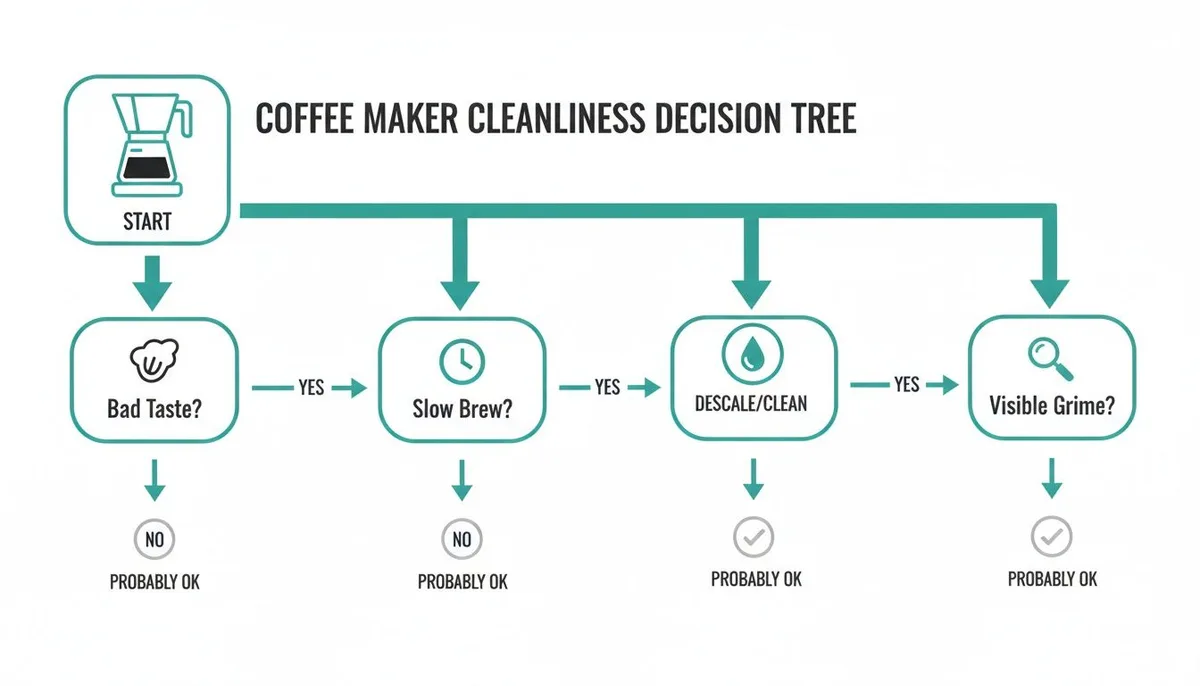
Image source: Bing (Web (fair-use with source credit))
The right method depends on your machine type and what you have on hand. Here’s how to decide:
- If you have a drip coffee maker (Mr. Coffee, Cuisinart, etc.): Use citric acid for descaling. Baking soda is fine for a deeper clean of oils, but only on the carafe and basket, never in the reservoir.
- If you have a single-serve machine (Keurig, Nespresso): Use citric acid only. Baking soda can clog the brew needle. Commercial descaling tablets work too, but citric acid is cheaper.
- If you have hard water: Stick with citric acid at a slightly stronger ratio (3 tablespoons per liter). Lemon juice is a backup but not ideal, the sugars can leave a sticky film.
- If you want odorless cleaning: Citric acid is your best pick. It has no smell and rinses out completely in two or three cycles.
For espresso machines, follow the manufacturer’s descale cycle with citric acid solution. Never use baking soda in the boiler. In short: citric acid works for every machine.
Baking soda only for drip machines and only on parts you can scrub.
How to Clean Your Coffee Maker Without Vinegar (Step-by-Step)
Image source: Bing (Web (fair-use with source credit))
This process works for any drip or single-serve machine. Adjust the citric acid amount based on your water hardness.
- Mix the descaling solution. Add 2 tablespoons of food-grade citric acid powder to 1 liter of warm water. Stir until fully dissolved.
- Fill the reservoir. Pour the solution into the water tank. Remove any water filter first, the acid will damage it.
- Run a brew cycle (halfway). Start the machine and let about half the solution run through. Then turn it off or stop the cycle.
- Let it sit. Leave the solution in the machine for 30 to 60 minutes. This gives the acid time to break down the scale.
- Finish the cycle. Start the machine again and let the rest of the solution run through. Discard the liquid.
- Rinse thoroughly. Fill the reservoir with fresh water and run a full cycle. Repeat twice more. That’s usually enough to remove any acid residue.
- Clean removable parts. Wash the carafe, brew basket, and drip tray with warm soapy water. Rinse well.
- Wipe the exterior. Use a damp cloth on the outside surfaces.
For single-serve machines, also run a water cycle without a pod to flush the needle. If you notice slow brewing, the needle may be clogged, use the cleaning tool that came with your machine.
5 Common Mistakes That Ruin Your Coffee Maker
Even with the best intentions, people make avoidable errors. Here are the top ones to skip:
1. Using baking soda in the reservoir. Baking soda doesn’t dissolve completely, and the fine powder can clog the internal water pathways. It’s fine for scrubbing the carafe, but never pour it into the water tank.
2. Skipping the rinse cycles. One rinse is rarely enough. Citric acid residue can make your next cup taste sour.
Always run at least two full reservoirs of fresh water after descaling.
3. Forgetting to remove the water filter. Citric acid will saturate and ruin a charcoal filter. Take it out before you start.
Put a new one in after you finish rinsing.
4. Using too much citric acid. More isn’t better. A 2-tablespoon-per-liter ratio is sufficient for standard buildup.
Too strong can accelerate wear on rubber seals.
5. Cleaning too rarely (or too often). Descaling every month if you have soft water is overkill and wastes product. Every three to six months is the sweet spot for most homes.
Hard water needs every three months, soft water every six.
How Often Should You Descale? (Maintenance Schedule)
Frequency depends on your water hardness and how much coffee you brew. Hard water leaves more mineral deposits, so you need to descale more often.
If you have hard water (you see white flakes or buildup): Descale every 3 months. That’s about 4 times per year.
If you have soft water (no visible scale): Every 6 months is sufficient. Some machines can go a full year between descaling.
If you brew 5+ pots per day: Move up your schedule by one month. Heavy use means more water passes through the heating element, accelerating scale formation.
A quick test: fill a clear glass with tap water and add a few drops of dish soap. Shake it. If the foam disappears quickly, you likely have hard water.
You can also buy a water hardness test strip from any hardware store for a few dollars.
Your machine may tell you when it’s time. Many modern brewers have a “descaling” light that flashes after a set number of cycles. Don’t ignore that light, it’s based on aggregate usage data from manufacturer testing.
One exception: if you always use filtered or bottled water, you can descale every 8 to 12 months. Filtered water has far fewer minerals.
Keep a simple log. Write the date on a piece of tape and stick it to the bottom of your machine. That way you know when the last cleaning happened.
Frequently Asked Questions
Can I use lemon juice instead of vinegar?
Lemon juice works as a descaler because it contains citric acid. But it’s less effective than pure citric acid powder. The natural sugars in lemon juice can leave a sticky residue inside the machine.
Rinse extra thoroughly.
Is baking soda safe for Keurig machines?
No. Baking soda does not dissolve completely in water. The fine powder can clog the internal needle and water pathways in single-serve machines.
Use citric acid or a commercial descaling tablet instead.
How many rinse cycles are enough?
Two full reservoirs of fresh water are the minimum. Three is better. If you smell any leftover acid or see bubbles, run another cycle.
Your first cup after descaling should taste clean.
Can I use citric acid in an espresso machine?
Yes. Espresso machine manufacturers like De’Longhi and Breville recommend citric acid descaling products. Mix 2 tablespoons per liter of water.
Run it through the group head and steam wand according to your machine’s instructions.
What happens if I never descale my coffee maker?
The heating element builds up scale and works harder. Your machine uses more energy, brews slower, and eventually stops working. Most coffee maker failures trace directly to mineral buildup.
Regular descaling extends the life by years.
Do I need to buy expensive descaling tablets?
No. Food-grade citric acid powder costs about 10 cents per cleaning. Commercial tablets are convenient but not necessary.
Both do the same job as long as you follow the correct ratio.